





















Former Vice President Atiku Abubakar’s choice of running mates has repeatedly raised questions about the political value they bring to his presidential ambitions. His latest decision to pick former Rivers State Governor Rotimi Amaechi as his running mate under the African Democratic Congress (ADC) has drawn particular criticism, especially when measured against the qualities expected of a strong deputy candidate.
A running mate is generally expected to broaden a ticket’s appeal, strengthen its credibility and governing capacity, and help build political alliances. Atiku’s choice of former Delta State Governor Ifeanyi Okowa in 2023 offered some political and financial advantages, particularly given Delta State’s importance to the Peoples Democratic Party. However, those advantages were not enough to secure victory.
Amaechi’s value to the current ticket, according to his critics, is even less obvious. He does not appear to offer the same financial or political advantages he once brought to the All Progressives Congress when he served as governor of Rivers State and helped mobilise support for Muhammadu Buhari’s presidential ambition.
What he has brought to the campaign so far is a combative style that often turns serious political issues into public spectacle. While sharp political rhetoric can attract attention, it may become a liability when it overshadows the substance voters expect from a candidate seeking national leadership.
In October, Amaechi claimed that Tinubu’s economic policies had contributed to the death of his 89-year-old mother. The remark attracted criticism, particularly after he later described it as a joke. Questions were raised about the appropriateness of making such a statement, especially given his own financial capacity and political background.
His comments about Buhari have also attracted attention. On November 6, Amaechi said the former president had betrayed him by failing to honour an alleged promise to support his presidential ambition during the APC primaries in 2022. He said he regretted believing Buhari’s assurance.
However, Buhari was already in the final phase of his presidency at the time, with his influence and authority increasingly diminished. Anyone closely following the political situation during his final months in office could have recognised that his ability to deliver such a commitment was uncertain.
Amaechi’s disappointment may be genuine, but his account raises questions about his political judgment and expectations. Nigerians may have to wait for his memoir to hear more about the alleged promise and the circumstances surrounding it.
His move from the APC to the ADC, followed by his emergence as Atiku’s running mate, also reflects a familiar pattern in Nigerian politics. Politicians often move from governing parties to opposition platforms, presenting themselves as reformers without necessarily explaining what has changed in their political beliefs or approach to governance.
Amaechi’s record as Transport Minister under Buhari is another issue that deserves closer examination. His supporters can point to his role in advancing major railway projects, including the Abuja-Kaduna line, which began under former President Goodluck Jonathan and was completed during Buhari’s administration.
He also made several political decisions during his time in office that have continued to attract scrutiny. These include the proposed railway connection between Kano and Maradi in Niger Republic, the location of the Federal University of Transportation in Daura, Buhari’s hometown, and his acceptance of a chieftaincy title from the Daura Emirate.
Critics argue that these decisions reflected a strong interest in political patronage rather than a clear national development strategy. Amaechi, however, has yet to provide a convincing public explanation that addresses all the questions surrounding his record.
His political ambitions were evident during the APC presidential primaries in 2022, where he finished second, ahead of several contenders, including former Vice President Yemi Osinbajo. That performance demonstrated his political strength within the party at the time. Yet, he did not remain in the APC for long after failing to secure its presidential ticket.
Now in the opposition, Amaechi has become one of the administration’s outspoken critics. He has accused Tinubu’s government of worsening insecurity, poverty and the education crisis, while declaring that Nigeria has been badly damaged under the current leadership. He has also suggested that only a mad person would vote for Tinubu in 2027.
His claim that eight million children have dropped out of school deserves serious examination. Nigeria’s out-of-school children crisis did not begin with the present administration. It has been driven by years of poverty, insecurity, poor school funding and government neglect. Tinubu’s administration must answer for its own record, but the responsibility for the crisis also extends to previous governments, including those in which Amaechi played a prominent role.
The APC has governed Nigeria for nearly 12 years, and Amaechi was part of the party’s leadership during a significant portion of that period. He cannot reasonably demand that Nigerians assess Tinubu solely on the basis of current outcomes while his own time in government remains beyond scrutiny.
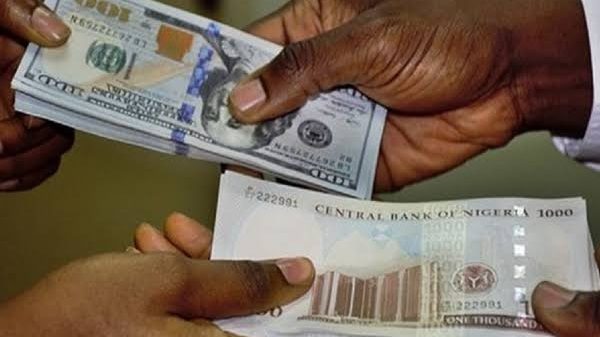
The Abuja-Kaduna railway project provides a clear example. Amaechi deserves recognition for his role in completing the line, but questions remain about the cost of the wider rail development programme. A project initially valued at about $500 million in 2013 was later associated with a much larger figure of $3 billion, while Phase II, constructed by CCEC during Amaechi’s tenure, reportedly cost $1.473 billion.
These figures raise important questions about project planning, borrowing and value for money. Amaechi defended the use of Chinese loans to finance railway infrastructure, but the debate goes beyond whether the trains can operate. Nigerians also need to know whether the country can maintain the projects, repay the loans and sustain the infrastructure without placing further pressure on public finances.
His political relationship with Atiku has also attracted criticism. Former APC National Chairman Adams Oshiomhole and other critics have pointed to Amaechi’s previous legal challenge over the ADC presidential primary, which he had accused Atiku of manipulating. They now question how the two politicians have moved from political opponents to running mates.
Although such criticism is clearly shaped by partisan interests, it highlights a broader concern about the consistency of political alliances in Nigeria. Voters are entitled to ask what changed between Amaechi’s earlier position and his decision to join Atiku’s ticket.
A politician who criticises Tinubu’s leadership, expresses disappointment with Buhari and now seeks power alongside Atiku must be able to explain the principles connecting those positions. Without a clear explanation, some voters may conclude that political ambition, rather than a consistent political philosophy, is driving the decisions.
If Amaechi wants Nigerians to take his new political position seriously, he will need to offer more than fiery speeches, selective statistics and criticism of the present government. He must also be prepared to answer questions about his own record and explain what he would do differently if given another opportunity to serve.
Nigeria needs leaders who can account for their time in public office, acknowledge past failures and present practical solutions to the country’s problems. Changing political parties or criticising former allies is not enough. What matters is whether those seeking power can demonstrate the judgment, consistency and capacity required to deliver better governance.







