





























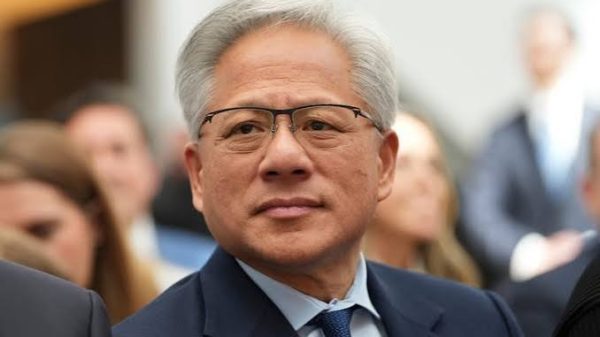









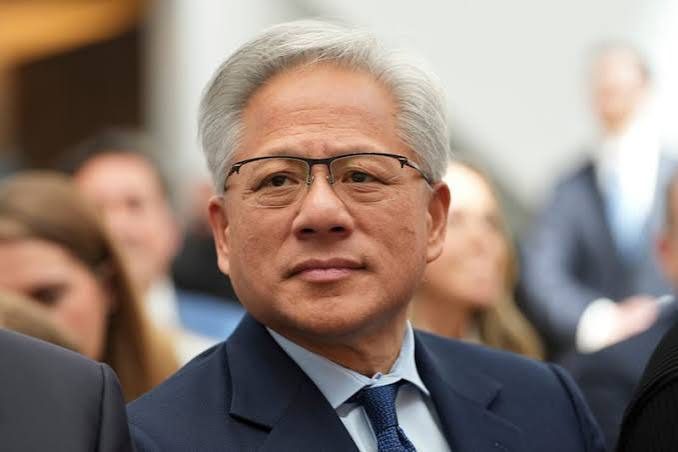
Jensen Huang has stepped down as chief executive of Nvidia, bringing an end to his 33 year leadership of the technology company he co founded. His resignation, announced on Thursday, comes amid growing controversy over reports of two extramarital relationships, including one involving a woman suspected by US intelligence officials of having links to Chinese espionage.
Nvidia confirmed that Huang had resigned as president, CEO and a member of the board with immediate effect. The 63 year old executive did not publicly give a reason for his departure, while the company also declined to explain the circumstances surrounding his exit.
Chief Financial Officer Colette Kress has been appointed interim CEO as the board begins searching for a permanent replacement. Kress, who joined Nvidia in 2013 after holding senior finance positions at Cisco and Microsoft, will continue overseeing the company’s financial operations while taking on the additional responsibility.
The board has also appointed Harvey Jones, a former chief executive of chip design software company Synopsys, as Nvidia’s first ever chairman.
In a statement, Jones expressed confidence in Kress and the existing leadership team, assuring customers and investors that the company’s operations, commitments and product plans would continue without disruption.
Kress also pledged to build on the foundation established by Huang over the past 33 years, stressing her commitment to maintaining Nvidia’s position in the technology industry.
Huang’s departure has unsettled investors, with Nvidia shares falling by more than 10 per cent in premarket trading on Thursday following the announcement. The stock had already dropped significantly from its record high in early October, adding to concerns about the impact of the leadership change on the company and the wider artificial intelligence industry.
The controversy surrounding Huang began with reports of an extramarital relationship involving Alice Huang, a former senior executive at Singapore based data centre company Megaspeed International. The two are not related.
US intelligence officials reportedly circulated a memo alleging that Alice Huang had links to China’s Ministry of State Security. Beijing has rejected the espionage allegations.
Huang, who has been married to Lori Huang for more than four decades, acknowledged in a message to employees that he had been unfaithful to his wife. However, he did not publicly identify the person involved.
Following the reports, Nvidia’s board announced an investigation into claims that its chief executive had been the target of a foreign intelligence operation. At the time, the board maintained its confidence in Huang while the inquiry continued.
The situation became more complicated on Wednesday after The New York Times reported that Huang had also been involved in another alleged relationship with Kimberly Powell, Nvidia’s vice president of healthcare.
Powell, 48, has been one of the company’s prominent representatives in efforts to expand its technology into healthcare and higher education. The newspaper reported that Huang and Powell were seen displaying affection towards each other at a hotel during a conference in San Jose, California.
The reports have also raised questions about Nvidia’s workplace policies, particularly its rules on conflicts of interest and personal relationships between employees.
The controversy has extended beyond the company’s internal investigation. Some Nvidia shareholders have reportedly filed a class action lawsuit against Huang and the company, accusing them of failing to disclose information about the alleged relationship to investors.
Huang’s resignation marks a major turning point for Nvidia, which he co founded in 1993. The company initially became known for developing graphics processing units used in video games, but its technology has since become central to the development and operation of artificial intelligence systems.
Its processors now power a significant portion of the global AI industry, making Nvidia one of the most valuable technology companies in the world. Most of its chips are manufactured by Taiwan Semiconductor Manufacturing Company, widely regarded as the world’s largest contract chipmaker.
Despite leading the company for more than three decades, Huang had repeatedly avoided naming a potential successor when questioned about his eventual departure.
With Kress now in temporary control, Nvidia’s board is expected to consider both internal and external candidates for the permanent position.
The company has also confirmed that it will release its quarterly financial results as scheduled on November 17, despite the leadership shake up.







