


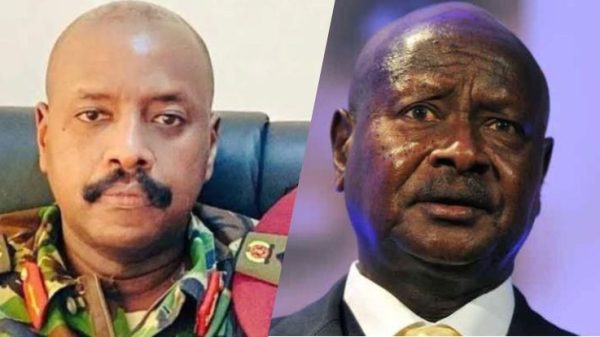












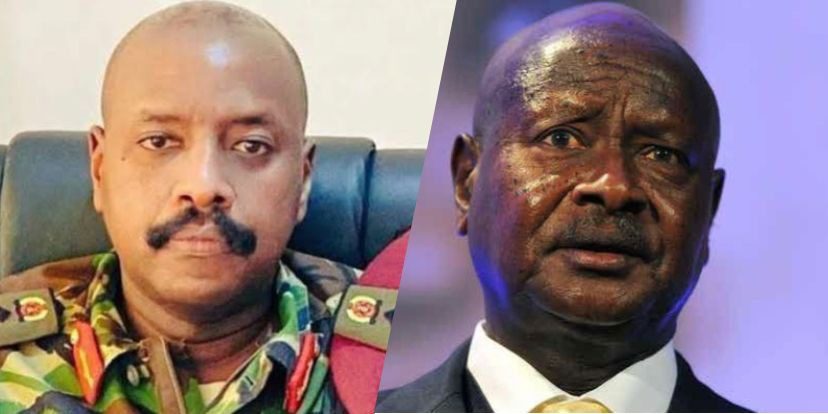
The leadership of Uganda’s ruling National Resistance Movement (NRM) has reportedly rejected a plan by President Yoweri Museveni to position his son, Muhoozi Kainerugaba, as his successor, according to five party sources.
Kainerugaba, 52, currently serves as the country’s army chief and has become increasingly influential as his 82 year old father continues to lead Uganda after nearly four decades in power.
Widely known as Muhoozi, he has indicated his intention to contest the 2031 presidential election. However, his conduct, particularly his controversial social media posts and reported threats against political opponents, has raised concerns among members of the ruling party.
In recent months, he has been accused of using his influence against political rivals, including having opponents detained and threatening to behead opposition leader Bobi Wine. He was also linked to the closure of one of Uganda’s leading independent media groups for several weeks.
Although Museveni has maintained a firm grip on power since taking office in 1986, growing concerns have emerged within his party over the possibility of a family succession.
The issue came to a head during a closed door meeting of the NRM executive committee on Tuesday. The meeting, attended by 28 members, was reportedly convened to consider the question of succession.
According to five people who attended the meeting, a vote on Kainerugaba’s possible candidacy was abandoned after several committee members spoke against the proposal and received loud applause from those present.
By the time the voting process was halted, four members had reportedly supported his candidacy, while three had voted against it.
One party source said Kainerugaba’s confrontational approach had created unease among some members, particularly his repeated threats against critics on social media.
The source argued that the army chief should seek public support through persuasion rather than intimidation, warning against attempts to force Ugandans into accepting his political ambition.
The reported disagreement highlights divisions within the ruling party over who should eventually succeed Museveni, whose long stay in power has shaped Uganda’s political landscape since 1986.







