





































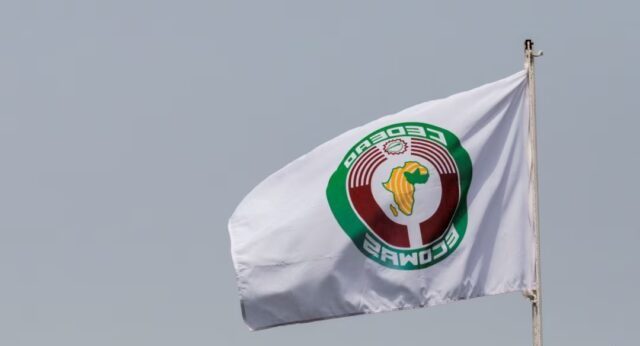
The Economic Community of West African States (ECOWAS) has launched a $650 million regional initiative aimed at strengthening rice production, improving food security and reducing the region’s dependence on imported food.
The programme, known as the Resilient Rice Value Chain Development Project (REWARD), is designed to improve rice farming, processing and marketing while making locally produced rice more competitive. A regional steering committee has also been inaugurated to oversee its implementation between 2025 and 2035.
The launch comes as West Africa works towards a target of producing 35 million tonnes of rice by 2035. However, the region’s broader rice development plan requires an estimated $25.6 billion in investment to achieve self-sufficiency.
REWARD is supported by the African Development Bank (AfDB), with technical assistance from AfricaRice. Its activities are expected to cover key areas of the rice value chain, including access to quality seeds, irrigation, fertiliser, improved farming methods, processing facilities, financing and market access.
Speaking at the launch, ECOWAS Commission Vice President Anthony Ogunjimi said the project was established in response to a directive from the region’s heads of state, who tasked the Commission with mobilising resources to improve food availability and security across West Africa.
Ogunjimi, who was represented by the Commission’s Commissioner for Economic Affairs and Agriculture, Dephue Zuo Dephue, said the region’s overall rice investment requirement stood at about $25 billion.
He disclosed that a financing roundtable held in Accra had generated approximately $1.5 billion in commitments, expressions of interest and ongoing funding discussions. The resources are expected to support farmers, businesses and other players involved in rice production and distribution.
He called on West African citizens, private investors and business partners with the capacity to contribute to the initiative to support the region’s food security ambitions.
Dephue stressed that West Africa could only achieve food sovereignty by increasing local production and reducing its exposure to external supply disruptions. He described rice as a major part of that effort but warned that higher production alone would not guarantee self-sufficiency.
He said the region must also address challenges involving agricultural inputs, irrigation, processing, financing, market access and policies that support the entire value chain.
According to him, the Regional Rice Roadmap for 2025 to 2035 builds on the 2004 Yamoussoukro Declaration and places the required investment at $25.6 billion. He urged stakeholders to turn the interest generated at the Accra meeting into actual funding and practical results for farmers, processors and consumers.
ECOWAS is expected to support the programme through regional policy and regulatory reforms, improved coordination and stronger oversight of agricultural inputs. The Commission will also use the ECOWAS Rice Observatory to monitor progress through digital tools.
The newly inaugurated steering committee will provide strategic direction, oversee major decisions and identify implementation challenges early enough to keep the programme on track. It is also expected to promote accountability throughout the project.
Representing AfricaRice, Dr Sali Atanga identified limited access to quality seeds, low farm productivity, climate change, inadequate mechanisation, post-harvest losses and poorly connected markets as some of the major obstacles affecting rice production in the region.
He said overcoming these problems would require coordinated regional action rather than isolated investments by individual countries.
Atanga explained that AfricaRice would provide technical support in areas such as improved seed systems, climate-resilient rice varieties, sustainable farming technologies, mechanisation and better post-harvest management.
Meanwhile, the Coordinator of ECOWAS RiceAgenda and the REWARD Programme, Dr Boladale Adebowale, disclosed that five countries had joined the first phase of the initiative. He added that more countries were expected to come on board during the programme’s second phase next year.







