






























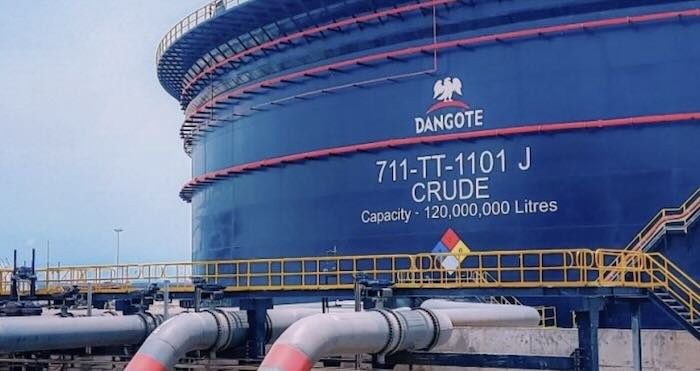
There are rare occasions when a company’s public listing transcends a simple financial transaction. Every so often, an offering emerges that serves as a profound statement on who truly has the right to participate in wealth creation. The proposed initial public offering of the Dangote Petroleum Refinery and Petrochemicals is shaping up to be exactly that kind of transformative moment for the continent.
Should the plans proceed as expected, this could stand as the most significant capital market transaction in African history. Data gathered by Zoyols News indicates the refinery is targeting an offering in the neighborhood of 5 billion dollars. While the sheer size of this move on the Nigerian Exchange is enough to grab headlines, the more compelling narrative is the shift in ownership. For far too long, Africa’s industrial heavyweights have remained either state-run, under foreign control, or completely out of reach for the average citizen. This potential offering flips that script, offering a rare chance for everyday Africans to move from being mere consumers of a product to being partial owners of the industrial machine behind it.
The reach of this refinery is already felt in every corner of the economy. From the fuel that powers transit to the aviation spirit and petrochemicals keeping industry alive, Nigerians have been the primary end-users of the Dangote output. By transitioning into a publicly traded entity, the refinery bridges the psychological and economic gap between the towering industrial complex on the Lagos skyline and the man on the street. It turns a familiar logo at the filling station into a tangible asset that a teacher, a trader, or a young entrepreneur can include in their personal portfolio. This is the essence of democratizing wealth—widening the gates so that the benefits of productive enterprise are not locked behind the doors of the wealthy.
The numbers projected for this exercise are nothing short of extraordinary. Should this IPO succeed in drawing significant new capital into the market, analysts note it could dramatically expand the total capitalization of the Nigerian Exchange. This move would signal to global investors that African capital markets possess a level of depth and sophistication previously underestimated. While the Dangote Group has a history of successful public transitions—notably in the cement and sugar sectors—the refinery represents an entirely different class of asset. It is a strategic energy hub with the power to alter balance of payments, bolster regional trade, and redefine fuel security.
To ensure this remains a people-centric movement, there is a deliberate design to favor retail participation. By leveraging fintech platforms and digital distribution, the organizers are working to dismantle the archaic barriers that once kept the stock market as a playground for the elite. The goal is to make the process accessible through a mobile phone, allowing a wide cross-section of Nigerians—from Kano to Port Harcourt—to join the same shareholder register. This is not about making people rich overnight; it is about the structural evolution of capitalism where entrepreneurs build, institutions finance, and citizens participate in the long-term growth of the economy.
Ultimately, the Dangote Refinery IPO could serve as a model for how the continent addresses its historic lack of deep domestic capital pools. By raising funds through a public offer, the refinery is not just looking to pad its balance sheet; it is positioning itself to scale its capacity and fuel an expansion that stretches into East Africa. As regional regulators look toward creating a unified energy trading hub, the refinery is cementing its role at the heart of West Africa’s energy architecture.
If executed successfully, this offering will prove that a premier industrial asset can be fueled by local ambition and held by a broad community of citizens. It shifts the conversation from merely attracting foreign investment to the more vital question of how Africans can own their own industrial future. When a project moves from building the factory to sharing the growth, it completes the circle of true economic development. This is more than a public offer; it is a fundamental shift in the architecture of African capitalism, proving that the future shouldn’t just be built for Africans—it should be owned by them.