



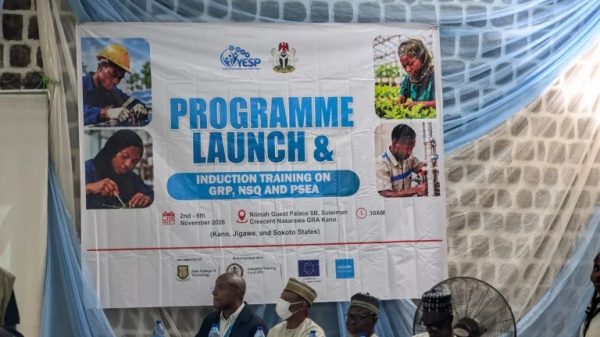






































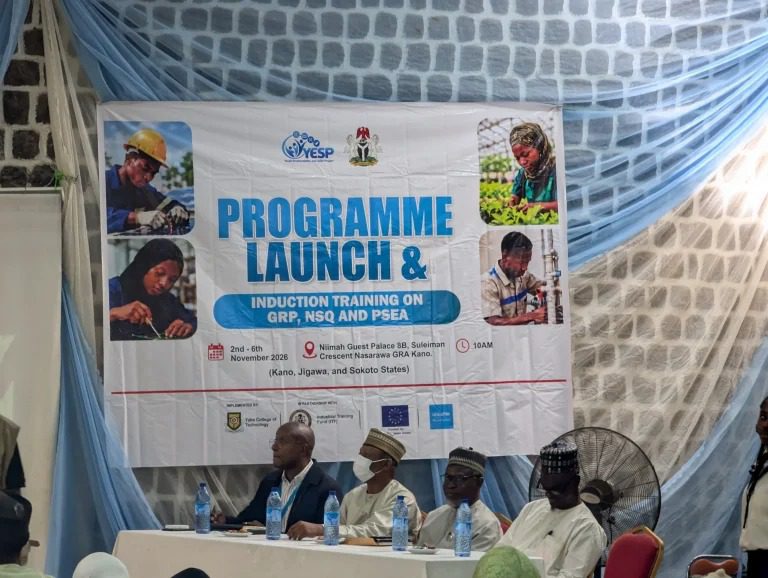
The Youth Employability and Skills Project has begun training 3,400 young people in Kano, Jigawa and Sokoto, with a focus on preparing them for employment, entrepreneurship and sustainable livelihoods.
Supported by the United Nations Children’s Fund and the European Union, the initiative is being delivered by Yaba College of Technology in partnership with the Industrial Training Fund.
Project Coordinator Dr Funmilayo Doherty announced the start of the programme on Monday at an induction and launch event in Kano. Participants were introduced to the Global Record Book, the National Skills Qualification and requirements for preventing sexual exploitation and abuse.
The programme will reach beneficiaries in 30 local government areas. Kano is expected to provide 1,200 participants, while Jigawa and Sokoto will each have 1,100. It is designed to help young people build practical skills, improve their productivity and contribute to development in their communities.
Doherty urged employers and industry leaders to offer internships, apprenticeships, mentorship and job opportunities, giving participants a chance to turn their training into lasting livelihoods. She said Nigeria’s large youth population could become a major asset to the economy if young people gained skills suited to the needs of today’s and tomorrow’s labour markets.
She added that the project would pay particular attention to young women and vulnerable youths, who often face greater barriers to opportunity. Doherty also thanked the European Union, the governments of Kano, Jigawa and Sokoto, Yaba College of Technology, the ITF and other partners for supporting the programme.
UNICEF’s representative at its Kano Field Office, Shafeeq Ur Rehman, said the partnership reflected a shared commitment to investing in young people as contributors to economic growth, innovation and sustainable development.
Yaba College of Technology Rector Dr Ibraheem Abdul, represented by Deputy Rector Dr Ismail Badmus, said the institution was proud to support the initiative. He noted that the college aims to reach 18,000 young people through its wider skills training programmes, as part of its efforts to promote technical education, employability and economic empowerment.
The project will offer training in digital, green, technical, vocational and entrepreneurial skills, alongside pathways to employment and business development.







