
























Learning has once again come to a standstill in public universities across Nigeria as the Academic Staff Union of Universities (ASUU) begins its two-week warning strike. A nationwide check on Monday confirmed that lecturers fully complied with the directive, forcing students and institutions into another round of uncertainty.
Zoyols Blog gathered that the industrial action followed the expiration of ASUU’s ultimatum to the Federal Government after failed negotiations aimed at averting another shutdown of the academic system. Despite several meetings and reassurances, talks between both parties broke down, rekindling old frustrations that have long plagued Nigeria’s tertiary education.
According to the Minister of State for Education, Dr. Tunji Alausa, the government had made “considerable progress” before the strike commenced. He cited the release of ₦50 billion for Earned Academic Allowances and the inclusion of ₦150 billion in the 2025 budget for needs assessment projects. However, ASUU maintained that the document presented by the government was inconsistent with the agreements discussed, particularly concerning lecturers’ conditions of service.
ASUU President, Prof. Christopher Piwuna, outlined the union’s key demands, including the completion of the renegotiated 2009 FGN/ASUU Agreement based on the Nimi Briggs Draft of 2021, the release of withheld salaries from the 2022 strike, and the payment of unpaid wages to staff on sabbatical and adjunct appointments affected by IPPIS. The union also demanded the release of outstanding pension deductions, cooperative contributions, revitalization funds for public universities, and the payment of salary arrears ranging from 25% to 35% for a 12-month period.
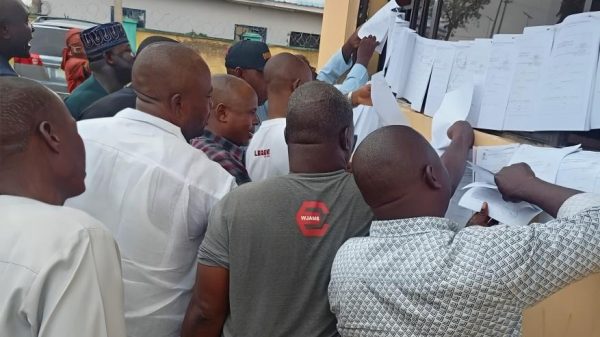
Universities across the country recorded total compliance with the directive. From the University of Benin to the University of Nigeria, Nsukka, and the University of Jos, academic activities were completely halted. At Nasarawa State University, ASUU officials reportedly went around examination halls instructing students to leave, while several ongoing exams were abruptly suspended.
At Moses Adasu University in Makurdi, classes were deserted as students roamed the campus in frustration. One student, Joseph Adoyi, expressed his disappointment, saying, “I was hoping to move to 300 level in a few months, but here we are again. In Nigeria, students plan, ASUU decides. We just hope this two-week strike won’t stretch into months.”
Another affected student, Mary Ajegba from the Federal University Dutse, lamented that frequent strikes have derailed her academic progress. “I should be serving as a corps member by now if not for these strikes. They say it’s two weeks, but experience tells me it could drag on. Every time there’s a new government, ASUU goes on strike. It’s exhausting,” she said.
Meanwhile, Prof. Piwuna confirmed that the union remains open to dialogue. He revealed that the Chairman of the Federal Government negotiation team, Alhaji Yayale Ahmed, and the Minister of State for Labour have reached out to resume discussions. “We are ready to talk and settle this once and for all,” he said in an interview with Zoyols Blog.
However, the Federal Government has already moved to enforce its ‘No Work, No Pay’ policy. In a circular dated October 13, 2025, Dr. Alausa directed all Vice-Chancellors of federal universities to suspend the payment of salaries to striking lecturers, reaffirming the government’s stance that wages would not be paid for the period of the industrial action.
As the standoff continues, uncertainty looms large over the fate of thousands of students caught in the crossfire between ASUU and the Federal Government. For many, the hope is simple — that both sides will finally find common ground before another academic year slips away.