






































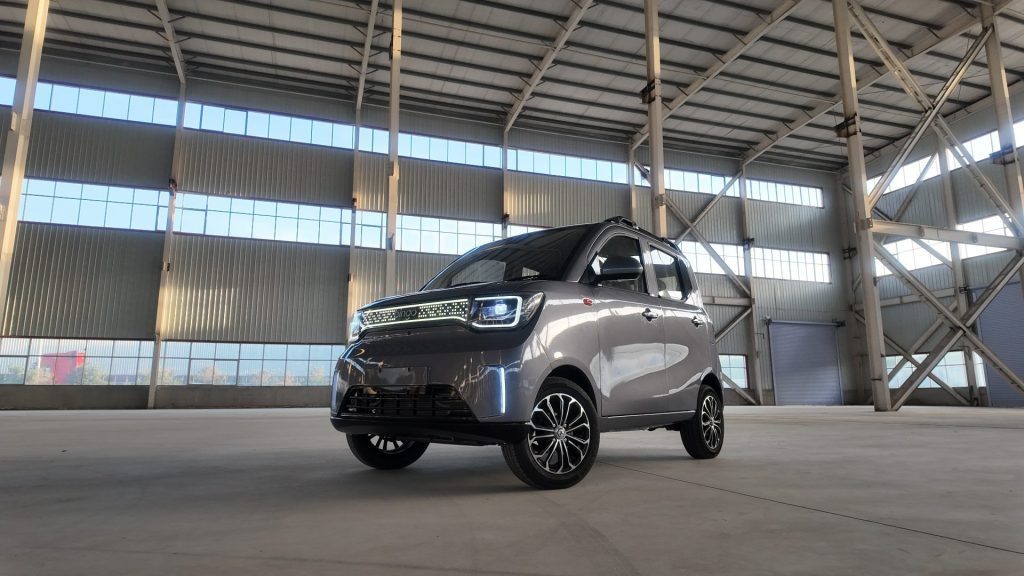
California-based electric vehicle startup Bingo Technologies is making a bold play for Kenya’s commercial transport sector with the launch of its E2 model. Priced at $12,000, this compact four-seater is being marketed specifically to ride-hailing drivers, taxi operators, and last-mile delivery firms. As urban centres across Africa race to electrify their transport networks, this move is designed to tackle the region’s most pressing barrier for commercial drivers: the soaring daily cost of petrol.
The E2 stands out from typical electric vehicles by bypassing the need for long stays at charging stations. It features a dual-battery system, pairing a fixed 31 kWh lithium iron phosphate battery with four removable 13 kWh semi-solid modules. This configuration offers a total range of up to 500 kilometres. According to the company, drivers can pull into a swap station and replace the modules in just two minutes, effectively eliminating the downtime that often makes electric vehicles impractical for high-usage commercial work.
Kenya has emerged as a premier hub for electric mobility, bolstered by a strong commitment to renewable energy and government-backed incentives. The local market is already heating up with competition, as various firms scramble to establish electric buses, motorcycles, and charging infrastructure. Bingo is distinguishing itself by focusing strictly on commercial fleets, where the promise of slashing operating expenses by up to 90 percent is a powerful incentive for drivers juggling tight margins.
To lower the barrier to entry, Bingo is introducing flexible financial tools, including lease-to-own agreements and a battery-as-a-service plan. The latter allows drivers to purchase the vehicle while treating the battery as a subscription, which significantly reduces the initial investment. The company intends to start with a trial of 10 to 20 imported units to gather performance data before shifting to local assembly. With plans to begin manufacturing in 2026, Bingo aims to produce roughly 100 vehicles initially, serving as a springboard to penetrate the wider East and Southern African markets.
While the potential is significant, the company faces the standard hurdles of infrastructure development. Much of its long-term success will hinge on its ability to build an extensive, reliable battery-swapping network and secure strong local financing partners. If Bingo can successfully demonstrate that its swapping model provides superior economics over traditional fuel-powered cars, Nairobi could solidify its position as the primary testing ground for the future of urban mobility across the continent.