





















Anambra’s local AI raises Nigeria’s digital sovereignty hopes
Nigeria’s bid for a firmer grip on its own artificial intelligence may have found an unexpected lift in Anambra State. The state’s ICT Agency has begun rolling out a locally trained system to run government work, lift output, tighten administration and chase more of the money that slips through the cracks.
Nobody is claiming this is a world beating model that can stand next to ChatGPT or Google Gemini. What matters is simpler. It shows Nigeria need not sit still until the big global firms arrive before it starts shaping tools around its own data, offices and problems. That idea is growing louder as the country talks more seriously about digital independence.
The same stretch of news has brought a pact between Open Access Data Centres, a WIOCC Group firm, and Analytics Intelligence. The two say they will build sovereign AI and cloud setups so African businesses can run secure, scalable systems that stay on the continent. Analytics Intelligence brings enterprise AI and data work. OADC brings its data centre footprint so sensitive information does not have to leave local jurisdiction. Set beside Anambra’s experiment, the talk of sovereignty starts to look less like speeches and more like servers and software.
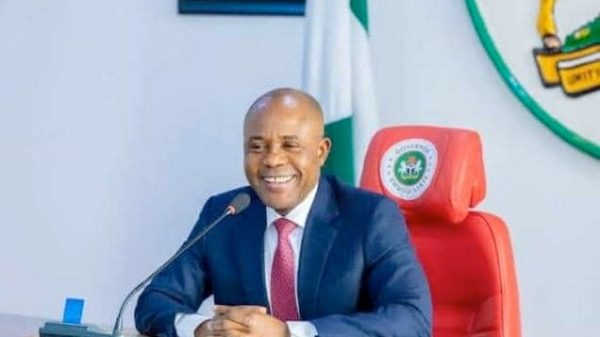
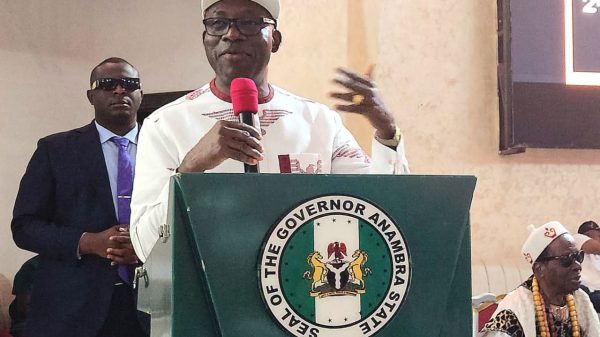
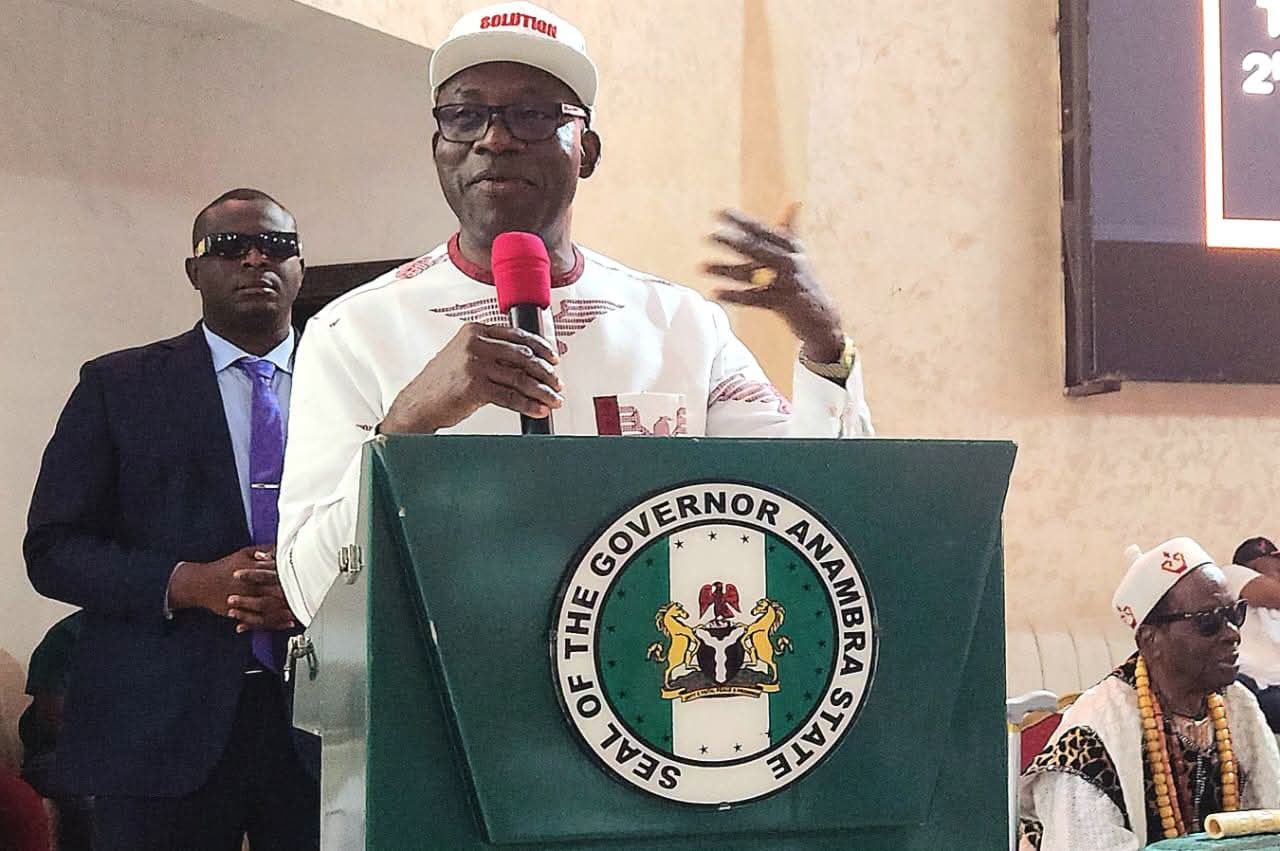
In Anambra the test bed is government itself. Chukwuemeka Fred Agbata, managing director and chief executive of the Anambra State ICT Agency, told journalists on a recent call that the Agency had entered a new stretch of digital work after Governor Chukwuma Soludo brought him back. Building a frontier language model from nothing would have cost a fortune. The Agency took an open source model instead, changed it, and began training it for the jobs at hand.
We have started doing our own local AI system. It is an open source system, so we didn’t build our own frontier model. We basically looked at open source and modified it, and we are training it, he said.
That path may be the honest one for governments and firms in poorer economies. Sovereignty does not have to mean inventing a model from dust. It can mean owning the pipes, the data, the people and the right to bend AI to local life while keeping a hand on sensitive files and the systems that matter.
Agbata said Anambra has already left the trial stage. The Agency has automated its own work from end to end. Everything we do now is currently automated, he said. The next hope is to carry the same lesson across ministries, especially where machines can speed work, stiffen governance and plug revenue leaks. For a state whose services, taxes, licences and records throw off mountains of data, a home grown system could sort information faster, spot holes and stretch scarce resources. That is a long way from treating AI as a chat toy. Here it is meant to sit inside the engine of the state.
Agbata called the project a main plank of the Agency’s 2.0 phase after his reappointment. The governor had asked what would change in a second term. The answer, he said, was to lock in gains on infrastructure, skills, e governance and smart government, then add a stronger AI thread. He tied the Agency’s nod at the National Council on Innovation and Digital Economy to that smart government work and said the prize had hardened their wish to use tech on real problems. The aim now, in his words, is how we drive development, leveraging AI and other infrastructure.
For Nigeria’s newsrooms the Anambra story lands with extra weight. Publishers are locked in a fight with global platforms over the worth, ownership and sale of local reporting. In July President Bola Tinubu told the Federal Competition and Consumer Protection Commission to look into Meta, Alphabet Google, X and some generative AI firms after a joint petition from the Nigerian Press Organisation, the Newspaper Proprietors Association of Nigeria, the Nigeria Union of Journalists, the Nigerian Guild of Editors, the Broadcasting Organisations of Nigeria and the Guild of Corporate Online Publishers. The complaints include alleged unfair practices, commercial use of Nigerian news without fair pay, the taking of copyrighted journalism, and the feeding of publishers’ work into AI trainers. The Commission has said the probe does not assume anyone is guilty.
The quarrel is not Nigeria’s alone. Publishers, writers and artists in many countries are challenging how their work is used to train machines. In the United States, cases against AI firms have already brought large settlements, including a 1.5 billion dollar deal involving Anthropic and authors who said their books were used without leave. In France, a press body has asked the competition watchdog to step in over Google’s AI summaries, arguing those briefings steal the traffic that pays for ads and subscriptions.
If machines sit between reporters and readers, whoever owns the models, the data halls, the ranking code and the apps will decide what people see and who gets paid. One recent experiment found that AI laced search can cut referrals to publishers, a warning for newsrooms whose reporting feeds the very systems that then keep audiences away.
That is why Anambra’s trial can be more than a state IT project. Home trained models, locally hosted machines and Nigerian platforms could give institutions more room when they sit across the table from global firms. The press would not have to take whatever terms the dominant apps dictate. The harder question would be whether Nigeria can build enough of its own digital backbone to decide how its words are processed, shared and sold.
LekeeLekee, the African owned social platform unveiled by media entrepreneur Prince Nduka Obaigbena, sits in the same argument. He has said American and Chinese firms dominate social media and that Africa must raise its own apps, its own tech and its own algorithms if it wants a say in how stories travel in an AI heavy future. LekeeLekee is not an AI sovereignty scheme, but the idea behind it is clear. Local ownership matters when technology is the road on which society talks, trades and reads.
That stance, OADC’s push for AI that stays on African soil, and Anambra’s attempt to train and run government systems point to a possible Nigerian path. The pieces are still loose. The country still needs more computing power, steadier electricity, local datasets, trained engineers, research houses, home grown apps and tougher data rules before anyone can speak of full sovereignty. Sovereignty rarely arrives in one jump. It is stacked. A state that automates its offices with a model it has adapted is one brick. A data centre firm that hosts AI at home is another. Platforms such as LekeeLekee are a third.
For news organisations now arguing with the giants over who owns Nigerian content and who banks the money, those bricks may be worth more than the software itself. They may be bargaining power.
Agbata’s near term job is still to show that AI can make government work better. He said the Agency will keep using technology to drive development, not chase fashion. Nigeria may not need the next ChatGPT tomorrow to start walking toward AI sovereignty. It may only need to build and hold the systems that know this country first, and serve it first.