























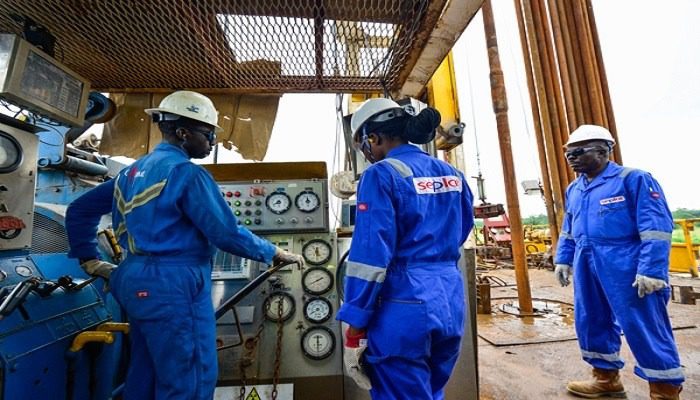
Seplat Energy Plc has successfully brought forty-nine previously dormant offshore oil wells back online, boosting its average daily production to 131,506 barrels of oil. This major operational revival has expanded the company’s total resource base to approximately 2.49 billion barrels of oil, marking a significant step forward in the country’s broader energy goals.
Speaking at the recent Nigeria Annual International Conference and Exhibition in Lagos, the Chief Executive Officer of Seplat Energy, Effiong Okon, shared these developments while emphasizing Nigeria’s critical path toward industrial growth. He pointed out that the global energy landscape is currently facing intense pressure from geopolitical conflicts, an surge in electricity demand driven by artificial intelligence, and highly selective global investments.
Addressing the conversation around global energy transition, the Seplat chief argued that the focus for an energy-deficient nation like Nigeria should be on expansion rather than reduction. He noted that the country needs a substantial increase in reliable electricity, deeper industrial gas usage, cleaner domestic cooking options like LPG, and more responsible oil production alongside renewable energy solutions wherever they make economic sense.
Recent global disruptions, including tensions in vital maritime shipping routes like the Strait of Hormuz, have highlighted the urgent need for secure and steady energy suppliers. According to reports by Zoyols News, this global instability presents a unique opportunity for Nigeria to step up as a highly reliable exporter by improving operational uptime, securing supply routes, and rapidly expanding its natural gas infrastructure.
Natural gas is viewed as the cornerstone of Nigeria’s industrial future. It holds the potential to power factories, run petrochemical and fertilizer plants, sustain digital data centers, and provide cleaner transport fuel through compressed natural gas. Realizing this potential across Africa will depend heavily on continuous investments in physical infrastructure, local manufacturing, and job creation.
Seplat remains fully aligned with the federal government’s ambitious targets to hit three million barrels of crude oil per day and twelve billion standard cubic feet of gas daily by the year 2030. With Nigeria’s current daily output hovering around 1.7 million barrels, the reactivation of these idle wells represents a vital contribution toward closing the gap and achieving national energy self-sufficiency.