























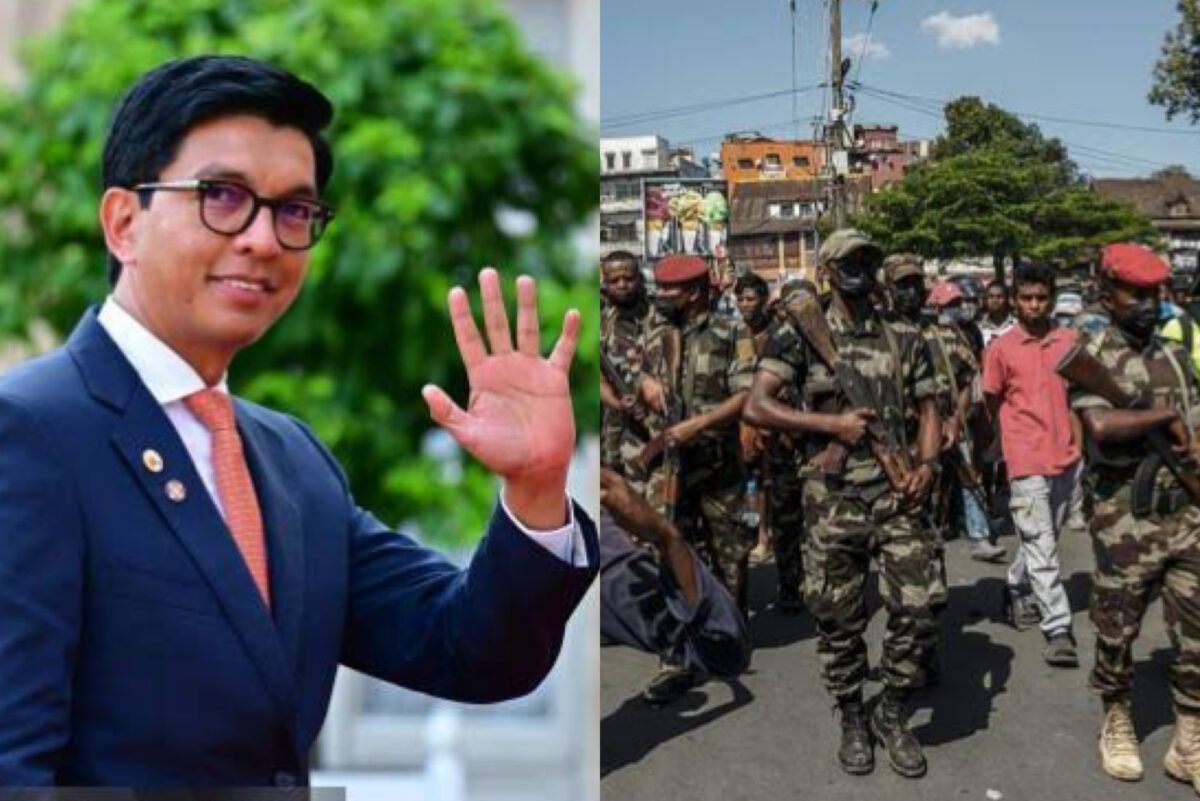
Madagascar has plunged deeper into turmoil as President Andry Rajoelina reportedly fled the country amid mounting protests and a growing wave of military defections. What began as youth-led demonstrations against crippling power cuts, water shortages, and economic hardship has now erupted into a full-blown political crisis shaking the nation’s foundations.
Rajoelina, who has not been seen in public since last Wednesday, was scheduled to address the nation on Monday evening but abruptly postponed the broadcast. The presidency cited threats from mutinous soldiers planning to seize control of the state television station. It was the second time in a week that the president canceled a national address, fueling widespread speculation about his whereabouts.
Opposition leader Siteny Randrianasoloniaiko told Zoyols Blog that Rajoelina fled Madagascar on Sunday after sections of the military defected to join the protesters. According to him, staff within the presidency confirmed the president’s departure. Reports also suggest that he left aboard a French military aircraft, allegedly after reaching an agreement with French President Emmanuel Macron. French radio sources hinted at behind-the-scenes negotiations facilitating his exit.
Meanwhile, Rajoelina’s former prime minister, Christian Ntsay, and influential businessman Maminiaina Ravatomanga were also reported to have left Madagascar for Mauritius “urgently,” a move confirmed by Mauritian authorities.
Before his reported departure, Rajoelina accused his opponents of plotting to “illegally seize power,” a statement that only intensified public anger. Within hours, an elite military unit known as CAPSAT announced it had assumed full control of the nation’s armed forces—land, air, and sea—declaring its leadership over all military operations.
Sunday’s events in the capital, Antananarivo, painted a surreal picture. Soldiers were seen mingling and chanting alongside jubilant protesters in the streets, a rare and defiant gesture that signaled deep fractures within Madagascar’s security apparatus. Despite the heightened tension, the day passed without major clashes, though the atmosphere remained combustible.
The unfolding crisis has become the gravest challenge to Rajoelina’s rule since his return to power in 2019. What began weeks ago as a movement against economic hardship and poor governance has now evolved into a broader revolt against corruption, nepotism, and political stagnation.
International observers are increasingly alarmed by the escalating situation. The United Nations estimates that at least 22 people have been killed since the protests began—though the government disputes the figure—as civic groups, labor unions, and religious bodies rally behind the demonstrators.
As the military’s loyalty remains uncertain and Rajoelina’s whereabouts unclear, Madagascar stands on the brink of yet another political reckoning—one that could reshape its leadership and test the resilience of its democracy.