


































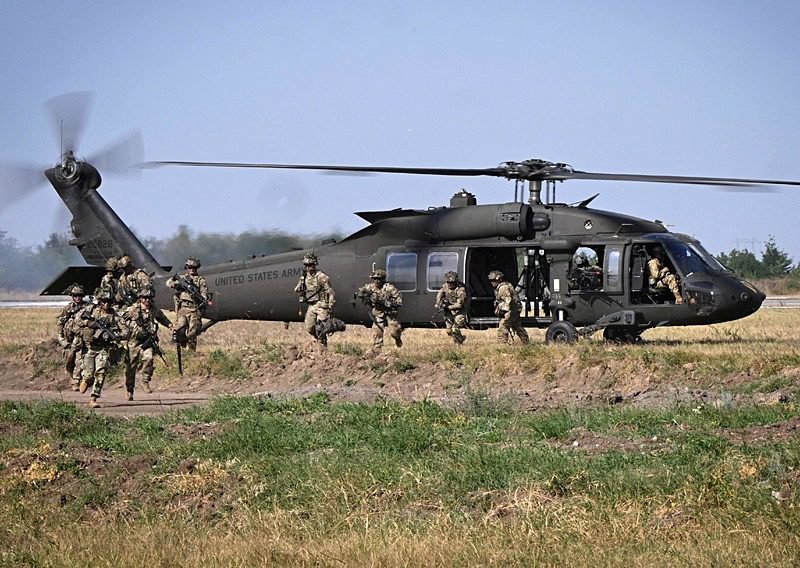
Thousands of elite paratroopers from the U.S. Army’s 82nd Airborne Division have begun arriving in the Middle East, according to officials who spoke on the matter this Monday. The arrival of these North Carolina-based soldiers from Fort Bragg marks a significant intensification of the military buildup as President Donald Trump considers his next moves in the ongoing conflict with Iran.
This latest deployment follows earlier reports that the administration was weighing the addition of thousands of troops to expand its strategic options, which now potentially include operations within Iranian territory. These paratroopers are joining a growing force in the region that already includes thousands of sailors, Marines, and Special Operations units. Just over the weekend, approximately 2,500 Marines also touched down in the theater of operations.
While the exact locations of these new deployments remain confidential for security reasons, the force includes elements of the 82nd Airborne’s headquarters, a brigade combat team, and essential logistics and support units. Sources informed Reports that while no final decision has been made to move ground troops into Iran, these arrivals are designed to build the necessary capacity for any future regional operations.
Strategic analysts suggest these forces could be utilized for several high-stakes missions, such as an attempt to seize Kharg Island, a critical hub that handles about 90 percent of Iran’s oil exports. However, such a move is considered extremely risky given Iran’s ability to defend the island with an array of missiles and drones. Other internal discussions have reportedly touched on the possibility of using ground forces to secure highly enriched uranium or to ensure safe passage for oil tankers through the Strait of Hormuz by occupying key points along the shoreline.
President Trump stated on Monday that the United States is currently in talks with what he described as a “more reasonable regime” to find an end to the war. However, he maintained a stern warning to Tehran, insisting they must keep the Strait of Hormuz open or face U.S. strikes on their power plants and oil wells.
The prospect of using ground troops—even for limited or specific missions—presents a major political challenge for the administration. Public support for the campaign remains low, and the move appears to conflict with previous campaign promises to avoid deep entanglement in Middle East conflicts. Since Operation Epic Fury began on February 28, the U.S. has struck over 11,000 targets, but the cost has been high, with 13 service members killed and more than 300 injured in the fighting.