







































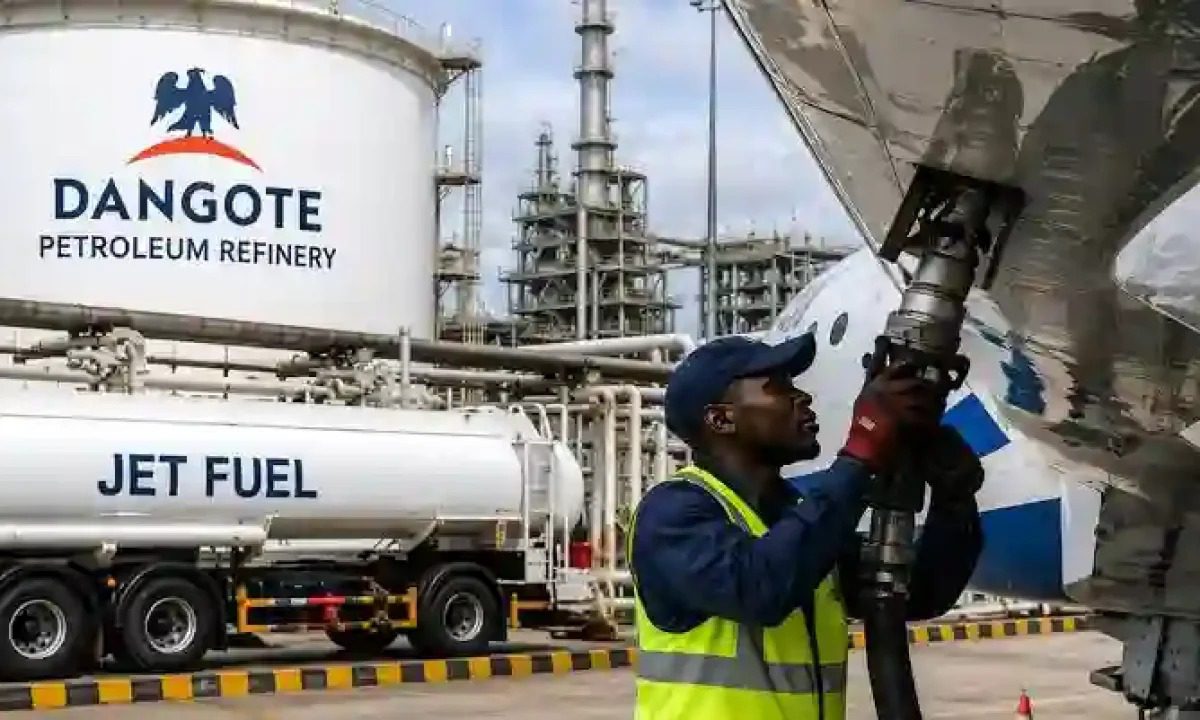
The Dangote Petroleum Refinery has firmly cemented its status as a powerhouse in the global energy sector, securing the title of Europe’s top jet fuel supplier for the second month in a row. By consistently outperforming traditional heavyweights like the United States, the massive 700,000-barrel-per-day facility is effectively redrawing the map for international fuel trade and proving that Nigerian-refined products are now a cornerstone of the European market.
New figures captured by Zoyols News indicate that over 400,000 tonnes of jet fuel were shipped from the refinery to European ports throughout July. This volume represents roughly 20 per cent of all jet fuel imports into the continent for the month. This follows a record-breaking June, during which 466,000 tonnes were delivered, marking the first time Nigeria ascended to the top spot as the primary source for Europe’s aviation fuel needs.
The ability to maintain such high-volume exports is a testament to the refinery’s operational scale and its commitment to meeting rigorous international quality standards. While Europe has historically looked to suppliers in the Middle East and the United States, industry experts point out that the facility’s strategic location on Nigeria’s Atlantic coast, coupled with cutting-edge technology, has made it a highly competitive and reliable alternative. Buyers are increasingly turning to this new source to bypass the volatility and supply chain uncertainties often associated with traditional trade routes, particularly those impacted by geopolitical tensions near the Strait of Hormuz.
This upward momentum is directly linked to the refinery’s ramped-up production capabilities. Crude oil intake reached an all-time high of 660,000 barrels per day, providing the necessary throughput to sustain such aggressive export targets. These logistics are managed seamlessly through the dedicated terminal in Lekki, which saw record loadings as the facility hit its stride.
Beyond aviation fuel, the impact of these operations is being felt across the broader energy landscape. The refinery is actively diversifying its reach, with increasing volumes of diesel, gasoline, and other high-value petroleum products flowing into markets across Africa and beyond. As noted by the leadership at the refinery, these successes are transforming Nigeria from a traditional consumer of refined products into a major net exporter, effectively shifting the balance of power in the global refined petroleum trade.