





































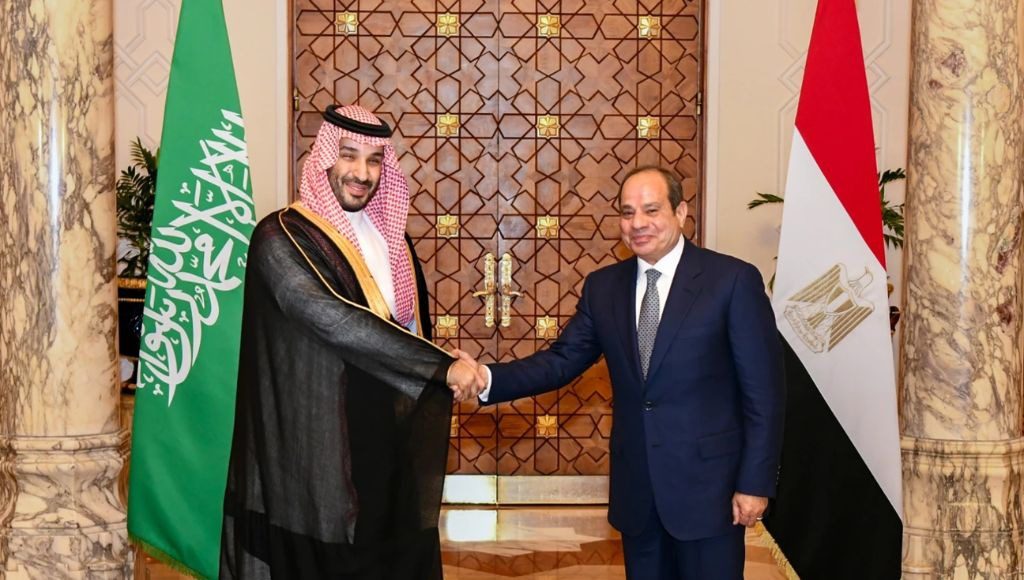
Saudi Arabia and Egypt have called for freedom and security of navigation in the Red Sea as renewed fighting in Yemen raises concerns over one of the region’s most important shipping routes.
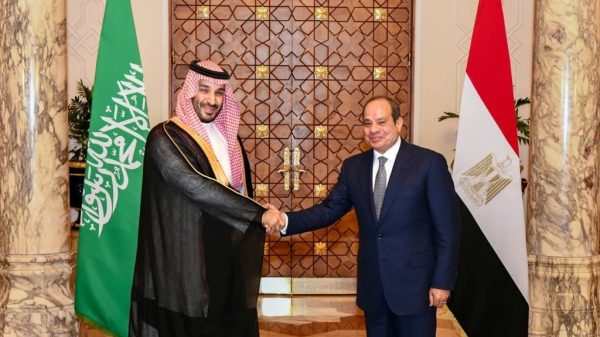
Saudi Crown Prince Mohammed bin Salman met Egyptian President Abdel Fattah al Sisi in Cairo on Tuesday, where both leaders discussed the worsening situation and stressed the importance of keeping the Red Sea, Bab al Mandab Strait and Strait of Hormuz open to maritime traffic. Egypt also expressed support for measures taken by Saudi Arabia to protect its security and stability.
The renewed crisis follows a major Houthi offensive in Yemen. The group has expanded its control along the country’s Red Sea coast and around the Bab al Mandab Strait, a strategic waterway linking the Red Sea with the Gulf of Aden.
The developments have increased pressure on Saudi Arabia, particularly as the kingdom faces missile and drone attacks linked to the renewed fighting. A Saudi led coalition said attacks on three areas on Monday injured 13 civilians, while Riyadh later warned that it would take measures to protect the country and respond to what it described as hostile attacks.
The situation has also raised concerns in Egypt because the Red Sea provides access to the Suez Canal, a major source of revenue for the Egyptian economy. Any prolonged disruption around Bab al Mandab could make the route less attractive to shipping companies and further affect maritime trade.
The importance of the waterway extends beyond the region. The route has become increasingly significant for Saudi oil exports as instability around the Strait of Hormuz affects other energy shipping routes. Qatar has also warned that a closure of Bab al Mandab would have serious consequences for global trade and the wider economy.
Saudi Arabia has faced renewed attacks as the conflict in Yemen, which had largely remained subdued since a 2022 truce, has intensified. The kingdom has responded with airstrikes against Houthi positions, although the military campaign has so far not reversed the group’s territorial gains.
The renewed fighting is also worsening an already severe humanitarian situation in Yemen. The United Nations says about 100,000 people have been internally displaced since the latest escalation, while thousands more have crossed the sea toward Djibouti.
The current conflict is rooted in Yemen’s civil war, which began after the Houthis seized the capital, Sanaa, in 2014. Saudi Arabia subsequently led a military coalition that intervened on the side of the internationally recognised government.
The Houthis have vowed to continue their attacks as long as Saudi Arabia maintains its military campaign. Hazem al Assad, a member of the group’s political bureau, said the Yemeni response would continue and intensify in response to what the Houthis describe as Saudi aggression.
The fighting is unfolding against the backdrop of wider tensions across the Middle East, with Iran’s longstanding support for the Houthis adding another layer to the conflict. Tehran has acknowledged its support for the group but has denied involvement in the latest fighting, while analysts continue to differ over the extent of Iran’s role in the renewed escalation.
For Saudi Arabia and Egypt, the immediate concern remains the security of vital maritime routes. Their latest discussions reflect growing regional concern over the potential impact of the Yemen conflict on shipping, energy supplies and economies that depend heavily on uninterrupted movement through the Red Sea.