






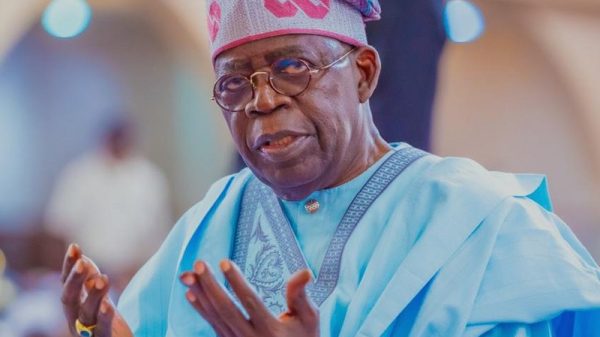















President Bola Ahmed Tinubu has publicly commended Vice President Kashim Shettima, describing him as a vital partner in the ongoing mission to transform Nigeria’s economy. While opening the National Economic Council (NEC) Conference in Abuja on Monday, the President took a moment to personally acknowledge Shettima’s leadership, noting that their partnership is built on a shared commitment to national progress.
The conference, held at the State House, brought together governors and top private sector leaders to discuss the “Renewed Hope National Development Plan 2026–2030.” The President emphasized that for any economic plan to succeed, the country must first address the persistent threats of terrorism and banditry. He described these security challenges as “alien” to Nigerian culture and vowed that his administration would not rest until peace is fully restored to every community.
One of the major highlights of the President’s address was the announcement of seven new “mechanization zones” designed to modernize Nigerian agriculture. Tinubu linked these zones directly to national security, arguing that a more productive and secure farming sector is essential for a stable economy. He noted that while recent reforms have been difficult, they have successfully stabilized the Naira and improved how the world views Nigeria’s financial potential.
Vice President Shettima, who chairs the NEC, also addressed the gathering, calling for a “bottom-up” approach to development. He stressed that the government’s mission remains incomplete as long as a child born in a remote village does not have the same opportunities as one born in a major city. He urged the council members to focus on practical, data-driven solutions that prioritize job creation and poverty reduction across all 36 states.
The two-day summit marks a critical point in the administration’s second term, moving from emergency economic recovery toward long-term structural transformation. By the end of the conference, the council is expected to produce a roadmap that better aligns state-level spending with national development goals, particularly in areas like infrastructure, power, and digital connectivity.