































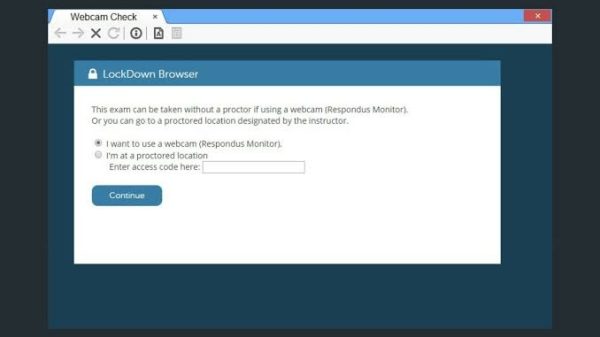










A locked browser can prevent candidates from opening unauthorised websites, switching applications or accessing certain files, depending on its configuration. However, it cannot independently confirm who is taking the examination or monitor every activity outside the restricted device.
The real goal is to establish reliable evidence that an examination was completed under the required conditions. Achieving this means understanding what each security measure can do and how it works alongside other safeguards.
Browser Restrictions Need Proper Planning
Browser lockdown serves an important purpose by limiting access to unauthorised digital resources during an examination. Its effectiveness, however, depends on how the restrictions are configured and whether they match the institution’s examination rules.
Guidance from University College London on lockdown browser examinations highlights the importance of in person invigilation, equipment testing, candidate preparation and technical support. This demonstrates that browser restrictions are most effective when they form part of a properly organised examination process.
Institutions can strengthen their arrangements by specifying permitted materials, testing the examination setup in advance and ensuring candidates understand the rules. A practice session can also help identify configuration problems before the actual examination begins.
Identity Verification Must Go Beyond Device Control
Restricting a computer and confirming a candidate’s identity are two separate responsibilities. While browser lockdown controls access to digital resources, identity verification helps establish who is completing the assessment.
For examinations held on campus, checking institutional identification against attendance records may be sufficient in many cases. Remote examinations may require additional authentication, depending on the importance of the assessment and the institution’s policies.
Institutions should also establish procedures for confirming identity after a candidate changes devices or reconnects following an interruption. Clear verification records and defined responsibilities can help prevent confusion and strengthen confidence in examination results.
Effective Supervision Requires Consistent Procedures
Invigilators play an important role in identifying unusual events and documenting what happens during an examination. However, an unexpected incident should not automatically be treated as evidence of misconduct.
For example, a candidate losing internet connectivity may be experiencing a genuine technical problem. Recording the time, circumstances and support provided allows the relevant team to assess the incident fairly.
Where suspected examination misconduct arises, invigilators should follow established reporting procedures and preserve factual records. Academic decision makers can then review the available evidence and determine an appropriate response.
This approach promotes consistency and helps institutions make fairer, more defensible decisions.
Assessment Design Can Reduce Security Risks
Examination security also depends on how assessments are designed. Australia’s Tertiary Education Quality and Standards Agency has addressed assessment vulnerabilities in its guidance on understanding risks, encouraging institutions to consider the format and consequences of different assessments.
Educators can reduce certain risks by using practical scenarios, application based questions and carefully prepared question banks. These methods can make it more difficult for candidates to rely solely on memorised answers or reproduce responses from previous examination sessions.
Time limits should also reflect the skills being assessed. Excessively restrictive timing does not automatically make an examination more secure. Instead, institutions should allow reasonable time for the required calculations, reasoning and written responses while establishing clear rules about permitted resources.
A 2025 report by Jisc, titled Trends in Assessment in Higher Education: Considerations for Policy and Practice, also highlights developments in assessment design, blended learning and the reconsideration of traditional invigilated examinations.
These developments underline the need to align security measures with the purpose of each assessment rather than relying entirely on technical restrictions.
Technical Recovery Plans Help Protect Fairness
Even a well prepared examination can experience technical disruptions. Institutions therefore need clear procedures for restoring access, protecting saved responses and determining whether additional time is appropriate.
Before examination day, administrators can test how the system handles interrupted connections, whether submitted answers remain available and how candidates can safely resume their work.
Responsibilities should also be clearly assigned. Technical support teams can resolve device and connectivity problems, examination administrators can document incidents, and academic staff can determine whether disruptions affect the validity or fairness of the assessment.
Monitoring indicators such as recovery times, completed examination sessions and the consistency of incident records can help institutions identify weaknesses and improve future delivery.
Within this framework, high stake exam software can support secure examination delivery, controlled access and incident management. However, institutions must still establish appropriate procedures and retain responsibility for academic decisions.
A Balanced Approach Builds Confidence in Examination Results
Not every assessment requires the same level of security. A short classroom quiz may need fewer restrictions than an examination used to determine professional competence or award an important qualification.
Institutions should identify the risks associated with each assessment and choose controls that address them. Browser restrictions may be appropriate where unauthorised digital access is the main concern, while identity checks and supervision become particularly important when verifying the candidate and the conditions under which the work was completed.
The effectiveness of these measures also depends on how well they work together, from candidate registration and examination preparation to live supervision and the review of reported incidents.
Ultimately, browser lockdown remains a useful part of online examination security, but it cannot provide complete protection on its own. Confidence in examination results comes from combining appropriate technology with sound assessment design, consistent supervision and reliable procedures that support fairness and academic integrity.







