

























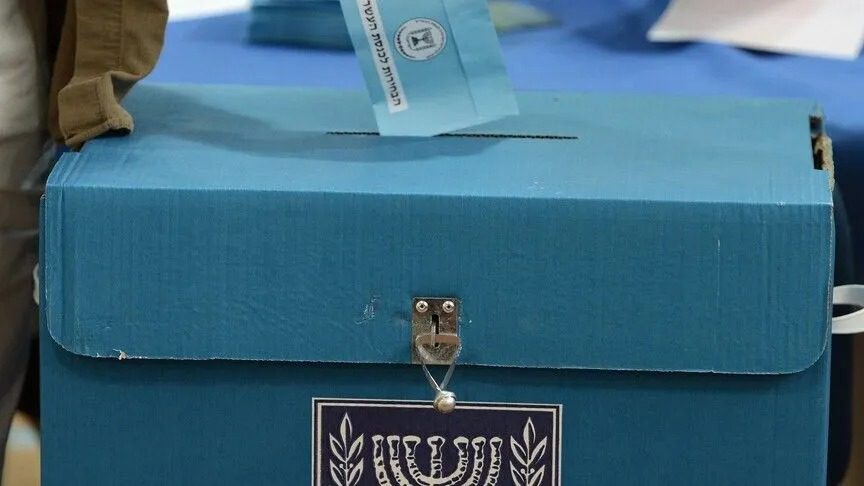
Addressing supporters in a stronghold of his Likud party, Netanyahu urged them to abandon their usual activities and head to polling stations. He warned against allowing left wing parties and Arab political groups to determine the country’s future, arguing that the election was a battle over the character of the Jewish state.
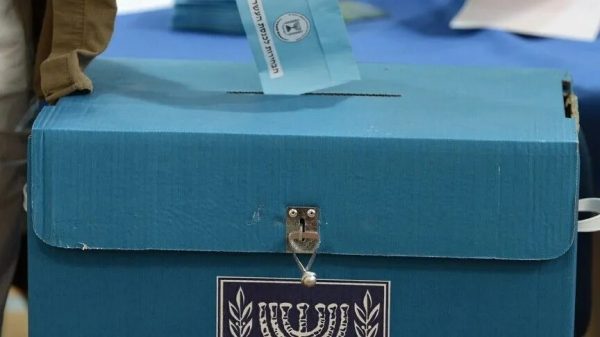
The prime minister’s appeal came as turnout reached 66.7 per cent nationwide by 6pm, according to the Central Elections Committee. The figure was the highest recorded at that point in an election day since the committee began publishing such statistics in 1973.
The closely contested election is taking place against the backdrop of the October 7 attack and the regional conflicts that followed. Security concerns, the trauma of the assault and questions over political accountability have remained central issues for voters.
Israel is also facing growing international criticism over its military campaign in Gaza, the war involving Iran, expanding settlements and violence in the occupied West Bank. These developments have added pressure on Netanyahu as he seeks another term in office.
The final opinion polls published before voting suggested a tight race between Netanyahu and his main challenger, Gadi Eisenkot, a former military chief who leads the Yashar party. Eisenkot, regarded as a political newcomer compared with the veteran prime minister, has presented a contrasting leadership style that appeals to voters seeking a change in government.
Eisenkot’s party accused Netanyahu of preparing to dispute the election results after the prime minister called for voting to continue beyond the scheduled 10pm closing time. Yashar argued that there was no exceptional incident to justify extending the hours.
Before casting his ballot, Eisenkot privately visited the grave of his son, Gal, who was killed while fighting in Gaza. The loss has drawn sympathy from many Israelis. Speaking to reporters afterwards, Eisenkot urged voters to remove what he described as the worst government in Israel’s history.
Arab Voters Become a Major Election Issue
About 7.3 million Israelis were eligible to vote, with tens of thousands reportedly travelling home from abroad to participate in an election expected to shape the country’s political direction.
Among them was Eilana Zisblit, 55, who returned from Canada, where she has lived for nearly three decades, to support a centre right party aligned with Eisenkot’s bloc. She expressed concern that Israel was heading in a dangerous direction for both Jewish and Arab citizens, as well as Jews living overseas.
Zisblit said the country needed to act immediately to change course, warning that delaying action could threaten its future.
Turnout appeared particularly strong among Arab citizens of Israel and residents of East Jerusalem, placing the minority community at the centre of the election campaign.
Netanyahu, who has served as prime minister for more than 19 years across several periods in office, has frequently portrayed Arab political participation as a threat to his government. On Tuesday, he warned that organised groups of Arab voters were heading to polling stations and suggested that Israel could end up with a left wing government backed by the Muslim Brotherhood.
He also claimed that three senior officials of the United Arab List had been arrested in southern Israel with envelopes containing cash.
Dean Livne, acting director general of the Central Elections Committee, confirmed that police had detained individuals suspected of attempting to bribe voters. However, he said the suspects were apprehended near their homes rather than at polling stations and described the incident as a localised case under investigation.
Mansour Abbas, leader of the United Arab List, accused Netanyahu of making false claims and stirring hostility in an attempt to mobilise his supporters. The party could hold considerable influence if the election produces a closely divided parliament.
Meanwhile, concerns about political violence emerged in Tel Aviv, where The Democrats, a left leaning party in Eisenkot’s opposition bloc, said police had arrested a man carrying a knife after he allegedly approached its leader, Yair Golan, in a threatening manner.
Golan condemned the incident and said intimidation and violence would not deter his party. He blamed the atmosphere surrounding the campaign on what he described as Netanyahu’s political network of hostility.
Opposition Bloc Seeks to End Netanyahu’s Rule
Netanyahu returned to power in December 2022, forming a coalition that included far right and ultra nationalist parties. Those groups have since gained considerable influence over government policy, particularly on security and the occupied Palestinian territories.
The effort to remove him from office has brought together an informal alliance of parties led by Eisenkot’s Yashar and extending from the political right to the centre left. The bloc includes former prime ministers Naftali Bennett and Yair Lapid, veteran politician Avigdor Lieberman and Golan.
Despite their opposition to Netanyahu, neither he nor Eisenkot has publicly committed to forming a government with the predominantly Arab parties. Those parties represent a minority community that makes up about 21 per cent of Israel’s population.
Throughout the campaign, Netanyahu has presented himself as the leader best equipped to protect Israel from its security threats. In the final days before voting, he shared an image depicting a nuclear bomb destroying Tel Aviv and repeatedly highlighted his endorsement by US President Donald Trump.
The American president’s support has become part of Netanyahu’s campaign message as the Israeli leader seeks to reassure voters about his international standing and ability to manage the country’s security challenges.
With turnout reaching record levels and the race remaining close, the election has emerged as a major test of Netanyahu’s political strength. The result will determine not only who leads Israel but also the direction of its domestic politics, security policy and relations with the wider international community.







