
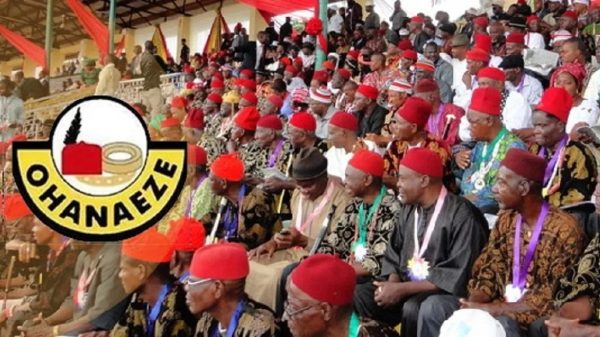




















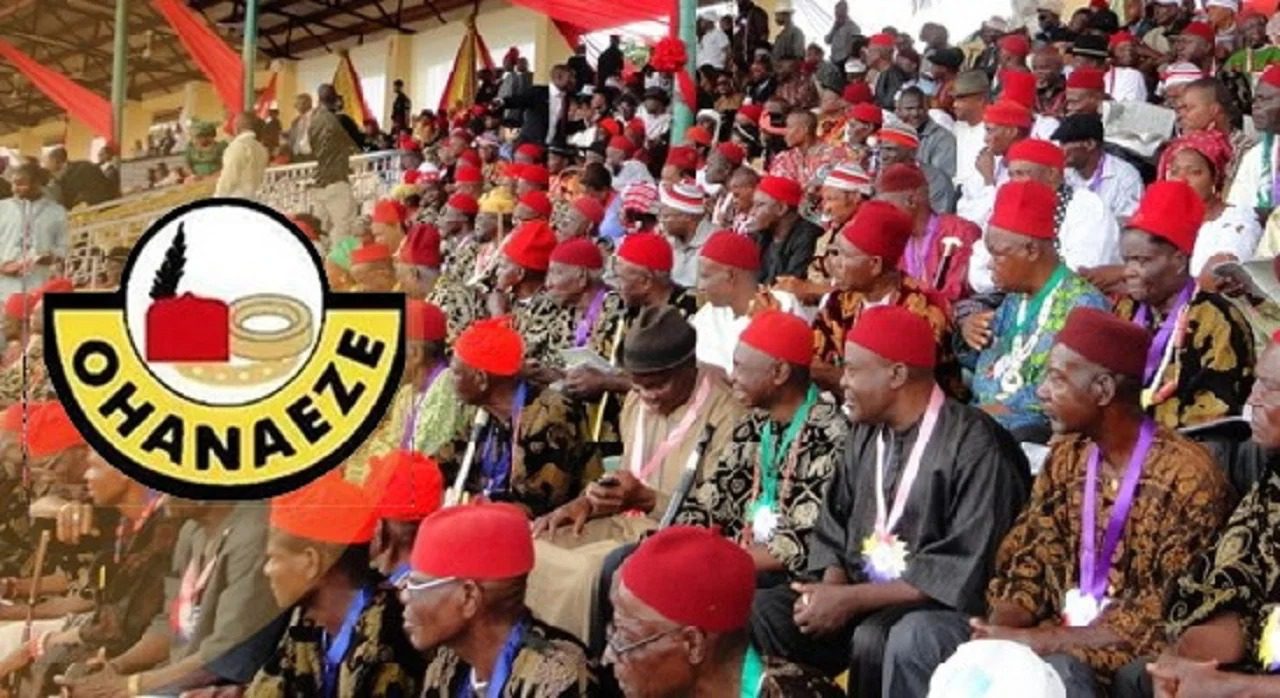
As the country looks ahead to the 2027 general elections, the apex Igbo socio-cultural organisation, Ohanaeze Ndigbo Worldwide, has put President Bola Ahmed Tinubu on the spot, demanding a clear account of what his administration has specifically packaged for the South-east region.
Speaking through a signed statement by its deputy president-general, Mazi Okechukwu Isiguzoro, and acting secretary-general, Prof. Chibuikeya Achoakawa, the leadership of the socio-cultural body cautioned that the political alignment of governors in the zone does not automatically translate to grassroots votes for the ruling party. Drawing parallels with the 2015 political landscape where incumbent backing failed to secure victory, the group emphasized that political endorsements alone cannot sway the electorate without tangible commitments.
The socio-cultural leadership pointed out that ongoing challenges, such as the persistent Monday disruptions despite regional efforts by state governors, underscore deeper security and political puzzles that require federal backing to resolve. While acknowledging the ongoing federal road projects spearheaded by the Minister of Works, Senator Dave Umahi, the group maintained that asphalt and concrete are simply not enough to address the comprehensive developmental needs of the populace.
Beyond infrastructure, the organisation pressed the federal administration for clarity regarding the status and execution timeline of the long-awaited Aba–Maiduguri standard-gauge rail project, which previously secured approval and funding alignment under the Federal Executive Council. Furthermore, the push for a deep seaport at the Azumiri Blue River in Abia State was strongly reiterated, with leaders stressing its capacity to catalyze trade, spur industrial growth, and create vital employment opportunities for the youth.
Conversations around security and equity also took center stage, as the group queried the federal approach to rehabilitating former insurgents alongside its handling of Mazi Nnamdi Kanu’s legal situation. Emphasizing the need for institutional fairness and due process, The leadership reiterated the persistent demand for an additional state to bring the South-east at par with other geopolitical zones, which currently boast six states each.
Closing out their demands, the organisation urged the federal government to ensure fair representation and consideration for qualified leaders from the region in legislative leadership discussions, even as they acknowledged the constitutional boundaries governing such choices.







