



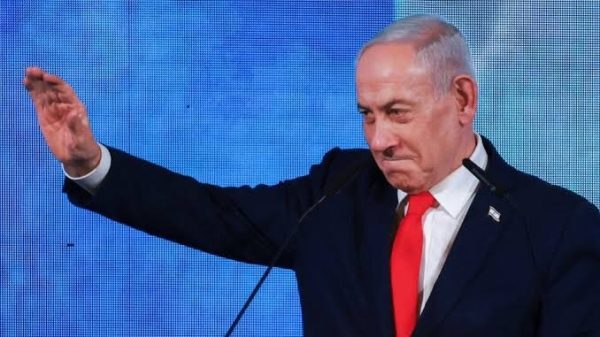
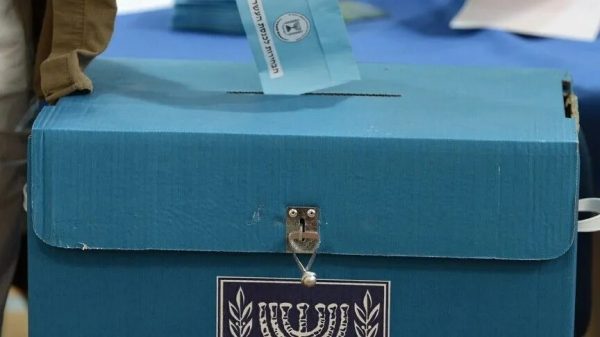



























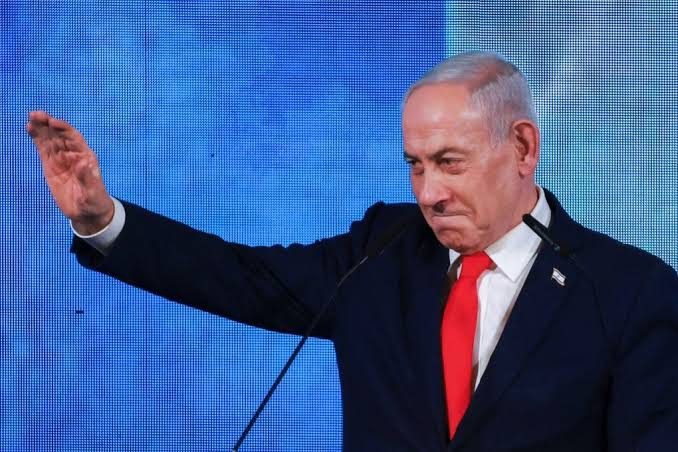
With nearly 86 per cent of votes counted on Wednesday, projections by Israel’s three major broadcasters indicated that Netanyahu’s bloc of right wing, far right and ultra Orthodox parties would secure 53 seats in the 120 member Knesset. The opposition bloc led by Gadi Eisenkot was projected to win 48 seats.
Arab Israeli parties were expected to win a record 19 seats, a result that could complicate Eisenkot’s efforts to form a government. Without substantial support from these parties, his path to power appears narrow, while many Jewish political leaders remain opposed to such an arrangement.
Although vote counting was still underway and the final results could change, the opposition had performed below expectations. Pre election surveys had suggested a closely contested race between Netanyahu’s allies and the coalition of parties seeking to remove him from power.
Netanyahu is expected to continue serving as caretaker prime minister while political leaders negotiate possible coalition arrangements. If no agreement is reached, his government could remain in place until another election, potentially next year.
A caretaker administration operates under certain restrictions, but it does not lose all its executive powers. According to Guy Lurie, a research fellow at the Israel Democracy Institute, such a government formally retains the same powers as a regular administration, although it is expected to exercise restraint and has less freedom to make certain decisions.
Netanyahu pushes for a strong right wing government
Speaking to supporters of his Likud party shortly after 3am, Netanyahu called for the formation of what he described as a strong, right wing national government.
He pointed to Israel’s military achievements and suggested that further joint action against Iran remained possible in partnership with US President Donald Trump. Netanyahu described the situation as a rare historical opportunity for the two allies to eliminate what he called the Iranian threat once and for all.
Trump had previously encouraged Israeli voters to keep Netanyahu in office, arguing that the two leaders needed to finish their campaign against Iran. Reacting to the election projections, the US president said Netanyahu had performed very well and claimed his endorsement had significantly helped him.
However, the election results have done little to ease concerns about a possible continuation of the conflict across the Middle East.
In Tehran, banners displaying images of slain Supreme Leader Ayatollah Ali Khamenei served as a reminder of the US and Israeli strikes launched in February, which triggered the war. Some Iranians remain worried that further military attacks could follow.
“I genuinely see the possibility of attack,” said Abdollah Karimi, a 50 year old Iranian citizen.
In Egypt, which became the first Arab country to establish diplomatic relations with Israel in 1979, the outcome also prompted disappointment among those who had hoped for a change in Israeli leadership.
Outhman Selim, a 62 year old lawyer, said he had expected Netanyahu’s defeat to create an opportunity for Israel to move away from far right politics. The election projections, however, had weakened those hopes.
Eisenkot raises concerns over security powers
Eisenkot acknowledged that Netanyahu would remain caretaker prime minister but warned against the possibility of security matters being used for political purposes.
He urged senior security officials and civil servants to remain firm, arguing that Netanyahu was continuing in office without a fresh mandate or the public’s trust.
His remarks reflected concerns among opposition figures about the authority a caretaker government could exercise while lacking a parliamentary majority.
Netanyahu’s office has previously rejected allegations that he is exploiting the conflict with Iran for political advantage. His office did not immediately respond to a request for comment on Wednesday.
The uncertain political outlook has also affected financial markets. Israel’s shekel weakened by about 1.6 per cent against the US dollar, trading at approximately 3.10 shekels to the dollar, as investors assessed the implications of a prolonged caretaker government and the possibility of further political uncertainty.







