




























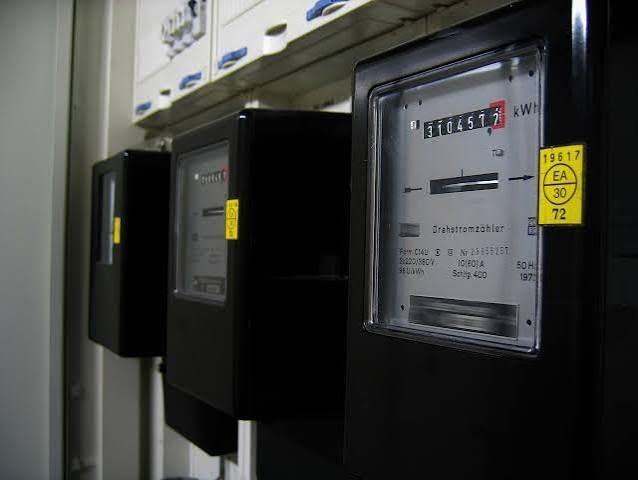
Nigeria’s electricity metering drive recorded a significant increase in June 2026, with 203,521 new meters installed across the country’s 11 electricity distribution companies.
Despite the progress, about 4.85 million active electricity customers remained without meters at the end of the month, leaving many households and businesses still dependent on estimated billing.
Data from the Nigerian Electricity Regulatory Commission showed that the national metering rate rose to 61.51 per cent in June, compared with 60.22 per cent in May. The 1.29 percentage point increase came as monthly meter installations nearly doubled from the 104,585 recorded in May.
The latest figures highlight the continued challenge of closing Nigeria’s metering gap, which has persisted for years despite several government initiatives aimed at achieving wider and more accurate electricity metering.
The absence of meters has made it difficult to accurately measure electricity consumption and has remained a major source of disagreements between distribution companies and their customers.
NERC data showed that the number of active electricity customers increased from 12,520,435 in May to 12,589,486 in June, representing an increase of 69,051 customers.
During the same period, the number of metered customers rose from 7,540,318 to 7,743,839. This left approximately 4.85 million active customers without meters.
Ibadan Electricity Distribution Company recorded the largest number of new meter installations during the month, adding 80,643 customers to its metered base. Kano followed with 44,753 new installations.
Abuja recorded 18,419 new meters, while Benin added 18,739. Enugu installed 10,805, Kaduna recorded 7,816, Jos added 6,077 and Yola installed 5,202.
Port Harcourt added 5,713 metered customers, while Eko installed 4,744. Ikeja recorded the lowest number of new installations at 610 meters, although it continued to maintain one of the country’s highest metering rates.
The performance across the distribution companies remained uneven. Eko had the highest metering penetration at 88.70 per cent, followed by Ikeja at 87.91 per cent and Abuja at 81.38 per cent.
At the other end of the table, Jos had a metering rate of 35.42 per cent, while Yola stood at 36.20 per cent and Kaduna at 39.83 per cent.
Kano recorded one of the strongest improvements during the month, with its metering rate rising from 35.41 per cent in May to 40.67 per cent in June.
Ibadan also made notable progress, moving from 54.76 per cent to 57.62 per cent after installing more than 80,000 meters. Benin increased from 60.12 per cent to 61.01 per cent, while Port Harcourt edged up from 68.46 per cent to 68.66 per cent.
Abuja improved from 80.70 per cent to 81.38 per cent, while Eko moved from 88.41 per cent to 88.70 per cent. Ikeja, however, recorded a slight decline, falling from 87.93 per cent in May to 87.91 per cent despite installing 610 new meters.
NERC classifies distribution companies with metering penetration below 50 per cent as red, those between 50 and 69 per cent as amber, while companies with penetration of 70 per cent and above fall into the green category.
Based on the June figures, Abuja, Eko and Ikeja were in the green category. Benin, Enugu, Ibadan and Port Harcourt were classified as amber, while Jos, Kaduna, Kano and Yola remained in the red category.
The regulator defines active customers as electricity users who have either purchased electricity or received a bill at least once within the previous 12 months.
NERC also clarified that some of the figures reported by Enugu, Ibadan and Kano in June included meter installations carried out between January and May 2026 but only reported by the respective distribution companies during the latest reporting period.
The figures show that while Nigeria’s metering coverage is improving, millions of electricity customers still remain outside the metered system, underscoring the scale of work required to achieve more transparent and accurate electricity billing nationwide.







