






























Data from the Debt Management Office (DMO) show that domestic debt servicing between January and June 2026 had already reached about 61.4 per cent of the amount spent throughout the previous year. If the pace of payments continues, the government could face an even heavier debt servicing burden by the end of the year.
However, the comparison covers six months in 2026 against the full year in 2025 and should not be interpreted as a direct year on year growth rate.
In 2025, the government spent N8.24 trillion on interest payments and N370.93 billion on principal repayments for promissory notes. Interest accounted for approximately 95.7 per cent of the total domestic debt servicing expenditure, while principal repayments made up the remaining 4.3 per cent.
The pattern continued in the first six months of 2026, when interest and rental payments amounted to N4.95 trillion, while N333.96 billion went towards principal repayments on promissory notes. Interest related obligations accounted for about 93.7 per cent of the N5.28 trillion expenditure during the period.
Figures from the DMO’s 2025 report showed that Federal Government bonds and Nigerian Treasury Bills accounted for the largest share of interest payments.
Interest on naira denominated Federal Government of Nigeria bonds stood at N5.35 trillion, while Treasury Bills attracted N2.55 trillion. The government also paid N140.29 billion in interest on dollar denominated FGN bonds, N171.73 billion on FGN Sukuk, N13.59 billion on FGN Savings Bonds and N6.67 billion on green bonds.
The figures underline the significant cost of domestic borrowing, with conventional government securities accounting for most of the interest paid during the year.
Monthly payments also varied considerably throughout 2025. Domestic debt servicing rose from N274.74 billion in January to N1.03 trillion in February and N1.30 trillion in March. Spending later fell to N423.10 billion in May before climbing to N998.28 billion in September.
The government recorded another N963.27 billion in domestic debt servicing in December, bringing the total for the year to N8.61 trillion.
Although the 2026 figures cover only the first six months, the amount already spent highlights the scale of the government’s financial commitments. The final bill for the year will depend on the timing of interest payments, further borrowing, principal repayments and other fiscal developments.
FG Borrowing Crowds Out Private Businesses, Expert Warns
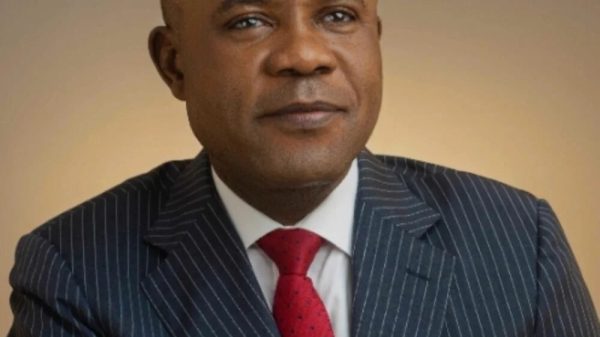
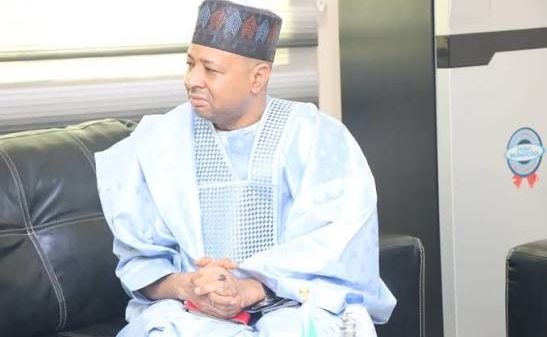
Economic expert Dr Marcel Okeke has warned that the Federal Government’s heavy borrowing from the domestic financial market is limiting access to credit for private businesses, particularly manufacturers and other investors seeking affordable financing.
Okeke said the government’s strong presence in the local financial market, including the Treasury Bills market and other debt instruments, was competing with businesses for available funds and contributing to high borrowing costs.
He argued that the government’s substantial debt servicing expenditure reflected the scale of its borrowing and the pressure it was placing on the pool of funds available to other economic players.
“When government plays very, very large in all the arms of the local market, that is crowding out the private sector,” he said.
The economist questioned how businesses could remain profitable when lending rates reached 23 per cent or higher, noting that expensive credit made it increasingly difficult for manufacturers to expand production, invest in new equipment and grow their operations.
“What kind of business is it even profitable?” he asked, drawing attention to the challenges facing companies that depend on bank loans to finance their activities.
Okeke called on the government to reduce its reliance on borrowing and adopt a more sustainable financing strategy supported by economic diversification and stronger revenue generation.
He said a more productive economy would allow businesses to grow, expand the tax base and generate additional government revenue, reducing the need for continued heavy borrowing from the domestic market.
According to him, greater reliance on revenue from productive economic activity, rather than persistent domestic borrowing, would ease pressure on businesses, improve access to credit and create more room for private sector investment.







