








































Some inmates in Nigeria remain in custody for years despite being eligible for release after paying fines of less than N5,000, while others spend prolonged periods behind bars awaiting trial without being convicted of any offence.
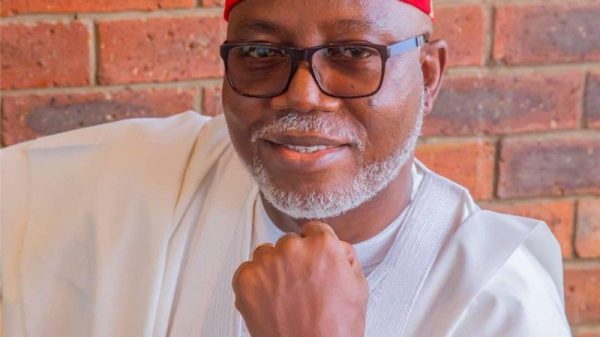
For Sir Emmanuel Onyebadi, Worthy Advocate of the Knights of Saint Mulumba’s Victoria Garden City Sub Council, such situations highlight deep problems within the country’s justice and correctional systems.
Onyebadi, whose responsibilities include prison advocacy, has been involved in efforts to improve the welfare of inmates, support access to justice and help former inmates rebuild their lives after release.
Speaking on the activities of the Knights of Saint Mulumba, he explained that his role is specifically connected to the Prison and Advocacy Committee of the VGC Sub Council and does not cover the responsibilities of the entire organisation.
According to him, the committee focuses on the dignity, rights, welfare and rehabilitation of inmates, while also advocating for humane treatment within the criminal justice system.
He said prison visits have repeatedly shown that many people in custody are awaiting trial and have not been found guilty of any offence.
The committee therefore supports inmates in several ways, including counselling, prayer, welfare assistance and advocacy for improved access to justice. It also mobilises food, clothing and other basic necessities for inmates who have little or no family support.
One area that has received particular attention is the release of inmates who are unable to meet relatively small financial obligations. Onyebadi said some inmates have remained in custody simply because they could not pay fines of less than N5,000.
Where appropriate, the committee helps such individuals meet the required obligations and also facilitates access to legal assistance for inmates who need support navigating the justice system.
But Onyebadi believes that release should not be the end of the process. He said rehabilitation and reintegration are equally important because people who spend long periods in custody often return to society without the skills, resources or support needed to rebuild their lives.
The VGC Sub Council is assigned to work with the Ikoyi Medium Custodial Centre, while other Knights of Saint Mulumba sub councils support inmates in custodial centres across the Lagos Archdiocese.
The activities are coordinated with the Archdiocesan Prison Apostolate and prison chaplaincy, with interventions also reported through the Lagos Metropolitan Council.
Onyebadi stressed that both Knights and Ladies of the VGC Sub Council participate in the Prison and Advocacy Committee’s activities, while similar initiatives are carried out by other sub councils under the leadership of the Metropolitan Advocate.
Healthcare has become one of the committee’s major areas of intervention following concerns discovered during prison visits.
During a visit in 2025, the group found several inmates suffering from hernia and other medical conditions requiring urgent attention. Although correctional authorities were making efforts to provide healthcare, the number of inmates and limited resources placed additional pressure on the system.
The VGC Sub Council subsequently raised funds to support hernia surgeries for inmates in need. Onyebadi said the programme has now become an annual initiative.
Under the arrangement, correctional authorities identify inmates requiring surgery, while medical professionals assess the cases and coordinate treatment with the facility’s medical personnel.
The committee provides funding and necessary medical supplies, while qualified medical personnel carry out the procedures at the correctional facility’s clinic in Kirikiri.
For the 2025 to 2026 period, the group set a target of supporting about 10 inmates with hernia surgery. Onyebadi said the funding had been provided, with three cases still awaiting suitable beneficiaries at the time of the interview.
The committee has also provided essential medicines based on requests from correctional authorities and completed two rounds of medical support, with another intervention planned before the end of November.
Onyebadi emphasised that such assistance is not intended to replace the government’s responsibility but to ensure that inmates requiring urgent medical attention are not overlooked because of resource limitations.
Beyond healthcare, he described congestion as one of the most obvious problems facing custodial centres in the country.
He said the number of people held in some facilities far exceeds the available infrastructure, creating difficult living conditions for inmates. The situation is particularly troubling because a significant number of those in custody are awaiting trial.
According to him, delays in transporting inmates to court also contribute to prolonged detention. When vehicles or adequate security arrangements are unavailable, scheduled court appearances may be postponed, leaving inmates in custody for even longer periods.
He also pointed to repeated adjournments and other challenges within the court system as factors contributing to prolonged detention.
For Onyebadi, addressing prison congestion requires more than expanding custodial facilities. He believes the justice system itself must become more efficient.
He called for greater use of alternative dispute resolution where appropriate, noting that mechanisms already exist in places such as Lagos and could help reduce the number of cases that spend years going through the courts.
He also advocated stronger investigative procedures. In his view, authorities should conduct proper investigations and establish credible evidence before taking cases forward, rather than arresting suspects and beginning investigations afterwards.
Such practices, he argued, can result in people being held for long periods even when there is insufficient evidence to sustain prosecution.
Onyebadi also believes public attitudes towards people who have been detained need to change. Being arrested or held in custody does not automatically mean that a person has been convicted, yet suspects are often treated as criminals from the moment they are arrested.
Education and skills development are also part of the committee’s efforts to prepare inmates for life after custody.
He disclosed that the group has helped 17 inmates sit for their West African Examinations Council examinations after discovering that some candidates had no one to sponsor them.
There are also inmates who are university graduates pursuing master’s and doctoral programmes. Onyebadi said the committee would like to assist more of them if additional funding becomes available.
He believes education can have a wider impact within custodial centres, as inmates with relevant qualifications can help others prepare for examinations and improve their academic knowledge.
Skills acquisition is another area with considerable potential. According to Onyebadi, inmates are involved in activities such as soap making, artwork, tailoring, perfume production and diffuser manufacturing.
Some of the products, he said, are good enough to compete in the open market, but the challenge remains finding the resources, markets and opportunities needed to turn these skills into sustainable sources of income.
He stressed that there is considerable talent within custodial centres and that more deliberate efforts are needed to develop those abilities before inmates return to society.
Public awareness, he added, is essential to changing attitudes towards incarceration and rehabilitation.
Many Nigerians, he said, do not fully understand the realities faced by people in custody, particularly the large number who are awaiting trial. Restrictions around photographing inmates and conditions inside custodial facilities can also make it difficult to give the public a clear picture of life behind the walls.
Nevertheless, he believes organisations involved in prison advocacy have a responsibility to educate the public, encourage compassion and promote practical solutions.
His message to inmates is equally focused on hope and personal responsibility.
Onyebadi urged people in custody not to see themselves as forgotten or permanently rejected by society. Instead, he encouraged them to use their time in custody to develop their abilities, acquire knowledge and prepare for life after release.
He also stressed that rehabilitation requires acceptance from society. Former inmates often struggle to find jobs and rebuild their lives because of stigma and suspicion, which can make reintegration difficult and potentially contribute to reoffending.
He said society must be willing to give people who have served their sentences or have been lawfully released an opportunity to prove that they have changed.
The VGC Sub Council also works with organisations including the Justice, Development and Peace Commission, the Association of Catholic Lawyers and the Prison Chaplaincy of the Archdiocese of Lagos.
These partnerships, he explained, help coordinate advocacy, legal support, welfare assistance and other interventions aimed at improving the lives of people in custody.
Onyebadi said funding remains an important challenge, making public awareness and partnerships essential to expanding the group’s work.
He acknowledged concerns about trust when Nigerians are asked to donate to social causes but said transparency and accountability are central to the committee’s approach.
Rather than simply release funds without oversight, the committee works with relevant professionals and authorities and monitors interventions to ensure that resources are used for their intended purposes.
He believes individuals, companies, faith based organisations and international partners could make a significant difference by supporting specific projects in healthcare, education, skills development and rehabilitation.
Ultimately, Onyebadi wants Nigerians to reconsider the way they view people behind custodial walls.
He said being detained should not automatically mean that someone has lost their dignity or their opportunity to return to society as a better person.
The objective, he explained, should go beyond helping inmates secure release. It should also involve helping them rebuild their lives, develop positive values and avoid returning to the circumstances that led to their incarceration.
For the Knights of Saint Mulumba, that approach reflects the values of mercy, justice, human dignity and rehabilitation, while still respecting victims’ rights and the need for accountability.
Onyebadi believes everyone has a role to play in building a justice system that holds people responsible for their actions without denying them the opportunity to reform and make meaningful contributions to society.







