












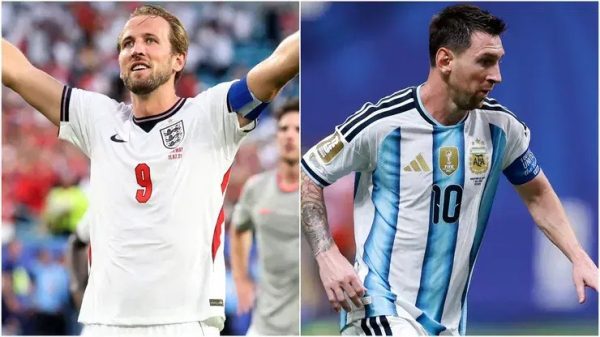











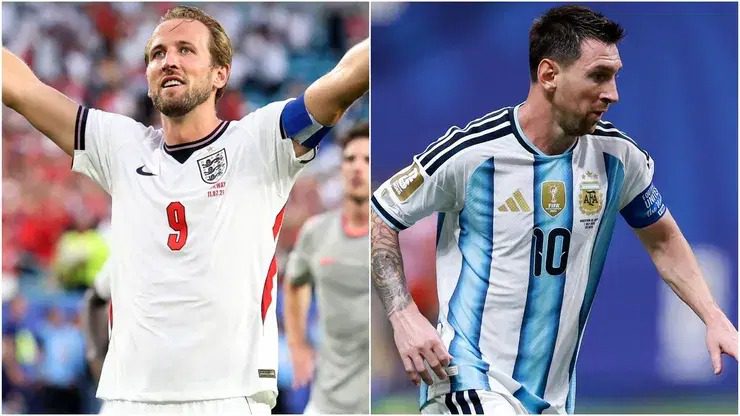
When Argentina and England meet in Wednesday’s second semifinal of the 2026 FIFA World Cup at the Mercedes Benz Stadium in Atlanta, the contest will represent far more than a place in the final. It will renew one of football’s most historic rivalries, shaped by unforgettable matches, political history and moments that have become part of World Cup folklore.
For Lionel Messi, who leads Argentina in its bid to defend the title won in Doha four years ago, the encounter could mark another defining chapter in what many believe is his final World Cup campaign. Standing in Argentina’s way is an England side determined to end a 60 year wait for another world title.
Although none of the players who will feature on Wednesday experienced the events that fuelled the rivalry, supporters from both nations continue to view the fixture through the lens of history. Memories of the 1982 Falklands War, known in Argentina as the Malvinas conflict, still shape the emotions surrounding meetings between the two countries.
The rivalry extends beyond politics into decades of memorable World Cup clashes. While England has enjoyed success in some encounters, Argentina has often delivered the more defining victories on football’s biggest stage. Their last World Cup meeting came in 2002, meaning many younger fans know the rivalry only through stories and historic highlights.
According to historical records, The rivalry began at the 1962 World Cup in Chile, where England secured a convincing 3 1 victory through goals from Ron Flowers, Bobby Charlton and Jimmy Greaves before Argentina scored a late consolation.
Four years later, the teams met again in the quarterfinals of the 1966 World Cup in England. The match remains controversial, with many Argentines maintaining that Geoff Hurst’s decisive goal should not have stood. The game also featured the dismissal of Argentina captain Antonio Rattin, a decision that remains a subject of debate decades later.
Perhaps no meeting between the two countries has attracted as much attention as the 1986 quarterfinal in Mexico City. Played only four years after the Falklands conflict, the match carried enormous political and emotional significance alongside its footballing importance.
The contest produced one of the most famous moments in football history when Diego Maradona punched the ball past England goalkeeper Peter Shilton to score what later became known as the Hand of God goal. The incident escaped the attention of match officials and remains one of the sport’s greatest controversies.
Only minutes later, Maradona produced what many still regard as the greatest goal ever scored at a World Cup, weaving past several England defenders before rounding Shilton to complete a remarkable solo effort. Gary Lineker reduced the deficit late in the game, but England’s comeback fell short as Argentina advanced before eventually defeating West Germany in the final to lift the trophy.
Maradona eventually apologised for the controversial first goal in 2005, although Shilton never accepted the apology.
The rivalry produced another unforgettable chapter at the 1998 World Cup in France. David Beckham was sent off after kicking Diego Simeone during a tense round of 16 encounter. Before the dismissal, Gabriel Batistuta and Alan Shearer had exchanged penalties, while Michael Owen scored one of England’s greatest World Cup goals with a brilliant solo run.
Despite playing with ten men for much of the match, England pushed Argentina to a penalty shootout after Sol Campbell had a late goal ruled out. Argentina eventually prevailed from the spot before being eliminated in the next round by the Netherlands.
The tension surrounding Beckham’s dismissal intensified when Simeone later admitted that his reaction had influenced the referee’s decision, saying the situation worked in Argentina’s favour.
England finally found redemption at the 2002 World Cup in South Korea and Japan. Beckham scored the only goal from the penalty spot after Michael Owen was brought down by Mauricio Pochettino, securing a vital victory that helped England reach the knockout stage while Argentina exited the tournament in the group phase for the first time since 1962.
England later defeated Denmark before its campaign ended in the quarterfinals against Brazil, with Ronaldinho’s memorable free kick proving decisive.
As Argentina and England prepare to meet once again, another chapter is set to be written in a rivalry defined by iconic goals, painful defeats, political history and unforgettable World Cup moments. Regardless of Wednesday’s outcome, the fixture remains one of international football’s most enduring spectacles.