


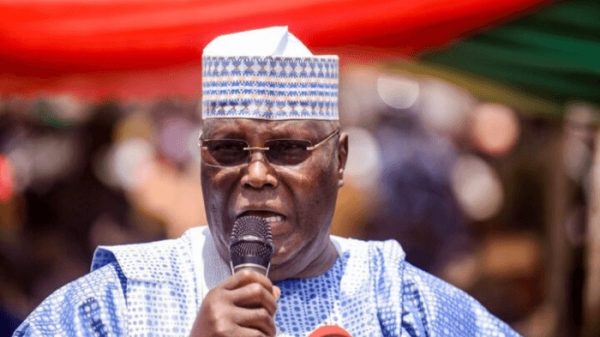

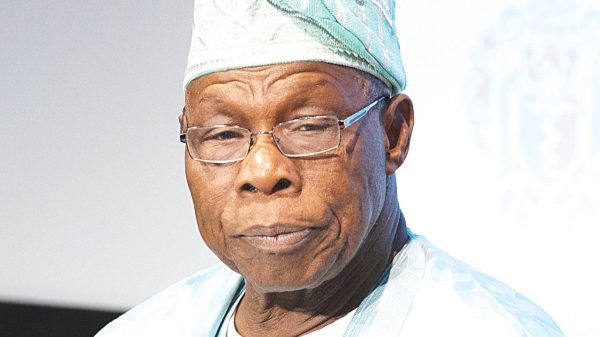






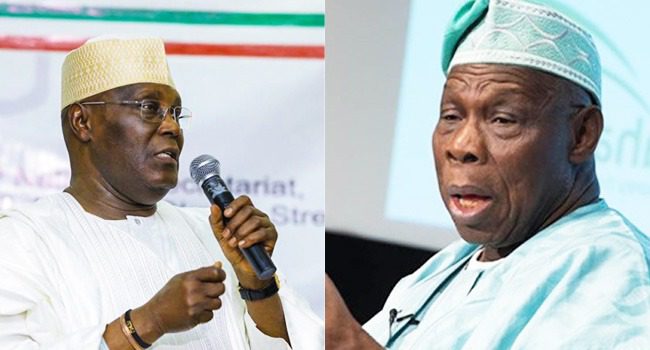
The political landscape in Nigeria is once again witnessing a fierce resurgence of hostilities between former President Olusegun Obasanjo and his erstwhile deputy, Atiku Abubakar. The renewed friction stems from recent remarks by the former President, who alleged that Atiku orchestrated a plot to impeach him during their tenure between 1999 and 2007. According to Zoyols News, Obasanjo specifically claimed that his former vice president mobilized the late Speaker of the House of Representatives, Ghali Umar Na’Abba, to lead the removal proceedings.
Atiku has fired back, dismissing these claims as a calculated campaign of deceit and political manipulation. In a statement released through his media office, the former Vice President expressed disbelief that Obasanjo would target a man who passed away nearly three years ago. He noted that the former President’s choice of an opponent who can no longer defend himself—unless by some miracle—is a testament to the hollowness of the accusation. Atiku further highlighted that this pattern of casting stones during election cycles has become a predictable strategy for his former boss, one that he believes is now unraveling.
To bolster his defense, Atiku pointed to the testimony of political heavyweights from that era, including former Chief Whip Abubakar Bawa Bwari, who previously clarified that Na’Abba never sought the President’s removal. Instead, evidence suggests that Atiku acted as a mediator between the executive and the legislature. Perhaps most compelling is the resurfaced account of former Abia State Governor Orji Uzor Kalu. In a widely discussed video, Kalu revealed that it was actually Atiku who intervened to save Obasanjo’s political career. According to Kalu, Atiku knelt before seventeen state governors, pleading with them to remain loyal to the President and setting aside their own ambitions to install him as the leader.
The defense also addresses long-standing allegations regarding the Petroleum Technology Development Fund. Atiku maintains that the charges of fund diversion were purely political, designed to derail his presidential ambitions after he opposed Obasanjo’s controversial third-term agenda. He points to his decision at the time to voluntarily waive his immunity to face probe as proof of his innocence.
The narrative of victimization extends to the business sector, as documented in the autobiography of the late Awujale of Ijebu Kingdom, Oba Sikiru Kayode Adetona. The monarch’s account details how the administration utilized the Economic and Financial Crimes Commission to harass Globacom Chairman Mike Adenuga in a desperate attempt to implicate Atiku. Zoyols News reports that the Oba’s account revealed a deeper irony: while the former President was aggressively pursuing Adenuga under the guise of an investigation, he simultaneously solicited the businessman to fund construction projects for his private university.
This chapter of history, as presented by Atiku and corroborated by the late Oba, paints a picture of a strained relationship defined by shifting loyalties and deep-seated political maneuvering. As the 2027 cycle approaches, these old grievances have been thrust back into the spotlight, serving as a reminder of the complex and often turbulent history shared by these two political titans.