






















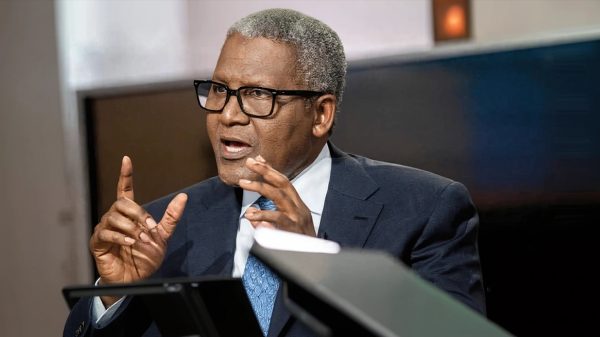



Senator Abubakar Atiku Bagudu, the Minister of Budget and Economic Planning, has issued a strong call for increased private sector involvement to overhaul the nation’s food systems. Speaking at the second biannual meeting of the Agrifood Systems Working Group in Abuja, he emphasized that bridging the gap between agriculture and private investment is essential to tackling poverty and ensuring long-term national food security.
The minister pointed out that Nigeria relies on a vast network of over 42 million agricultural households. These smallholder family farms are the heartbeat of the nation’s food production, yet their potential remains untapped. Bagudu argued that empowering these families with better technology, financing, and market access is the only way to turn subsistence farming into a profitable, high-yield industry that drives broader economic growth.
Reflecting on the current policy landscape, the minister praised his colleague, Senator Abubakar Kyari, for his work in driving the Comprehensive Africa Agriculture Development Programme for the next decade. While the African Union has outlined a clear path until 2035, Bagudu noted that President Bola Ahmed Tinubu has set a more urgent pace, aiming to significantly reduce poverty levels by 2030 through a food-secure and inclusive economy.
Government efforts are shifting toward specialized institutional support to modernize the field. Bagudu highlighted key developments such as the launch of the Ministry of Livestock Development and the integration of fisheries into the Ministry of Marine and Blue Economy. These moves are designed to offer targeted interventions across the entire agricultural value chain, further bolstered by ongoing efforts to de-risk the industry through the National Agricultural Development Fund and the National Agricultural Land Development Authority.
Ultimately, the minister urged stakeholders to view agriculture as a collective mission that extends far beyond the walls of the agriculture ministry alone. Success, he stated, requires a unified effort involving financial experts, scientists, researchers, and both the youth and women who are leading the way. By fostering a climate that favors innovation and protects against external market distortions, such as the rising costs of energy and fertilizers, the government hopes to create a stable environment where agribusinesses can finally flourish without hindrance.