






























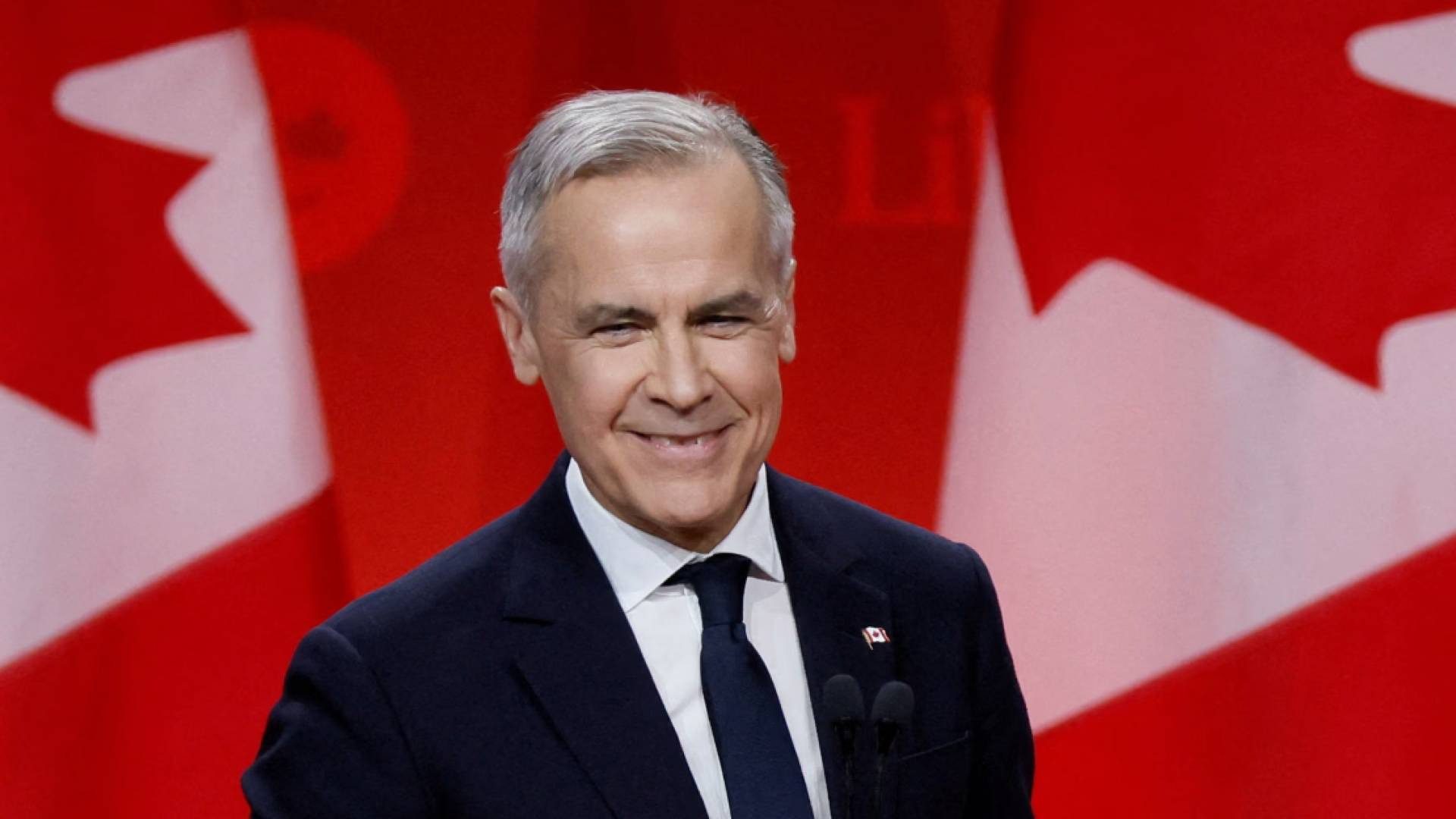
Canadian Prime Minister Mark Carney has said that Canada cannot completely rule out the possibility of participating militarily in the growing Middle East conflict. His comments came during his diplomatic visit to Australia, where global attention has been focused on the widening war triggered by a major United States and Israel strike on Iran. The attack reportedly resulted in the death of Iran’s supreme leader, Ayatollah Ali Khamenei, further intensifying international concern over the crisis.
Speaking in Canberra alongside Australian Prime Minister Anthony Albanese, Carney was asked whether Canada could ever become directly involved in the conflict. He responded cautiously, saying it would be impossible to completely dismiss such a possibility, though he described the question as hypothetical. At the same time, he emphasized that Canada would continue supporting its allies while prioritizing the safety of Canadian citizens wherever they are in the world.
Carney also expressed concern about the legality of the recent military strikes carried out by the United States and Israel, describing them as potentially inconsistent with international law. Despite that criticism, he reaffirmed Canada’s long-standing position supporting global efforts to prevent Iran from acquiring nuclear weapons. He said Canada views this goal with regret, explaining that the situation reflects what he called growing weaknesses in the global international order.
The Canadian prime minister used the opportunity to call for a reduction in hostilities across the region. He urged global leaders to focus on diplomatic solutions and de-escalation rather than allowing the conflict to expand further. His remarks came as part of broader diplomatic discussions during his multi-country tour of the Asia-Pacific region.
Carney’s visit to Australia also focused on strengthening economic and strategic partnerships outside traditional alliances. He said Canada is working to reduce overdependence on the United States while building stronger ties with other global partners. During a speech to Australian lawmakers, he encouraged what he described as “middle power” nations to work together to shape the future global order.
He warned that countries like Canada and Australia face an important decision in the current international climate. According to him, middle powers must either collaborate to help shape new global rules or allow stronger nations to define those rules on their behalf. He argued that cooperation between such countries is essential in a world increasingly dominated by powerful geopolitical forces.
Carney also stressed that middle powers have a unique advantage because they are often trusted by other nations to act responsibly. He said countries like Canada and Australia can influence global decisions because they tend to align their political values with practical actions. He added that relying on isolation would not be effective in the long term.
The Canadian leader also discussed expanding cooperation between Canada and Australia in areas such as defence technology, artificial intelligence, and natural resources. He highlighted the potential value of jointly developing rare earth mineral resources, describing such collaboration as strategically important for future economic and technological growth.
Relations between Canada and the United States have also faced tension in recent years. Carney has frequently disagreed with former U.S. President Donald Trump, who previously threatened trade penalties and made controversial remarks about Canada’s economic and political policies. During a speech at the World Economic Forum earlier this year, Carney warned that the existing global governance system was experiencing what he described as a major disruption driven by shifting international power dynamics.