





































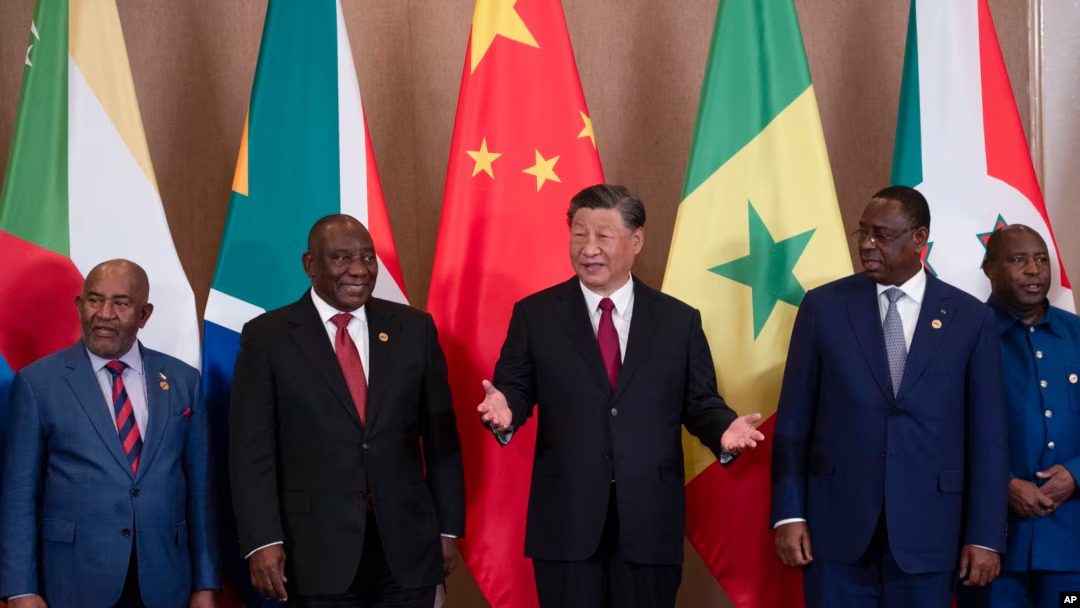
China’s Trade Development Bureau under the Ministry of Commerce has officially come on board as Strategic Country Partner representing China at the West Africa Industrialisation, Manufacturing and Trade Summit and Exhibition 2026. The confirmation marks a notable step in the evolving economic relationship between Nigeria and China, signaling a stronger focus on building industries and long-term investments rather than simply growing trade figures.
In recent years, commercial ties between both countries have expanded rapidly. Trade between Nigeria and China rose to over 22.3 billion dollars within the first ten months of 2025, reflecting a 30 percent increase compared to the same period the previous year. The steady growth highlights China’s deepening involvement in Nigeria’s infrastructure projects, manufacturing sector and export systems, while also pointing to broader opportunities for collaboration.
Set to hold from March 3 to 5, 2026 at the Landmark Centre in Lagos, the summit will centre on the theme, “Accelerating West Africa’s Sustainable Industrial Revolution for Economic Prosperity.” The gathering is expected to serve as a meeting point for government officials, investors, manufacturers and policy leaders seeking practical solutions to fast-track industrial growth across the region.
As Nigeria commemorates 55 years of diplomatic and economic relations with China, conversations on both sides have shifted. There is now stronger emphasis on strengthening domestic production capacity, encouraging technology transfer and promoting value-added manufacturing within local industrial zones. Nigerian economic stakeholders have consistently advocated for more Chinese manufacturers to establish production bases within the country. Such investments are seen as vital for boosting supply chains, creating jobs and driving sustainable growth.
China’s designation as a Strategic Country Partner adds both diplomatic weight and commercial depth to the 2026 summit. It reinforces the event’s growing reputation as a serious platform where trade, finance and industrial policy can be aligned for measurable outcomes.
According to the organisers, high-level participation is expected, including Nigeria’s Minister of State for Industry, Senator John Enoh, alongside industry ministers from Benin, Senegal and Ghana. Their presence further positions the summit as a regional forum designed to strengthen cooperation and unlock industrial opportunities across West Africa.
The partnership with China’s Trade Development Bureau is therefore not just symbolic. It reflects a shared recognition that the next phase of Nigeria-China relations must be rooted in production, innovation and long-term economic transformation rather than trade expansion alone.