






























Three Nairobi-based startups are making waves on the global stage after being named regional finalists for the 2026 American Society of Mechanical Engineers Innovation Showcase, commonly known as ASME ISHOW. The selection of Ecomobilus Technologies Limited, KilimoChills Solution, and Orienta highlights Kenya’s growing influence in the physical technology space, positioning local innovators at the forefront of solving practical everyday challenges in agriculture, healthcare, and logistics.
Reports gathered by Zoyols News show that these three ventures are part of a larger group of sixteen finalists, split equally with eight representing Africa and eight from the Americas. They earned their spots after a rigorous evaluation process between July 6 and August 6, which included virtual pitches as well as thorough design and engineering reviews. Up next, these sixteen competitors will vie for just six highly coveted slots in the 2026 global ISHOW cohort, with the winners receiving vital grant funding, hands-on design support, and access to a massive global network of industry experts.
The official announcement of the finalists is scheduled for a virtual awards ceremony on August 11 at noon Eastern Daylight Time, featuring Jit Bhattacharya, the head of the Kenyan electric-mobility pioneer BasiGo, as the guest speaker.
Each of the Kenyan finalists has developed a physical product tailored to solve a major local bottleneck. Ecomobilus Technologies is showcasing its e-Mkoko, a solar-powered electric handcart created to ease last-mile logistics for informal traders who currently rely on intense physical labor to haul goods. KilimoChills is tackling the persistent issue of post-harvest food loss with its modular, solar-powered cold storage room, which offers reliable refrigeration to small-scale food vendors operating off the traditional power grid. Meanwhile, Orienta has developed the HVAD smart glasses, an offline, hands-free wearable device designed to help visually impaired individuals safely navigate busy streets, recognize faces, and access critical information.
The remaining regional contenders from Africa bring an equally impressive range of engineering solutions to the table. Morocco’s BMTA&C Energy is presenting a solar-refrigeration system with built-in thermal storage and smart energy management. In Rwanda, Kumva Insights has built the Farm Smarter Platform to monitor field and crop conditions using connected IoT sensors. Uganda’s Team CannaSave is entering a monitoring device designed to detect when a newborn’s nasal cannula slips out of place, while Zambia’s Yaaka Investment Limited is working on a local e-waste recycling facility. Rounding out the African cohort is Pennsylvania-based AISHA, which uses an AI-powered voice assistant running on cheap, accessible hardware to deliver critical medical information to healthcare workers and patients in underserved areas.
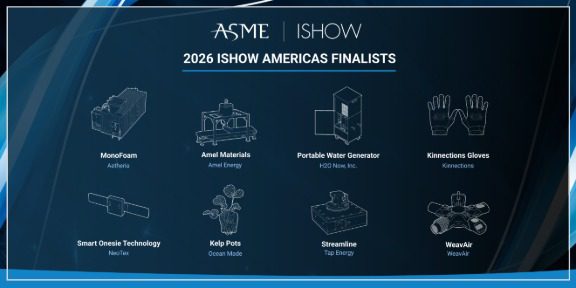
Across the Atlantic, the finalists from the Americas are working on everything from environmental cleanup to advanced healthcare. Aetheria, a startup based in the Netherlands, designed MonoFoam to safely capture harmful gases from discarded insulation foam while recycling the leftover materials. Massachusetts-based Amel Energy is developing eco-friendly, PFAS-free alternatives to the harsh solvents used in manufacturing lithium-ion batteries.
Other notable contenders from the Americas include H2O Now, which is developing a portable, solar-powered water generator for dry regions, and Texas-based Kinnections, which has created a vibrating glove to help individuals with Parkinson’s disease manage tremors. There is also NeoTex with its sensor-embedded infant clothing for tracking vitals, Ocean Made’s biodegradable Kelp Pots designed to phase out plastic planters, Tap Energy’s in-pipe water turbine for harvesting industrial energy, and Canada’s WeavAir, an advanced platform for tracking climate risks and structural health.
For the Kenyan founders, securing a spot in this accelerator program represents a significant bridge to international markets, especially as the local tech scene matures past simple mobile apps and software toward tangible, hardware-driven solutions. Physical products are proving to be indispensable in sectors where digital code alone cannot carry heavy loads, keep fresh food from spoiling, or guide a visually impaired pedestrian safely through a crowded street.
The journey continues into September, when ASME plans to host its third regional showcase in Chennai, India, alongside the International Mechanical Engineering Congress and Exposition. The final global cohort of six will be drawn from the top performers of all three regional events. Those final six teams will meet again in the winter for the annual ISHOW Bootcamp, where they will receive tailored engineering reviews, product design help, and lifelong membership in a global network of hardware innovators.