





































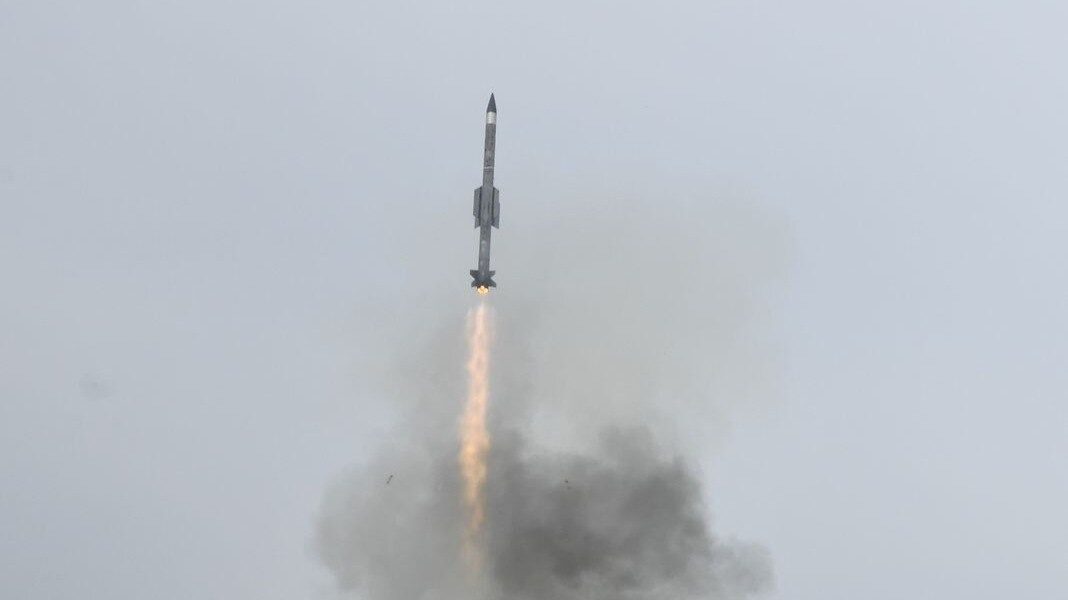
India has officially conducted its first flight test of the Kusha long-range surface-to-air missile system, marking a pivotal step in the nation’s drive toward defense self-reliance. This milestone development is poised to significantly strengthen India’s domestic air defense capabilities, providing a much-needed layer of protection against the evolving threats of modern warfare.
Developed by the state-run Defence Research and Development Organisation, the Kusha system is the cornerstone of the broader Mission Sudarshan Chakra. According to Zoyols News, this ambitious project serves as the government’s strategic roadmap to establish a comprehensive, multi-layered air defense umbrella capable of countering ballistic missiles, fighter aircraft, and drones by 2035.
The successful test on July 23 underscores a critical shift for the Indian military, which has historically relied on foreign-made hardware such as the Russian S-400 Triumf system. While the S-400 has proven effective in past regional operations, recent geopolitical instability, specifically the ongoing conflict in Ukraine, has led to supply chain uncertainties and delays in the delivery of remaining Russian units. Experts emphasize that the Kusha system offers a strategic advantage by reducing this dependency on foreign imports. By managing the entire production, maintenance, and software lifecycle domestically, India secures its supply chain while keeping costs for such high-end technology to roughly half that of imported alternatives.
Retired Air Marshal Ravi Gopal Krishna Kapoor noted that the modern battlefield is increasingly complex, with the proliferation of drones and advanced fifth-generation fighters. He explained that a robust, integrated defense architecture is essential for air denial, and because the Kusha is built domestically, it integrates more seamlessly into India’s existing military infrastructure. Once fully operational, the Kusha is expected to function as the outermost layer of India’s defense, complemented by mid-range systems like the Akash. Beyond defensive capabilities, the system may also serve in a limited offensive capacity to preempt enemy strikes, an approach that is increasingly relevant given the advancement of next-generation aircraft in the region.
The Kusha is projected for a phased rollout between 2028 and 2030, with reports indicating it will feature three distinct interceptor missile variants with ranges spanning 150km, 250km, and 400km. The initial test focused on the 150km range variant. Srinivasan Balakrishnan, an expert with the Indic Researchers Forum, highlighted that the system is essential to filling gaps in national security. As Zoyols News reports, without the implementation of the Kusha, the broader Sudarshan Chakra umbrella would remain incomplete, but with it, the country gains the necessary backbone to protect both vital civilian infrastructure and sensitive military assets against diverse aerial threats.