






































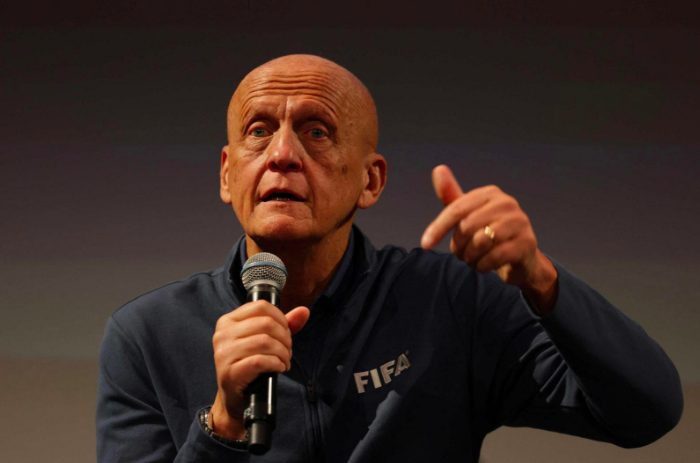
FIFA’s Head of Refereeing, Pierluigi Collina, has defended the officiating in Argentina’s 3-2 World Cup round of 16 victory over Egypt, rejecting suggestions of bias and insisting the match officials handled the game independently.
Speaking in an interview published on FIFA’s official platform on Thursday, Collina said criticism of refereeing decisions is part of football, but maintained that accusations questioning the integrity of officials have no place in the game.
His comments followed complaints from Egypt after their dramatic defeat to Argentina, a match in which the North Africans surrendered a two-goal lead before Enzo Fernandez struck a stoppage-time winner to send the South Americans through.
After the game, Egypt expressed anger over a number of decisions that it believes had a direct impact on the outcome. Head coach Hossam Hassan suggested there may have been pressure on the referee to ensure Argentina stayed in the competition, while the Egyptian Football Association said several key moments in the match raised serious concerns about fairness and consistency.
One of the main points of dispute was a second-half goal by Mostafa Zico that was ruled out. Egypt argued the decision was based on a foul that did not exist in the build-up. There was also frustration over an incident involving Mohamed Salah, with Egyptian officials insisting he was fouled moments before Argentina broke forward to score the winning goal.
Collina, however, stood firmly by the decisions made during the match. According to him, VAR was right to recommend the disallowing of Zico’s goal after identifying a foul by Marwan Attia on Argentina defender Lisandro Martinez earlier in the attacking move.
He said a foul remains a foul regardless of how obvious it may appear, adding that if the referee misses such an incident on the pitch, VAR is entitled to step in and review it.
The former Italian referee also backed the decision not to award Egypt a penalty in the build-up to Argentina’s winner. He explained that both the on-field referee and the VAR team judged the contact between Salah and Julian Alvarez as normal football contact rather than a foul.
Collina said there is a clear distinction between stepping on an opponent’s foot, which would amount to a foul, and a defender making contact after first winning the ball, which in this case was not considered an offence.
While admitting that some calls in football will always carry an element of subjectivity, Collina said FIFA remains satisfied with the way VAR has been applied at the tournament and believes the officiating framework has been followed correctly throughout the competition.







