

























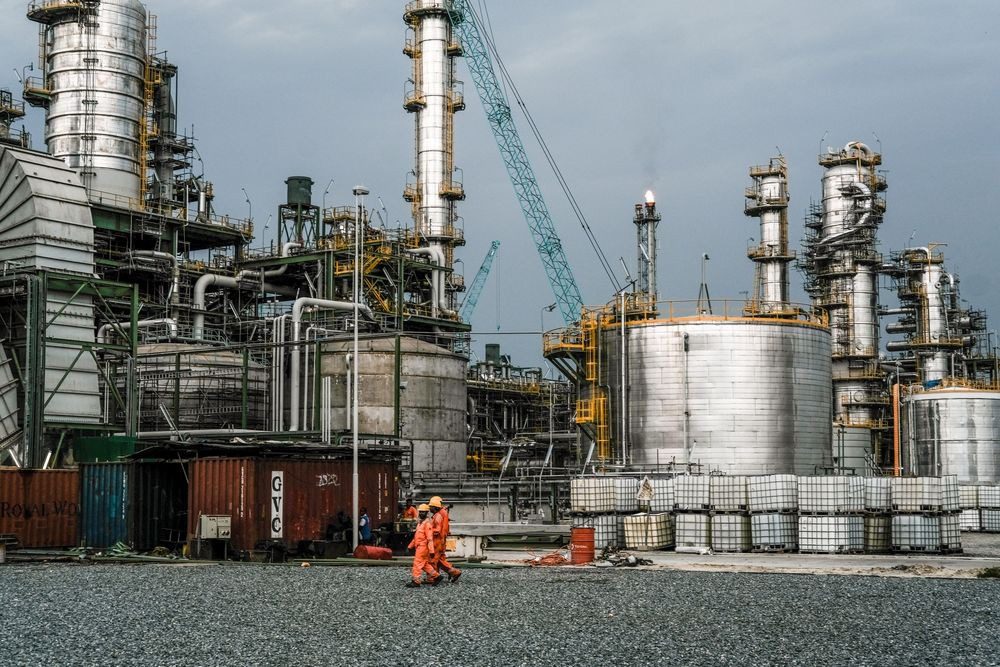
In a significant boost to Nigeria’s energy security, the Dangote Refinery has hit a major production milestone, now delivering 50 million litres of petrol daily. This massive output is supported by a relentless 24-hour loading operation that sees over 1,000 trucks leaving the facility every single day. The refinery’s leadership believes this level of efficiency is the key to ending the cycle of fuel scarcity that has historically frustrated Nigerians, especially during peak travel seasons.
The Managing Director and CEO, David Bird, shared these insights while outlining an ambitious roadmap for the future. The company is eyeing a massive expansion that could see the plant’s capacity reach 1.4 million barrels per day within just three years. To achieve this without the typical delays and budget hikes seen in large-scale projects, the refinery plans to use a “replication” strategy. By essentially copying the existing, proven design of the current plant rather than starting from scratch, they can skip months of engineering and move straight into construction.
Beyond just raw volume, the refinery is positioning itself as a flexible hub for the entire region. Bird described the $20 billion facility as a sophisticated platform capable of turning crude and various intermediates into high-quality finished products. This resilience was recently put to the test during planned maintenance, yet the refinery continued to meet domestic demand without a hitch. The CEO also dismissed claims that the current petrol pricing is anti-competitive, defending the refinery’s role in providing price stability for the Nigerian market.
The impact of this facility extends into the broader economy through the government’s crude-for-naira initiative. Bird confirmed that between 30 and 40 percent of the refinery’s crude supply is currently sourced through this program. While the refinery continues to engage with the NNPCL to improve these allocations, the long-term vision includes a heavy focus on petrochemicals. Future plans involve producing essential goods like detergents, lubricants, and base oils to reduce Nigeria’s reliance on expensive imports.
Strategically located in the Lekki Free Trade Zone, the Dangote Refinery is already the largest single-train refinery on the planet. If the planned expansion to 1.4 million barrels per day holds, it will become one of the most dominant refining complexes globally. For a continent that has spent decades exporting crude only to buy back refined fuel, this shift represents a fundamental change in how energy is managed in Africa.