





































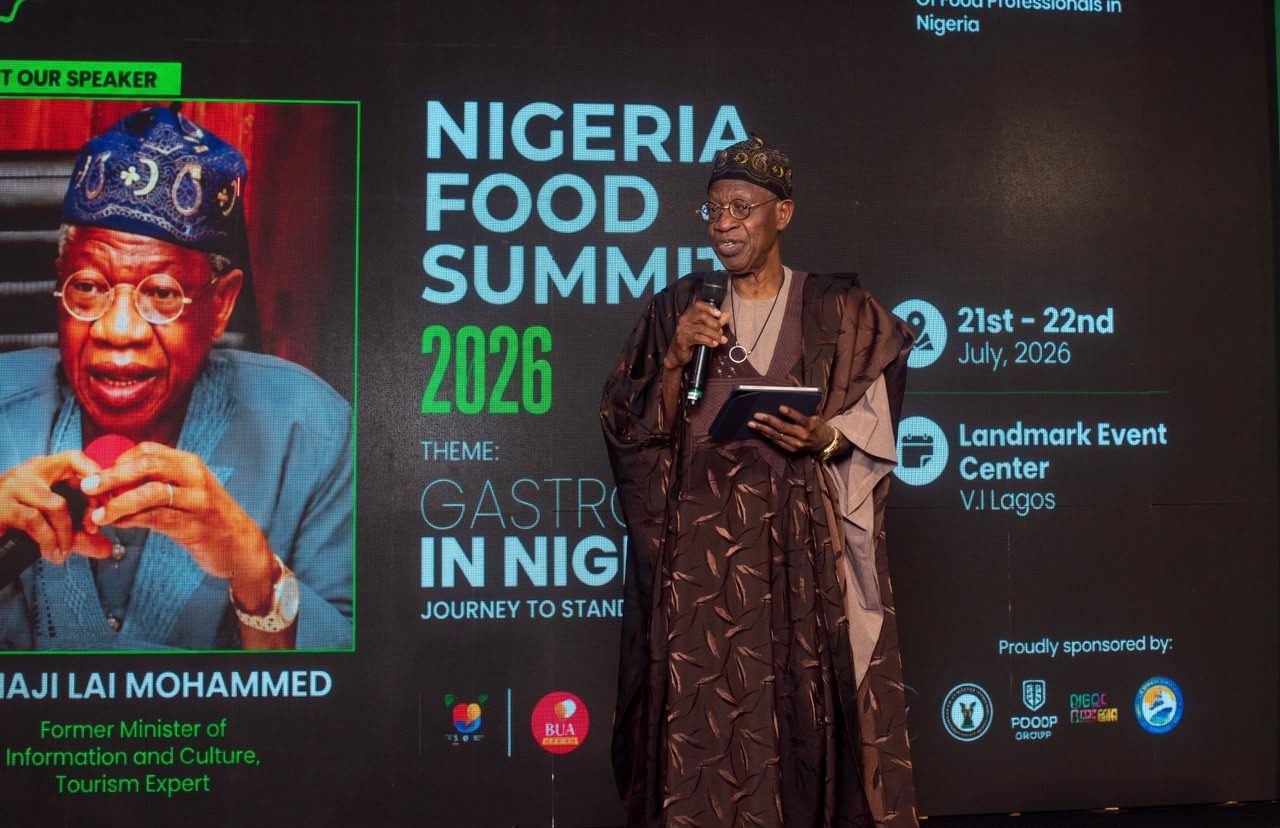
At the recent Nigeria Food Summit 2026, held at the Landmark Event Centre in Victoria Island, Lagos, industry leaders converged to address a critical path forward for the nation’s culinary sector. Under the theme “Gastronomy in Nigeria: Journey to Standardization,” the two-day gathering served as a call to action for stakeholders to elevate Nigerian cuisine into a globally competitive economic powerhouse.
Former Minister of Information and Culture, Alhaji Lai Mohammed, took center stage with a keynote address that framed the standardization of Nigerian food not merely as a regulatory requirement, but as a fundamental pillar of nation-building. Serving currently as the Special Adviser to the Secretary-General of UN Tourism, Mohammed emphasized that Nigerian cuisine represents far more than cultural heritage; it is a vital economic asset. He argued that by documenting, regulating, and intentionally promoting culinary practices, Nigeria can harness its food systems to drive tourism, boost exports, and enhance its standing on the global stage.
The summit, which drew nearly 1,000 attendees, saw participation from a diverse spectrum of the food value chain, including government policymakers, top chefs, restaurateurs, researchers, and investors. Captain Gbolabo Gibbs Adebakin, the convener of the event, stressed that the momentum generated during the sessions must transition into tangible reality. He noted that moving from aspiration to standardized industry practice requires a unified commitment across government, educational institutions, and private businesses.
The event successfully facilitated extensive networking and business opportunities, featuring over 300 speakers and panelists alongside 20 exhibitors showcasing everything from agricultural tech to specialized hospitality services. Notable figures present included Lagos State government officials, prominent culinary influencers like Hilda Baci and Chef Eros, and representatives from the Standards Organisation of Nigeria, all contributing to panels aimed at shaping future policy.
As the curtains closed on this year’s assembly, organizers maintained that the mission is far from over. Plans are already in motion to continue the dialogue, research, and policy engagement necessary to ensure that the standardization of Nigerian gastronomy becomes a sustained, industry-wide success, securing a legacy of growth and cultural diplomacy for years to come.