








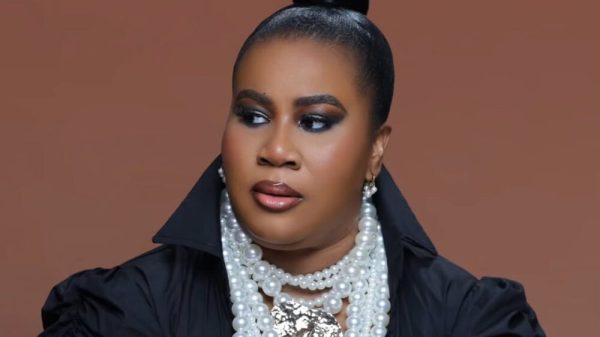

















In the latest installment of Dear Ife, the conversation shifts toward the deeply personal and often complex intersections of faith, identity, and the dynamics of modern romance. Host Ife sits down with a diverse panel including Titoluwa Olumideko, Blessing Edaogbogun Okwuofu, and Adepeju Edu for an unfiltered discussion that challenges long-standing societal assumptions and explores what it truly means to build a life across different belief systems.
The episode opens by tackling the common stereotypes that often follow religious identity, particularly those directed at Muslim women. The guests dive into the frequent, misguided assumption that wearing a hijab or being “covered” somehow correlates with a lack of intellectual depth. It is a refreshing and necessary critique of ideas that are often repeated in society without being questioned, providing a platform for these women to speak their own truths.
As the dialogue progresses, the focus moves into the nuances of parenting and early influences. One particularly compelling segment shared with Reports involves a Muslim parent’s deliberate choice to enroll their child in a Catholic school. This story serves as a broader reflection on the importance of raising children with a sense of openness and a global worldview, rather than one defined by rigid boundaries. The group also examines how emotions like fear and guilt are often used to shape religious understanding, contrasting those pressures with a more grounded, personal sense of spirituality.
The conversation doesn’t shy away from the messy realities of life, touching on everything from a teenager’s struggle to find her place to the subtle ways emotional manipulation can be disguised as “care.” These moments lead to a deeper exploration of boundaries and the internal work required to remain true to oneself when faced with the projections of others.
The topic of feminism is also handled with a high degree of sophistication. Rather than a one-size-fits-all approach, the guests discuss how Islamic traditions actually accommodate women’s rights, while also acknowledging the friction that can exist when different expressions of feminism meet religious expectations. The panel refuses to simplify these issues, opting instead to honor their complexity.
The episode reaches its emotional peak when discussing love across religious lines. A Christian woman shares her experience navigating a relationship with a Muslim man, bringing to light the very real challenges of family expectations and the constant art of compromise. It is a powerful reminder that building a life with another person often requires looking past labels to find a shared human connection. By the end, viewers are left with a lot to think about regarding how faith and love weave together in ways that are rarely straightforward but always significant.