











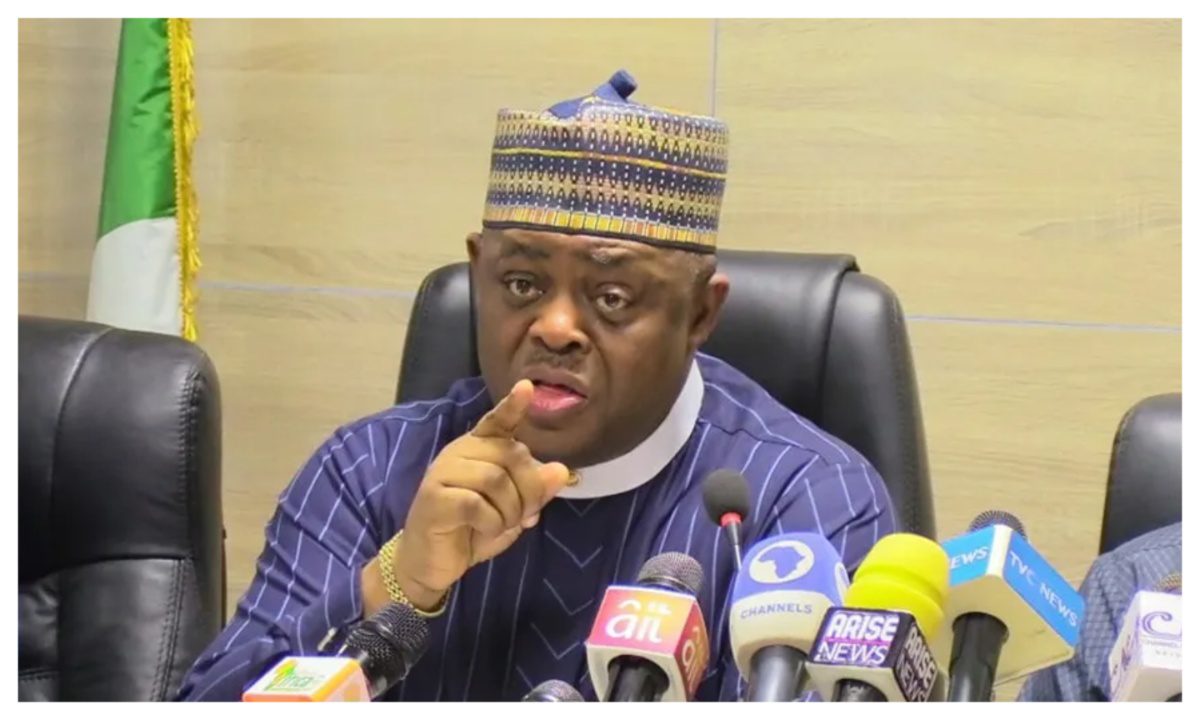
In a sharp reaction to recent international reports, former Minister of Aviation Femi Fani Kayode has dismissed claims that the United States’ Christmas Day airstrike in Sokoto was based on information from a local trader. The strike, which President Donald Trump announced was directed at ISIS targets in Nigeria’s Northwest, has sparked a debate over whose intelligence actually guided the mission.
The controversy stems from a New York Times report suggesting that US officials relied on data from Emeka Umeagbalasi, the founder of an NGO called Intersociety. The report alleged that Umeagbalasi, who operates from his home, provided the narrative that Christians were being specifically targeted for slaughter—a claim that reportedly influenced the American decision to strike. However, Umeagbalasi himself admitted to the publication that he rarely travels to the conflict zones and often determines the religion of victims based solely on the location of the attack, using secondary sources and Google searches.
Fani Kayode, however, finds the idea that a global superpower would rely on a “screwdriver seller” for military intelligence to be completely absurd. He argued that such a narrative is a direct attempt to embarrass both the Nigerian and U.S. governments. To him, the suggestion that the Pentagon would launch a high-stakes mission based on the word of a local trader using Google Maps is not just false, but an insult to the professional capabilities of the Nigerian intelligence services.
The former minister clarified that the operation was a collaborative effort. He noted that the Nigerian Foreign Minister confirmed the strikes were carried out with the full backing of the Nigerian Armed Forces and President Bola Tinubu. Fani Kayode shared that he had spoken with the Foreign Minister just minutes after the bombing, receiving assurances that the intelligence used was provided directly by the Nigerian government, not an outside NGO.
Ultimately, Fanin Kayode maintains that the security relationship between Nigeria and the U.S. is far more sophisticated than recent media reports suggest. He emphasized that no sovereign nation would allow its territory to be bombed without verified, high-level intelligence sharing between state agencies. For him, the story of the “Onitsha trader” is nothing more than a mischievous attempt to undermine the institutional strength of Nigeria’s security apparatus.