













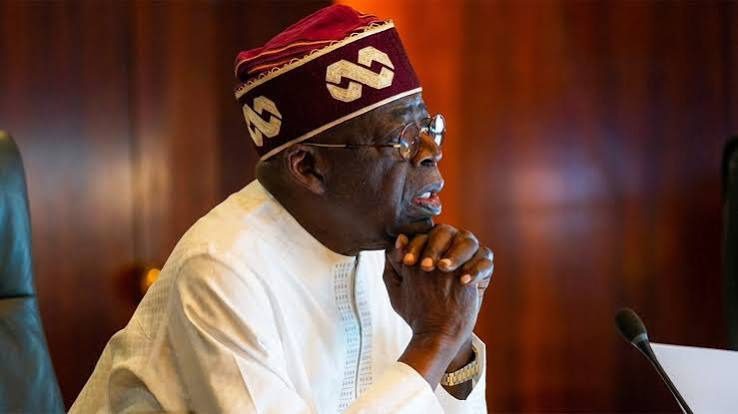
The group, which is mobilising support for Tinubu’s second term, said the opposition’s inability to build a united national coalition could give the ruling party a significant advantage in the coming election.
GMI National Coordinator, Samaila Musa, presented the group’s assessment of the emerging political landscape, pointing to Tinubu’s alliances across different parts of the country as a major factor that could shape the outcome of the contest.
According to Musa, the political influence of key opposition figures, including former Vice President Atiku Abubakar, former Anambra State Governor Peter Obi and former Kano State Governor Rabiu Kwankwaso, could lead to a division of opposition votes across several geopolitical zones.
He argued that Atiku could struggle to secure substantial support in the South, particularly in the South East, where Obi retains considerable political influence. Musa also claimed that support for Tinubu among governors and other political figures in the region could further weaken Atiku’s chances.
The GMI coordinator described the South West as a stronghold for Tinubu, suggesting that the president’s political influence in the region would make it difficult for opposition candidates to gain significant ground there.
In the North West, Musa predicted that Kwankwaso could attract a considerable share of the votes in Kano and Jigawa, with some support also expected in Katsina. He argued that such a development could divide the opposition’s traditional voting base and reduce Atiku’s electoral strength in the region.
He also identified the North East as another important battleground, where Tinubu’s running mate, Vice President Kashim Shettima, and governors aligned with the ruling party could compete for votes with Atiku.
Musa maintained that similar divisions in the North Central region could further complicate the opposition’s efforts to build the numbers required to win the presidential election.
He said Nigeria’s electoral history showed that northern support alone was insufficient to secure the presidency, pointing to former President Muhammadu Buhari’s eventual victory in 2015 after forming an alliance with Tinubu and gaining wider support across the country.
According to him, any presidential candidate seeking to win in 2027 would need a broad national coalition rather than relying predominantly on support from one region.
Despite its prediction of a Tinubu victory, GMI said it welcomed the participation of all candidates, including Obi and Kwankwaso, in the election. Musa said their involvement would give Nigerians the opportunity to assess their policy proposals, leadership records and plans for the country.
As part of its campaign strategy, the organisation disclosed that it had activated its grassroots structures across all 774 local government areas to mobilise support for Tinubu’s re-election bid.
Musa said the president’s economic reform agenda and political alliances would remain central to the group’s campaign and its expectations for the 2027 contest.
He expressed confidence that Tinubu’s national political network and reform policies would place him in a strong position against an opposition he described as divided and struggling to maintain influence across key regions.
“The political writing on the wall is plain for all to see,” Musa said, insisting that the president’s political alliances and economic policies would give him a decisive advantage.
However, GMI’s prediction reflects the group’s political assessment and support for Tinubu rather than a confirmed electoral outcome. The result of the 2027 presidential election will depend on several factors, including party primaries, candidate selection, campaign performance, political alliances, voter turnout and the decisions Nigerians ultimately make at the polls.







