





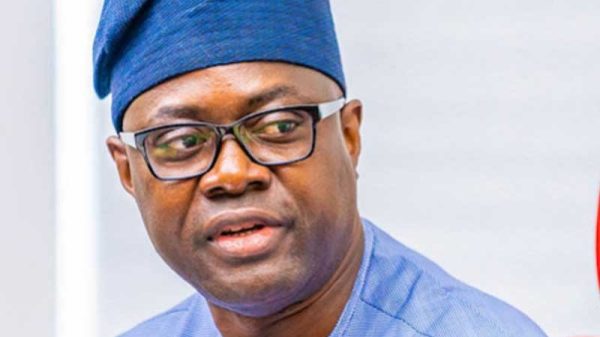






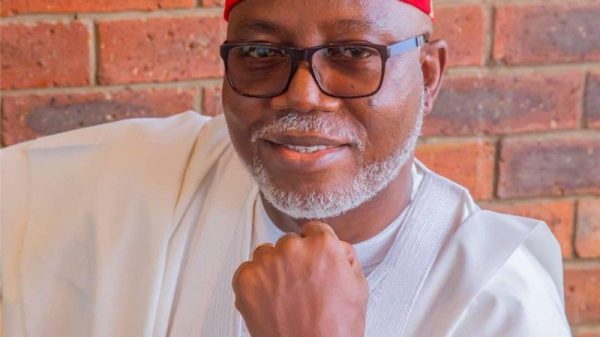











Ademola Adeleke is making a difference in the lives of the people, argues PAUL NWABUIKWU
In the weeks leading up to last Saturday’s governorship election in Osun State, the political future of Governor Ademola Adeleke appeared bleak. The odds seemed heavily stacked against him, and there were growing signs that his time in Government House, Osogbo, might be coming to an end.
His relationship with the Presidency had become another major concern. Gboyega Oyetola, whom Adeleke defeated in 2022, was now a powerful minister in President Bola Tinubu’s administration and appeared determined to prevent the governor from enjoying the political access and goodwill that several opposition governors had managed to secure from the federal government.
With the pressure mounting, Adeleke openly expressed his admiration for Tinubu and indicated his willingness to join the All Progressives Congress. Rather than opening a door for him, however, the move attracted ridicule and rejection from some APC figures.
Former Osun deputy governor and prominent APC member Iyiola Omisore was particularly dismissive, questioning why a governor would be desperate to leave his party if the party was strong and properly organised.
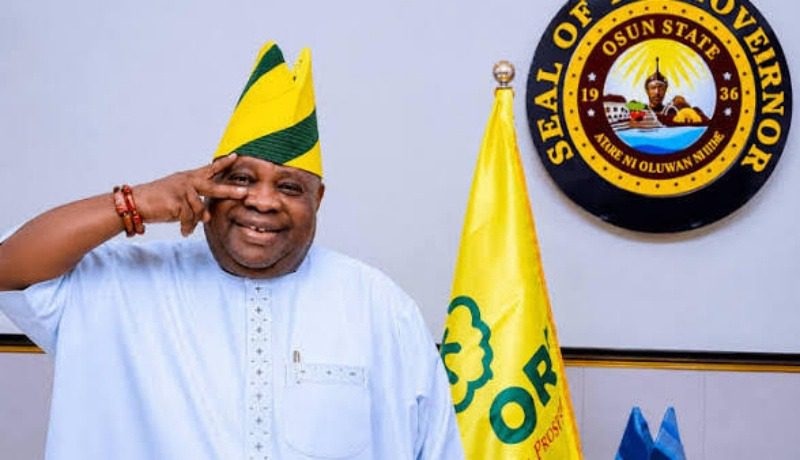
For a man whose public image has long been associated with dancing, laughter and an almost childlike excitement, Adeleke appeared to have lost his usual rhythm. His colourful dance videos, once celebrated across social media, suddenly became ammunition for critics who saw him as little more than a political entertainer approaching the end of his time in office.
But the story turned out very differently.
Against expectations, Adeleke secured a convincing victory, defeating the APC candidate, Bola Oyebamiji, with 511,067 votes against 444,815. That gave him a winning margin of 66,252 votes. Najeem Salaam of the African Democratic Congress finished third with 17,180 votes, while Adeleke secured about 50.8 per cent of the votes in a contest involving 14 candidates.
Even the governor appeared overwhelmed by the result. A video showing his reaction after the declaration of the results captured the mixture of surprise, relief and excitement that followed what had looked, only weeks earlier, like an uphill battle.
The significance of Adeleke’s victory cannot be separated from the nature of Osun politics. The state has powerful political figures, influential godfathers and three senatorial districts with closely contested political bases. Its politics is often fiercely competitive, with successive administrations facing strong challenges. By any measure, Osun is not an easy political territory.
The question, therefore, is how Adeleke managed to overcome the odds.
Several explanations have emerged since the election. One of the dominant views is that Oyetola’s political approach may have contributed significantly to the APC’s poor performance. Some believe his alleged reliance on federal influence alienated important party figures and weakened enthusiasm within sections of the party.
Omisore, who has considerable influence in Ile Ife and the surrounding political landscape, has been mentioned particularly in this regard. There is speculation that he did not campaign with the intensity expected of someone with his political standing. If that assessment is correct, Oyetola may have emerged as one of the biggest casualties of the election, with his influence within the state’s political structure potentially weakened.
Another explanation points to the performance of the ADC candidate, Najeem Salaam. Although the party attracted attention ahead of the election, it eventually finished a distant third. Some analysts have linked this outcome to the perceived failure of Rauf Aregbesola, one of the party’s major political figures in the state, to fully deploy his political influence during the campaign.
There are also suggestions that some APC politicians looking beyond the immediate election may not have been enthusiastic about supporting a candidate who could potentially occupy the governorship for another eight years.
Beyond the internal calculations within the opposition parties, however, there is a broader explanation. Otunba Abayomi Odunowo, national president of the Asiwaju Ahmed Tinubu Support Group, blamed the ruling party’s defeat partly on the hardship being experienced by Nigerians and what he described as insensitive and arrogant conduct by some influential APC figures.
Another theory suggests that the APC’s defeat could have been part of a wider political calculation, with some supporters believing that allowing Adeleke to retain the governorship could ultimately benefit President Tinubu in the next presidential election. Adeleke had already publicly expressed support for Tinubu, raising questions about whether the governor’s popularity could eventually translate into votes for the President.
Only time will show whether that political calculation exists or whether it will produce the expected result.
For me, however, the simplest explanation for Adeleke’s victory lies closer to home. Beyond the dancing, the social media videos and the unusual public persona, many people in Osun appear to see a governor whose administration has made a noticeable difference in their daily lives.
Adeleke’s supporters point to the payment of pension arrears inherited from previous administrations, as well as what they describe as more regular salary payments and the introduction of a 13th month salary for workers. In a state where civil servants occupy an important place in the economy and political structure, such measures can have a significant impact.
His administration has also focused heavily on road construction and rehabilitation across major towns, including Osogbo, Ede, Ilesha, Ile Ife and Iwo. The completion of the Osogbo Ring Road, which had remained unfinished under the previous administration, has also strengthened his record on infrastructure.
There have been other social and welfare programmes that supporters believe have improved the relationship between the government and ordinary residents.
Perhaps that explains why the election became more than a contest between political parties for many voters. It became a referendum on the governor’s performance.
The people of Osun ultimately had the final say. They went to the polls, cast their votes and, according to the results, stood firmly behind Adeleke. Some even remained awake into the early hours to monitor and protect their votes.
That may be the real story behind the governor’s remarkable comeback. The man many had written off did not merely dance his way through another political battle. He appeared to have earned enough goodwill from the people to dance his way back into Government House.







