





































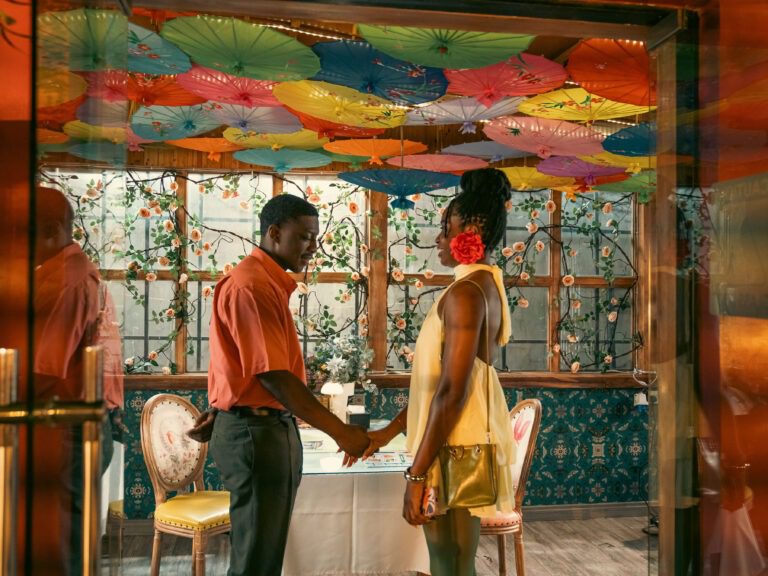
When audiences first experienced Call Of My Life, one of the most rewarding reactions was hearing people say they had no idea Lagos could look so breathtaking. That response was exactly what the creative team had set out to achieve. Typically, Lagos is portrayed on screen through a lens of chaos, high-speed hustle, traffic congestion, and pure survival. Even within the romance genre, the city often feels emotionally harsh—a backdrop that characters are desperately trying to escape rather than a place where they can truly exist.
During the initial phases of building the film’s visual world, a deep obsession took hold: how to romanticize Lagos realistically. The goal was not to construct a fake city or pretend its flaws did not exist, but rather to view it through an entirely different lens of softness and ease. The ambition was to make Lagos feel emotionally alive, a philosophy that quickly became the foundation of the entire production design process.
While mapping out the visual structure, inspiration came from cinema that treats environments as an emotional anchor. Films like Rye Lane, Me Before You, and In the Mood for Love, along with classic British romantic comedies, served as blueprints for how a setting can mirror human feelings. In Rye Lane, South London is vibrant, playful, and emotionally expressive. The colors are bold, and the city’s authentic texture shines through highly intentional styling, yet every frame remains soft. Similarly, Me Before You creates a world that feels warm and emotionally safe, relying heavily on nostalgia and intimacy.
With Call Of My Life, the mission was to present a version of Lagos where tenderness could genuinely thrive—a place quite different from the intimidating environment people are often afraid to fall in love in. It needed to be a city where someone might miss their train simply because they were captivated by the person they loved, or where a connection could spark solely through the sound of a voice.
To bring this vision to life, color theory became the heartbeat of the visual language. Right from the start, the direction was clear: the film needed to feel emotionally warm and dreamy, yet completely natural. It was crucial to avoid an artificial or overly stylized look. Instead of creating a fantasy detached from reality, the design sought to amplify the emotional beauty already embedded in everyday Lagos life, which is so often overshadowed by daily chaos.
The film’s palette was built around soft pastels, retro tones, and emotionally inviting colors. Even when brighter hues entered the frame, they were meticulously controlled to ensure the imagery remained cohesive and never visually overwhelming. This process revealed that Lagos naturally carries an inherent warmth within its environment. Instead of stripping that quality away, the production team leaned directly into it, heightening those natural tones through deliberate design choices. Environments were subtly amplified to fit the film’s color world while preserving total authenticity, ensuring the setting always felt believable and lived-in.
Costuming played an equally vital role, serving as a powerful tool for silent storytelling. A major priority was ensuring every character felt visually distinct before they even uttered a single line of dialogue. The wardrobe choices were deeply tied to characterization.
For instance, Soluchi’s styling was intentionally whimsical, instinctive, and slightly unconventional. Her outfits featured softer colors, expressive layering, textured fabrics, and playful combinations that felt personally chosen rather than rigidly styled. She is someone who literally dresses according to her emotions, to the point where even her earrings become part of the narrative.
Kalu stood in complete contrast. His wardrobe was practical, structured, and repetitive, dominated by safer tones, traditional silhouettes, and cleaner, emotionally controlled styling. By simply placing Soluchi and Kalu in the same frame, the audience could immediately sense their visual incompatibility long before any dialogue confirmed it.
When Eli enters the picture, the visual tone shifts back toward softness. His styling feels emotionally expansive and relaxed, creating a world that naturally accommodates Soluchi. As their color palettes begin to complement one another, the audience experiences a subconscious sense of emotional ease. This demonstrates the incredible power of production design and costuming: they allow viewers to feel the dynamic of a relationship before the characters themselves can even define it.
Ultimately, the most crucial creative choice was treating Lagos not just as a backdrop, but as a living, emotional presence—a character in its own right. The team wanted the city to feel intimate rather than overwhelming, romantic instead of aggressive, and richly textured. Achieving this meant obsessing over every minor detail, from the architecture, practical lighting, and restaurant interiors to street textures, wall colors, and the specific atmosphere of night scenes. Many iconic romance films set in London, Seoul, Paris, or New York understand how a city can embody a distinct emotional personality. The design process for Call Of My Life aimed to give Lagos that very same cinematic tenderness, creating a world that readers and viewers alike can truly believe in.