





























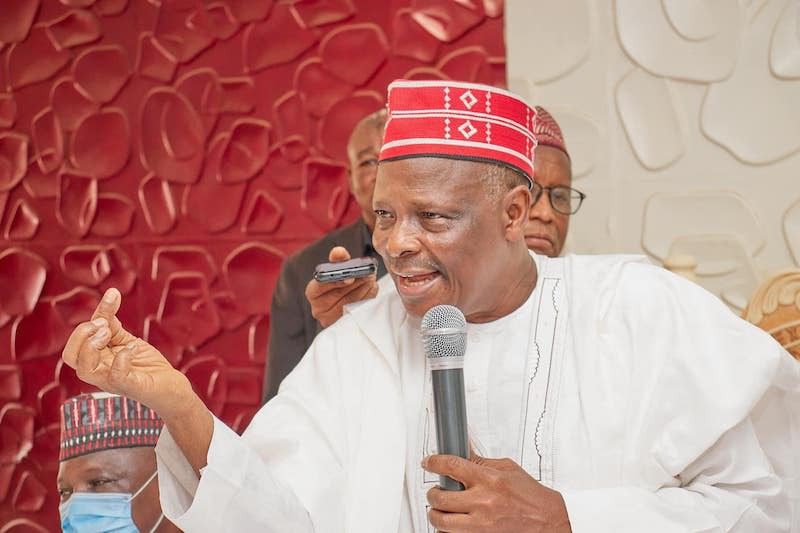
Rabiu Kwankwaso, a key figure in the Nigeria Democratic Congress, has opened up about the political frustrations that followed the 2015 general elections, revealing that despite his massive contributions to the victory of former President Muhammadu Buhari, his camp was largely ignored. Speaking during a recent television interview, the former Kano State Governor reflected on the heavy lifting he did to secure nearly two million votes for the then-opposition, only to find himself and his supporters sidelined once the government took power. He noted that many put their lives and reputations on the line at the time, but the expected benefits for their constituencies never materialized.
The veteran politician linked current national frustrations to a cycle of dissatisfaction with previous administrations, which he believes is now driving Nigerians toward the NDC. This shift follows his recent high-profile defection alongside Peter Obi, a move that has recalibrated the political landscape ahead of the next general elections. Kwankwaso is confident that the public is now looking for a genuine alternative after years of feeling unrepresented by the powers that be.
Addressing the heated debate over power rotation, Kwankwaso offered a historical perspective on why the zoning arrangement in Nigeria became so chaotic. He traced the roots of the current confusion back to the untimely death of President Umaru Musa Yar’adua in 2010. That singular event, he argued, disrupted the natural flow of the system and introduced a level of instability that the country is still grappling with today. To resolve this, he defended his party’s decision to zone the 2027 presidential ticket to the South as a way to clear up the lingering uncertainty.
While he supports the move to the South for the sake of national consensus, Kwankwaso was quick to point out that the region an individual comes from is ultimately less important than the quality of their leadership. He stressed that Nigeria is at a crossroads where it needs enthusiastic and committed leaders rather than just regional representatives. In his view, those who have spent years in the political trenches understand that progress isn’t tied to a leader’s place of birth, but rather to their determination to move the entire nation forward.