


















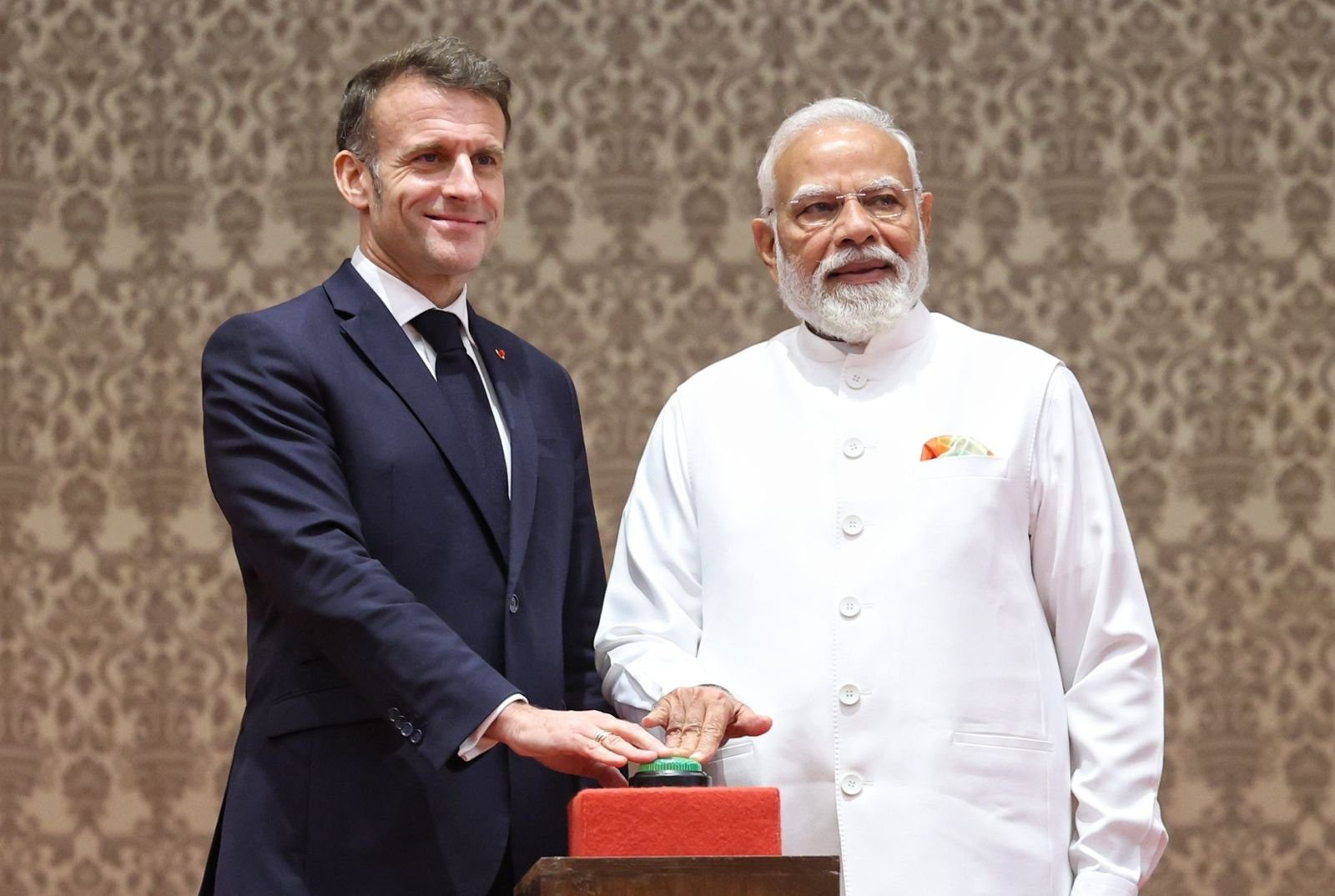
India and France are moving closer to deepening trade and infrastructure cooperation after leaders of both countries agreed on new port connectivity initiatives aimed at strengthening commerce between Asia and Europe. The deal was discussed between Indian Prime Minister Narendra Modi and French President Emmanuel Macron, marking another step in expanding strategic economic ties between India and France.
The partnership focuses on boosting collaboration between major ports operated by Adani Ports and Special Economic Zone Limited and France’s Port of Marseille Fos. The agreement supports plans for the ambitious India–Middle East–Europe Economic Corridor, a trade network designed to improve shipping and rail connections across three continents while reducing shipping time and transportation costs for international trade.
The proposed corridor, first discussed in 2023, stretches roughly 6,000 kilometres and is designed as a multimodal trade route linking Indian seaports to European markets through the Middle East. Supporters of the project believe it could cut transit time by nearly 40 percent while lowering logistics costs by around 30 percent compared with existing maritime routes. Trade goods would move from Indian ports such as Mundra and Hazira, pass through Middle Eastern hubs, then continue by rail through Saudi Arabia and Jordan before reaching Mediterranean ports and European destinations.
Economic analysts have described the initiative as part of a broader global competition in trade infrastructure development. Some experts say the project reflects growing efforts to create alternative trade networks in response to expanding global economic influence from China’s international trade programmes. They argue that digitalised port systems, greener shipping technologies, and better logistics coordination will help modernise global trade infrastructure while supporting environmental sustainability goals.
The timing of the agreement coincided with Macron’s diplomatic visit to New Delhi, during which both nations also renewed defence cooperation agreements and upgraded their bilateral relationship into a special strategic partnership. Discussions during the visit covered advanced technology cooperation, defence manufacturing, artificial intelligence development, and broader economic collaboration across multiple sectors.
Trade relations between India and the European Union have also been strengthening. Last month’s free trade agreement between India and the EU is expected to accelerate economic exchange and investment flows. Analysts believe combining trade agreements with infrastructure partnerships will help create stronger supply chains capable of withstanding global economic and political disruptions.
Business leaders have welcomed the development, saying the corridor could significantly expand international trade opportunities. Executives from Adani Ports said growing cooperation between India, Europe, and Middle Eastern partners could open new markets and increase export competitiveness for Indian businesses. Meanwhile, economic observers believe the project also reflects global trends toward diversifying trade relationships amid ongoing global tariff debates and shifting economic policies in major economies.
The India–Europe trade corridor is gradually emerging as one of the major geopolitical and economic projects of this decade, promising to reshape global shipping routes while strengthening diplomatic and commercial partnerships across regions.