
















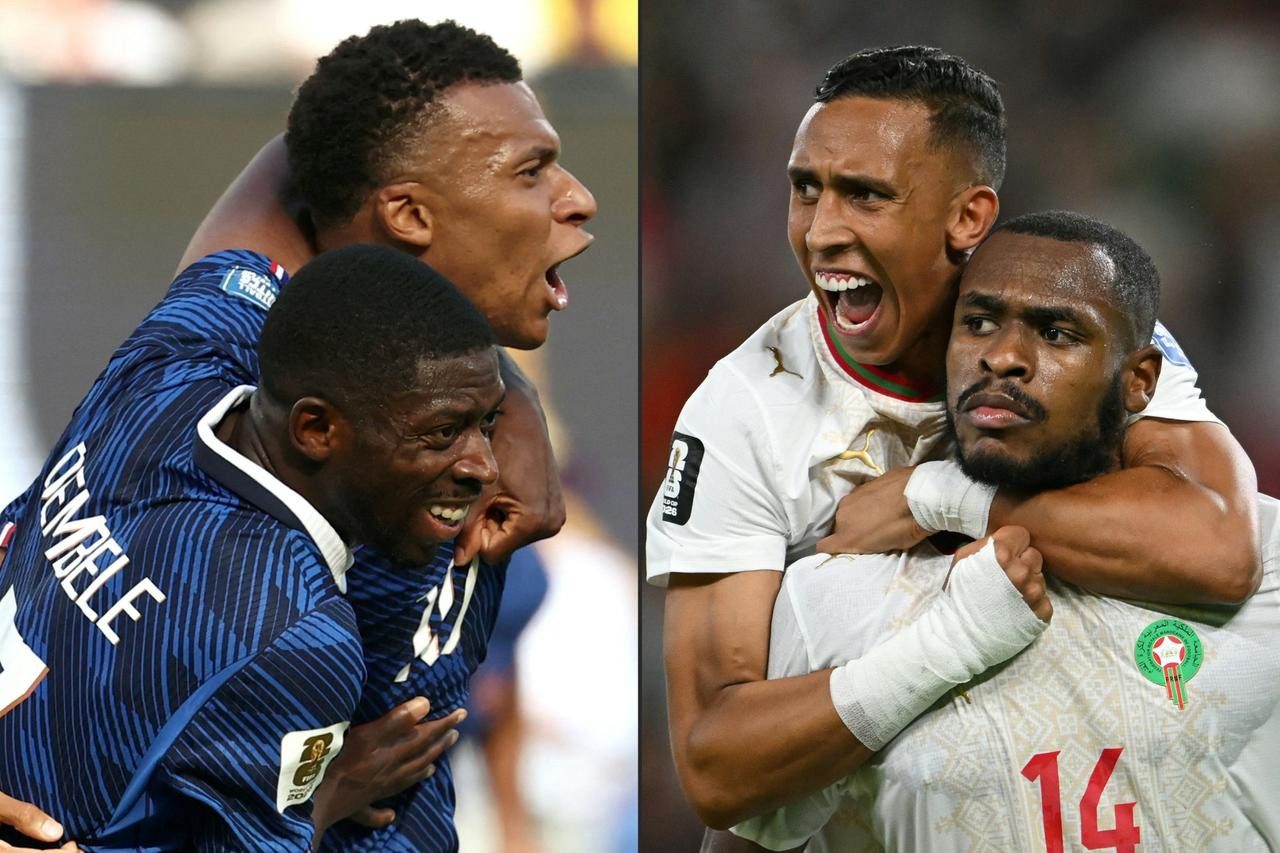
Morocco will shoulder Africa’s remaining hopes at the 2026 World Cup when the Atlas Lions take on France in a high-stakes quarter-final clash on Thursday night.
With most of Africa’s representatives already out of the tournament, Morocco now carry the burden of keeping the continent’s flag flying on the biggest stage. Of the 10 African nations that qualified for the World Cup in the United States, Canada and Mexico, nine reached the knockout stage. But after six teams fell in the round of 32 and Egypt bowed out in the round of 16 following a 3-2 defeat to Argentina despite leading by two goals, Morocco are left as Africa’s final hope.
Standing in their way is a formidable France side as both teams prepare to meet at Gillette Stadium outside Boston in a quarter-final that revives memories of their 2022 World Cup semi-final meeting.
For France, the contest carries added significance as it could mark the final stretch of Didier Deschamps’ long and successful spell in charge. The French manager is expected to step down after the tournament, and defeat against Morocco would bring his 14-year reign to an abrupt close.
Deschamps, one of the few men to have won the World Cup as both a player and a coach, insisted his attention is fixed solely on the task ahead rather than on how history will judge his time in charge. He said his focus, alongside his backroom staff, is on ensuring France handle the challenge Morocco present.
He also brushed aside concerns over the appointment of Argentine referee Facundo Tello, despite social media speculation suggesting the official’s presence could become a talking point. France and Argentina are seen as possible finalists in a repeat of the 2022 title decider, but Deschamps made it clear that France’s only concern for now is Morocco.
According to the French coach, Morocco have more than enough quality to make life difficult for his team. He pointed to their technical ability, physical strength and tactical discipline, describing them as a side that has fully earned its place at this stage of the tournament.
Deschamps noted that Morocco are not in the quarter-finals by chance, stressing that they have proven themselves over time and possess players capable of matching top opposition. He expects an intense battle between two teams that are both comfortable on the ball and dangerous going forward.
Morocco coach Mohamed Ouahbi, meanwhile, has made it clear that his players must approach the game with greater conviction than they showed in the 2022 semi-final against the same opponents. He said neither he nor the players want to look back with regrets this time, insisting there are aspects of their game that can be improved ahead of the rematch.
Ouahbi, who took charge earlier this year, said the team must attack the contest with full commitment and ensure they leave everything on the pitch.
Away from the sporting contest, French authorities have called for calm among supporters ahead of the match after previous major fixtures sparked unrest in parts of the country.
Morocco, which gained independence from France in 1956, maintains a long and complex relationship with its former colonial ruler. France is home to a large Moroccan community, while several members of the current Moroccan squad were born in France and play for French clubs.
Morocco captain Achraf Hakimi was born in Spain but currently plays for Paris Saint-Germain, one of several links between both countries that add another layer to the occasion.
Although celebrations after France defeated Morocco in the semi-finals of the 2022 World Cup were largely peaceful, French security services are expected to remain on high alert during Thursday’s game, which kicks off at 10:00 pm local time.
French Sports Minister Marina Ferrari appealed to supporters to act responsibly and ensure the occasion remains a celebration rather than descending into disorder.
Interior Minister Laurent Nunez has also warned that any form of misconduct will not be tolerated. His comments come after more than 280 people were arrested in Paris following unrest and property damage that broke out after Paris Saint-Germain’s victory over Arsenal in the UEFA Champions League final on May 30.