

























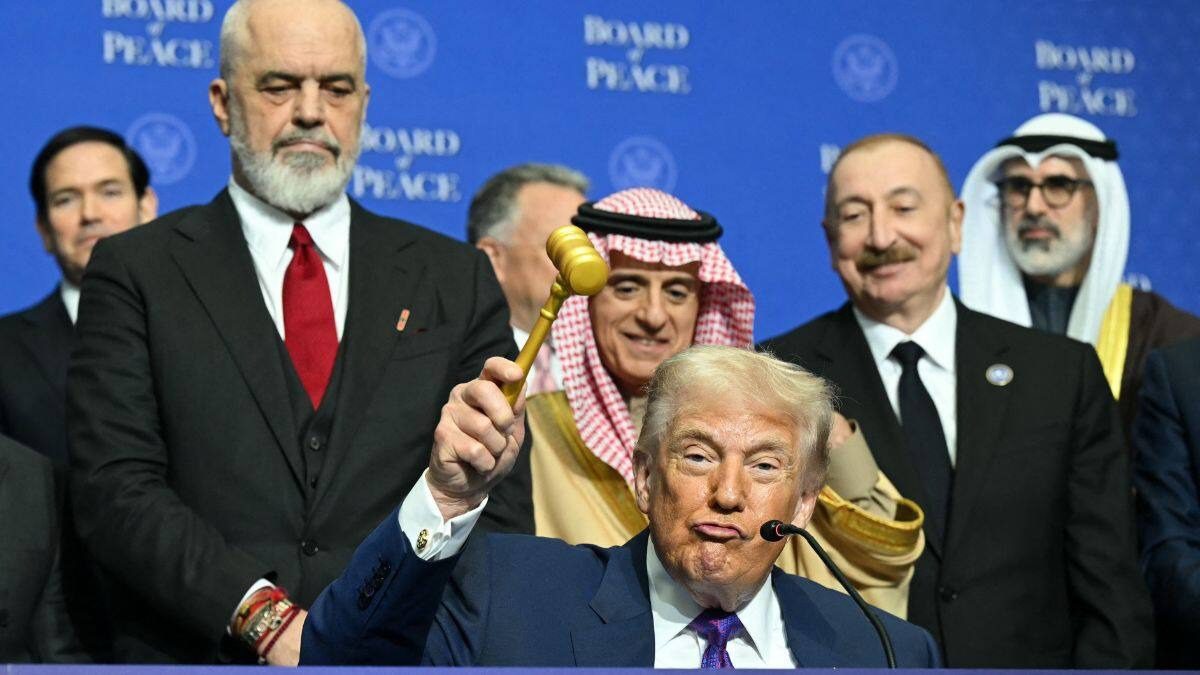
Muslim-majority nations have pledged funding and troops to support Gaza as US President Donald Trump launched his new “Board of Peace,” an initiative that has drawn global attention and raised questions about its long-term role.
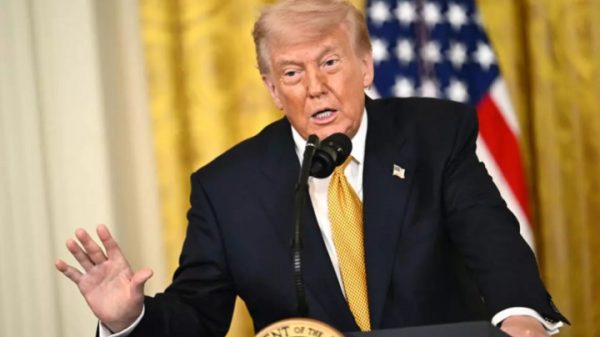
The inauguration took place in Washington at the former US Institute of Peace, which has been renamed under Trump’s oversight. Speaking to attendees, Trump praised the leaders who joined the board, promising to “help Gaza, straighten it out, and make it successful,” while highlighting the board’s ambitious mission to bring stability to the region. He announced a $10 billion contribution from the United States, with Qatar, Saudi Arabia, and the United Arab Emirates each committing at least $1 billion. White House Press Secretary Karoline Leavitt confirmed that total pledges exceeded $6.5 billion, not including Trump’s own allocation.
Despite the high-profile launch, details about how the funds would be used remain unclear. Trump will hold veto power over the board and retain leadership even after leaving office. Countries seeking a permanent seat on the board will be required to contribute $1 billion, while others participate for two-year terms.
The board’s formation follows a ceasefire negotiated in October between the Trump administration, Qatar, and Egypt, designed to halt years of conflict in Gaza. Its second phase focuses on disarming Hamas, whose October 7, 2023 attack on Israel sparked a devastating escalation.
Several nations have committed personnel to a new International Stabilisation Force. Morocco, for the first time, will send police and officers, while Indonesia has pledged up to 8,000 troops, nearly half of the 20,000 target. Albania, Kazakhstan, and Kosovo have also committed forces, with an Indonesian officer appointed deputy to US Major General Jasper Jeffers, commander of the force. Trump praised Indonesian President Prabowo Subianto, calling him a “tough cookie,” despite his controversial human rights record.
Nickolay Mladenov, appointed US high representative for Gaza, announced the recruitment of a post-Hamas police force, reporting 2,000 applicants within hours. Yet, the truce has not fully halted violence; Gaza’s health ministry reports that Israeli forces have killed at least 601 people since the ceasefire began.
Representatives from Israel, including Foreign Minister Gideon Saar, demanded the disarmament of Hamas and a “fundamental deradicalisation process” in Gaza. Meanwhile, few Western nations participated: Britain and Germany sent observers, while Canada and France declined entirely. French Foreign Minister Jean-Noel Barrot criticized the European Commission’s observer role, saying it lacked proper mandate.
The initiative represents an unusual coalition of Muslim-majority nations offering financial and military support to Gaza, while the board itself remains shrouded in uncertainty, leaving global observers to question its transparency and long-term effectiveness.