








































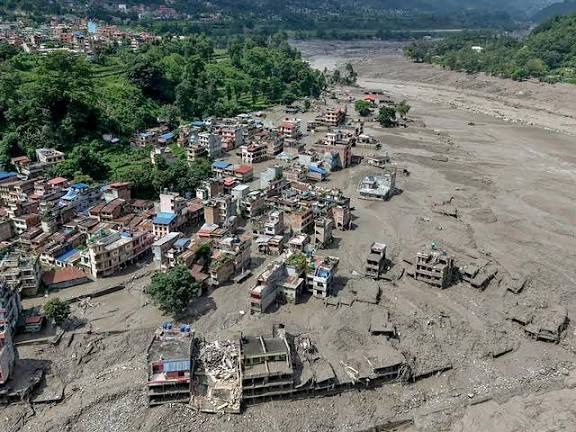
A glacier collapse is believed to have triggered the deadly flash flood that hit Nepal and parts of Tibet last week.
Scientists say a large section of ice and rock broke off from a glacier near Langtang Lirung in the Himalayas, sending a powerful surge of water, mud, and debris into the Lhende Khola river. The disaster killed over 160 people and left hundreds missing, while destroying roads, bridges, and hydropower facilities along the Nepal-China border.
Initial reports pointed to an earthquake, but experts later confirmed the seismic signal came from the glacier collapse itself, which released energy comparable to a magnitude 5.2 quake. Rescue teams are still searching for survivors on both sides of the border.
While researchers say it is too early to blame climate change directly, they noted that rising temperatures are shrinking glaciers and thawing permafrost, making mountain slopes more unstable. This increases the risk of similar sudden disasters in the region.







