




























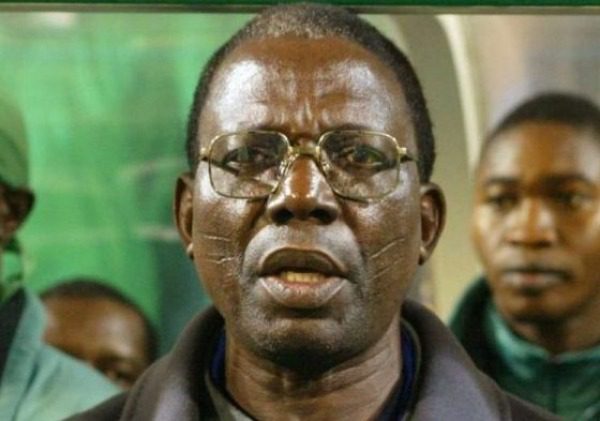
The Nigerian sporting community is currently united in grief following the passing of a true icon, High Chief Adegboye Onigbinde, who died on Monday, March 9, 2026, at the age of 88. His death marks the end of an era for a man whose name became synonymous with the growth and technical sophistication of football in Nigeria and beyond.
President Bola Ahmed Tinubu led the nation in paying tribute to the legendary tactician, offering his condolences to the family and colleagues of the former Super Eagles manager. In a statement released through his Special Adviser on Information and Strategy, the President highlighted Onigbinde’s landmark achievement in 1982 as the first indigenous coach to take charge of the senior national team. He described the late coach as a man of immense discipline and foresight whose passion for the game remained unwavering until the very end.
The impact of Onigbinde’s career was felt deeply at the National Sports Commission, where officials described him as a rare figure whose influence stretched across the global football landscape. According to reports from Reports, the Commission’s Director General, Hon. Bukola Olopade, noted that the High Chief’s contributions over five decades—both as a coach and a respected technical instructor for FIFA and CAF—have left a legacy that will serve as a blueprint for future generations.
The Nigeria Football Federation also expressed profound sadness, with General Secretary Dr. Mohammed Sanusi describing his passing as the departure of a titan. Onigbinde holds the distinct honor of being the first Nigerian to lead the Super Eagles to a FIFA World Cup, achieving the feat during the 2002 tournament in Korea and Japan. His domestic record was equally impressive, having guided Ibadan giants like Shooting Stars and Water Corporation FC to the latter stages of major continental competitions.
Beyond the trophies and accolades, Onigbinde was widely regarded as a “coach of coaches.” He dedicated much of his later years to traveling the world as a technical instructor, emphasizing that education was the bedrock of any successful sporting career. This sentiment was echoed by the Football Coaches Association of African Nations, which recalled his insistence on professional training during their launch in Nigeria.
Born in Modakeke, the legend made a symbolic choice in 1960 to drop his English name, Festus, in favor of Adegboye, a name reflecting his heritage and a reclamation of his roots. His family, speaking through Mrs. Bolade Adesuyi, expressed their gratitude for the outpouring of love from across the globe, noting that while they mourn his loss, they take solace in a life lived with purpose and distinction. Funeral arrangements are expected to be shared with the public in the coming days.