


























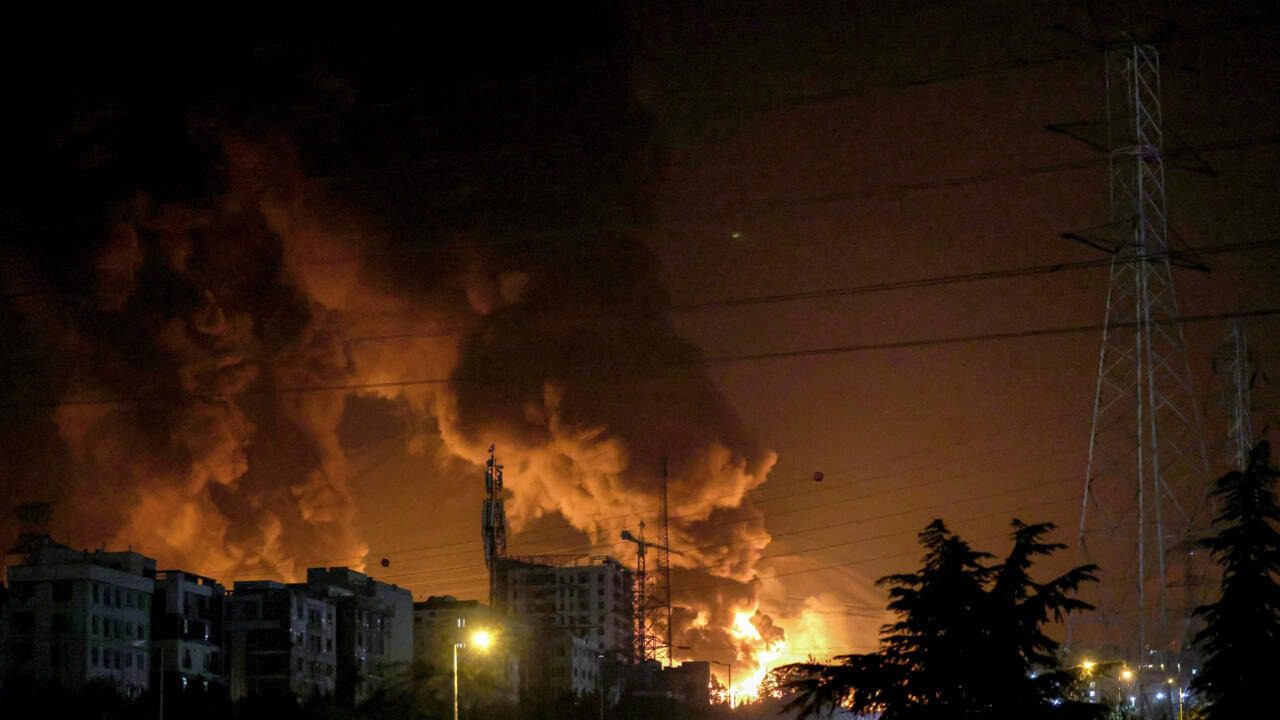
The United States and Israel carried out coordinated military strikes on targets across Iranian cities on Saturday, setting off explosions and thick plumes of smoke over parts of the capital, Tehran. The operation marked a sharp escalation after days of rising tension between Washington and Tehran over Iran’s nuclear and missile programmes.
US President Donald Trump said the objective of the strikes was to remove what he described as immediate threats. In a video shared on his social media platform while spending the weekend in Florida, he announced that American forces had begun major combat operations inside Iran. He vowed to dismantle Iran’s missile capabilities and cripple its naval power, warning Tehran of severe consequences if it failed to comply. At the same time, he offered what he called a path to safety for members of Iran’s military, while urging ordinary Iranians to see the moment as a turning point.
Israel’s Defence Minister, Israel Katz, described the action as a preventive move aimed at stopping future attacks before they could materialise.
Iranian state television later reported that President Masoud Pezeshkian was unharmed. The semi-official Fars news agency said several missile impacts were recorded in parts of Tehran, including the Keshvardoost and Pasteur districts. Witnesses in the city spoke of loud blasts and low-flying projectiles. One office worker said he saw what appeared to be two Tomahawk missiles moving horizontally toward their targets, adding that the first sound resembled the distant roar of a fighter jet before the explosions followed.
Journalists in Tehran reported hearing multiple detonations and seeing large columns of smoke rising from central and eastern areas of the city. Iran’s health ministry confirmed that emergency teams had been deployed, though there was no immediate word on casualties.
As the strikes unfolded, Iran, Iraq and Israel shut their airspace to civilian flights. US embassies in Qatar and Bahrain advised American citizens to seek shelter. In Jerusalem, sirens sounded and Israeli authorities issued emergency alerts to residents’ mobile phones warning of a serious threat.
The military action followed a significant build-up of US forces in the region. The aircraft carrier USS Gerald R. Ford, the largest in the American fleet, had been moving closer to Israel’s coast in recent days as tensions mounted.
Just a day before the strikes, officials from the United States and Iran had met in Geneva for talks. President Trump later expressed dissatisfaction, saying Iran was unwilling to meet key demands. However, Oman, which helped mediate the discussions, painted a more hopeful picture. Omani Foreign Minister Badr Albusaidi said Iran had agreed to stop stockpiling uranium and to convert existing reserves into fuel, potentially easing concerns over enrichment levels. He shared those details while in Washington for meetings that included US Vice President JD Vance.
The latest confrontation comes amid broader unrest inside Iran. In recent weeks, authorities have been accused of killing thousands while suppressing large-scale protests. Tensions over Iran’s nuclear programme have simmered for years. Tehran had accepted limits on low-level uranium enrichment under a 2015 agreement, but President Trump withdrew the United States from that deal during his first term.
US Secretary of State Marco Rubio is expected to travel to Israel for further discussions on the crisis. In a departure from long-standing practice, he will reportedly make the trip without journalists accompanying him. Earlier this week, during his State of the Union address, President Trump accused Iran of developing missiles capable of reaching American territory. Rubio later warned that failure to address missile concerns would create serious consequences for Tehran.
Adding to the pressure, Washington placed Iran on a new blacklist over what it described as the wrongful detention of US citizens. Iran’s Foreign Minister, Abbas Araghchi, responded by saying meaningful progress would depend on realism from both sides and avoiding excessive demands.
The International Atomic Energy Agency has scheduled technical talks with Iranian officials. The UN nuclear watchdog has urged Tehran to cooperate constructively as diplomatic and military tensions continue to unfold.