


























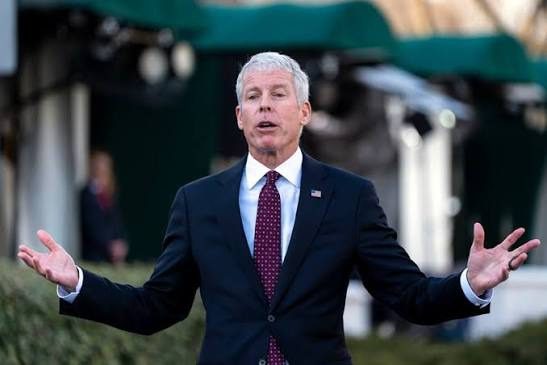
US Energy Secretary Chris Wright on Wednesday pushed back hard against talk that Washington is stealing Venezuelan oil, after Caracas opened the door for the United States to tap a large share of the country’s underground wealth.
Wright flew into Venezuela to watch the signing of energy agreements worth billions of dollars and spoke at Caracas airport, where he said headlines about theft miss the point. Under the arrangement, the United States is set to take majority control of more than 65 billion barrels, close to 20 percent of the oil sitting in Venezuela, home to the world’s largest proven reserves. Officials in Caracas have put expected earnings from the deal at $209 billion over 25 years.
I have seen those headlines. We’re stealing Venezuelan oil. Of course, that’s not true at all, Wright said. The oil in Venezuela is indeed owned by the people of Venezuela. Private companies are bringing the money to produce the oil, but the benefits, the royalties and the taxes all go to the government of Venezuela and the people of Venezuela. All we’re doing is taking an idle, underground asset that isn’t doing anything for Venezuelan people and bringing the money, the technology to develop it.
He also tied oil recovery to the country’s broken power grid. Large parts of Venezuela still live with hours of blackouts every day, and the oil industry itself cannot run without electricity. You need them both, he said, arguing that existing electricity infrastructure can be put back to work under a five year plan.
President Donald Trump has called the pact announced Friday the biggest oil deal in world history. Earlier Wednesday he brushed aside pressure for a vote, saying he does not think Venezuela is ready yet. It’s very new. We took them out of a dictatorship, and we’re getting along great with the government, he said. US forces removed Nicolás Maduro in January. Former vice president Delcy Rodríguez has governed on an interim basis since then, effectively under Trump’s influence, and she too has said elections will come when Venezuela is ready.
Wright described voting as a process, not a date on a calendar. He said reforms, including an overhaul of the Supreme Court, have to come first. The plan for elections has not changed at all. It’s to continue to get the infrastructure ready and have elections at the appropriate time. The country and the economy, he added, need to be stabilised before people go to the polls. You don’t want to wait, sit on your hands for whatever time it takes to get through elections.







