





































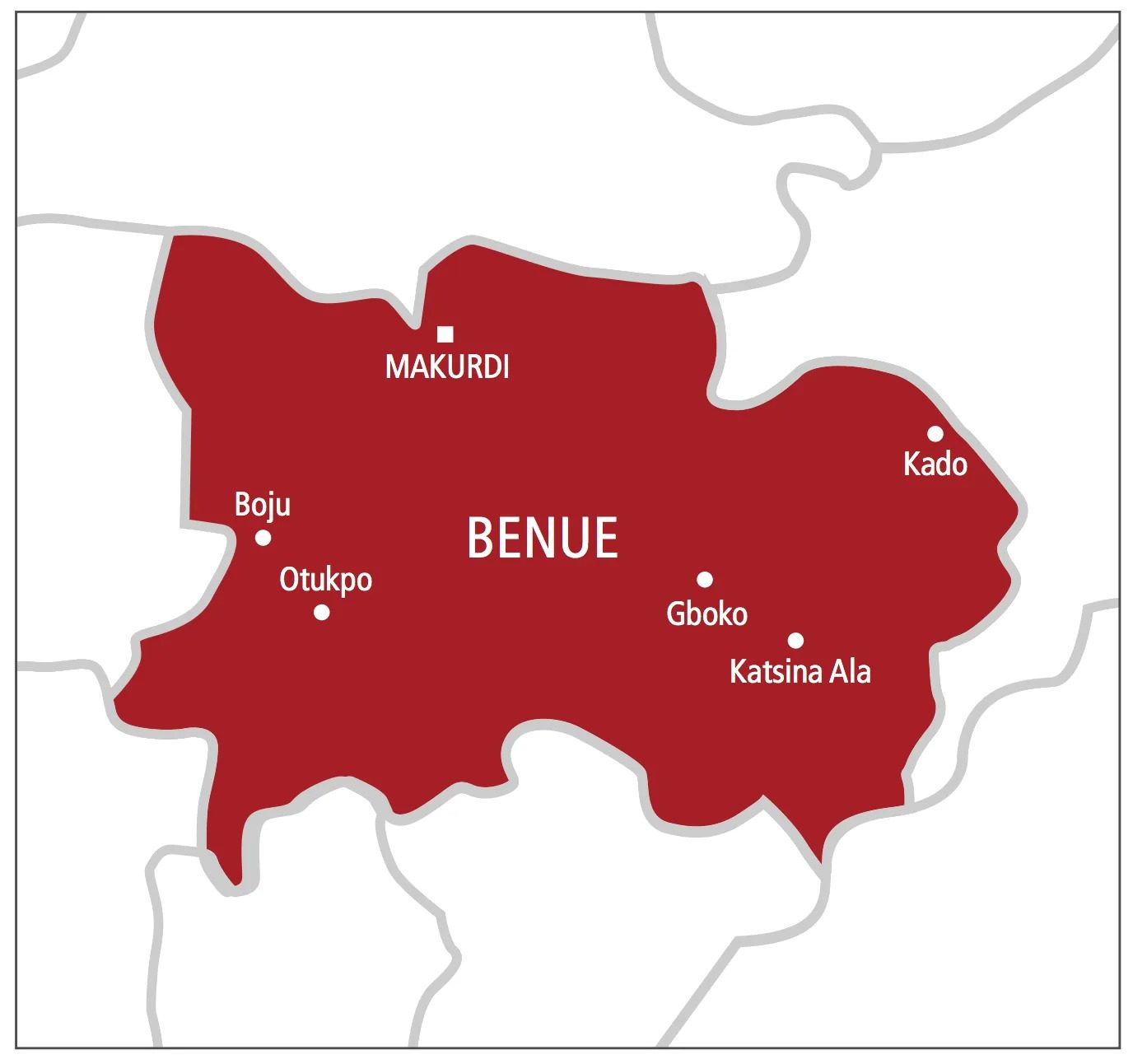
About 8,950 smallholder farmers across eight Local Government Areas of Benue State have received training on producing their own manure as part of efforts to reduce fertiliser costs and improve soil fertility.
The training is part of an agricultural intervention by the Sasakawa Africa Association, supported by The Nippon Foundation. The programme has also provided farmers with improved seeds, fertiliser, extension services and training on climate resilient farming practices.
SAA Technical Coordinator for Climate Resilient and Sustainable Agrifood Systems, Nathaniel Otene, disclosed this during a media field visit to demonstration farms in Cheedu community in Gwer East and Luga in Gboko Local Government Area.
Otene, who represented SAA Country Director Godwin Atser, said farmers were being encouraged to convert animal manure, leaves and crop residues into compost as a way of reducing dependence on synthetic fertilisers.
He explained that the programme also promotes the use of biochar to improve soil fertility, water retention and nutrient availability. Farmers are equally being trained in improved planting methods, proper spacing, crop population and other agronomic practices.
The intervention is being implemented in partnership with the Benue State Bureau of Agricultural Development and Mechanization and covers Gwer East, Gboko, Tarka, Guma, Ushongo, Vandeikya, Buruku and Konshisha Local Government Areas.
According to Otene, the beneficiaries include men, women, youths and Persons with Disabilities who have been organised into groups and trained in the production of soybean, maize, rice and horticultural crops such as onions, tomatoes, amaranthus and pepper.
Farmers have also been encouraged to intercrop maize with soybean and practise crop rotation. Otene explained that soybean could help improve nitrogen levels in the soil, making it useful in maintaining soil productivity.
One of the beneficiaries, Patience Kwaghgba, who is also the chairlady of a farmers’ cooperative society, said the training had improved her knowledge of manure production, fertiliser application, pest control and effective crop management.
Kwaghgba said the intervention had helped farmers produce more crops on smaller plots of land and had also changed their view of farming from subsistence activity to a business venture.
She added that beneficiaries received improved seedlings, USG fertiliser and other agricultural inputs, expressing confidence that the skills acquired would enable farmers to sustain production after the programme ends.
The intervention also includes a family economic component. Under the initiative, 50 women farmers and their spouses were trained in joint household financial decision making, farm planning and the management of farm income.
Project figures showed that 8,950 farmers were reached through step down extension training, while another 1,366 farmers were mobilised and sensitised in newly introduced communities.
The programme also involved 75 smallholder seed producers in establishing 1.5 hectares of community based seed multiplication plots, comprising one hectare of soybean and half a hectare of maize.
Programme Officer for Inclusive Markets and Agribusiness Development, Jonathan Yassah, said a processing centre had been established to help transform cassava production into a more profitable venture through processing and stronger market connections.
Yassah said the centre had created jobs for eight young people, while demand for its services had already grown beyond its current processing capacity.
The programme is also promoting agricultural technologies such as Urea Deep Placement, Integrated Soil Fertility Management and Integrated Pest Management.
In addition, 17 Community Savings and Internal Lending Association executives received training in financial literacy, savings mobilisation, loan administration and proper record keeping.







