



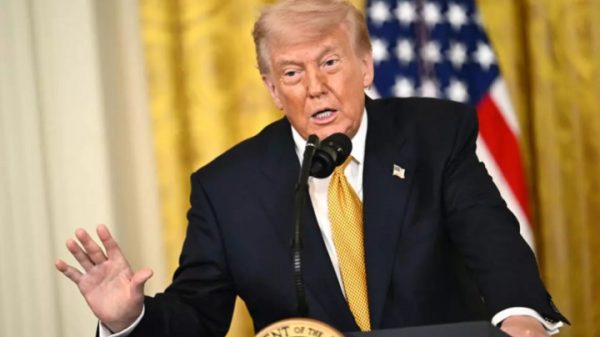











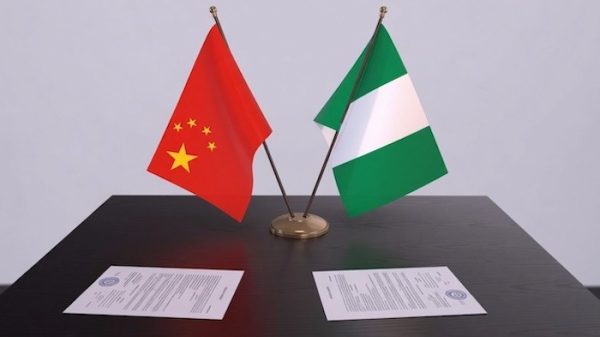


Boeing has officially secured a massive commitment from China to purchase 200 aircraft, marking a significant breakthrough for the aerospace giant following US President Donald Trump’s recent high-profile visit to Beijing. The initial agreement could serve as the foundation for an even larger deal, with potential orders eventually expanding by an additional 750 planes.
The aviation giant expressed immense satisfaction with the outcome of the diplomatic mission, noting that its primary objective of reopening the highly competitive Chinese market to Boeing aircraft had been achieved. Company leadership, including CEO Kelly Ortberg, who traveled as part of the American delegation, emphasized that this initial tranche of 200 planes is expected to pave the way for subsequent commitments. While Boeing declined to specify the exact models involved in the negotiations when pressed for details, the company publicly credited the Trump administration for facilitating the milestone and expressed readiness to meet China’s long-term aviation needs.
This breakthrough comes at a crucial time for the global aviation sector. According to market forecasts, the global commercial fleet will require roughly 44,000 new aircraft over the next two decades to replace aging fleets and keep pace with rising passenger demand. With nearly half of that demand concentrated in China and Southeast Asia, securing a foothold in Beijing is a massive victory for Boeing as it goes head-to-head with its fierce European rival, Airbus.
The development mirrors a similar triumph from Trump’s first term in 2017, which also yielded a $37 billion mega-deal for 300 Boeing aircraft. Commenting on the latest developments, the president hinted at the scale of the agreement, describing it as a massive job creator for the American workforce. He later suggested that if the initial phase goes smoothly, the total order could realistically skyrocket to 750 aircraft, potentially setting a historic industry record. Industry insiders have long speculated that Beijing’s shopping list includes a mix of single-aisle 737 MAX jets alongside larger, wide-body 787 Dreamliners and 777s.
To put the scale of this potential deal into perspective, the current world record for a single aircraft order is held by Indian carrier IndiGo, which famously ordered 500 Airbus A320s. If China fulfills the maximum projected order of 950 planes, it would comfortably shatter that record and reshape the global aerospace landscape.
However, the road to this agreement has been paved with geopolitical and regulatory hurdles. Reports highlight that China was the final major market to clear the Boeing 737 MAX for flight following the tragic Lion Air and Ethiopian Airlines crashes in 2018 and 2019. The worldwide grounding of Boeing’s flagship narrow-body jet lasted nearly two years in Western markets, but Chinese regulators kept the aircraft grounded until 2023.
The regulatory freeze quickly morphed into a diplomatic one. Beijing halted all Boeing deliveries in 2019, only briefly thawing relations in late 2023 and early 2024 to accept a handful of 787s and 737 MAXs before another temporary halt occurred due to technical reviews of cockpit batteries.
The friction intensified when Trump returned to the White House, sparking a fresh round of tariff disputes. Beijing responded swiftly by blocking domestic airlines from finalizing new orders or taking delivery of existing Boeing jets. Fortunately for the American exporter, a trade truce hammered out between the world’s two largest economies late last year cleared the runway for normal business operations to resume.
With a global backlog of over 6,800 aircraft valued at an estimated $600 billion, this renewed partnership with China provides Boeing with a much-needed stability boost as it looks to solidify its future order book and stabilize its production lines.