


















Marriage in Nigeria is more than the union of two people; it is a celebration of family, heritage, and identity. Across the nation’s diverse ethnic groups, marriage remains one of the most important cultural traditions, deeply rooted in communal values and carried out with colourful ceremonies, symbolic rituals, and unending joy.
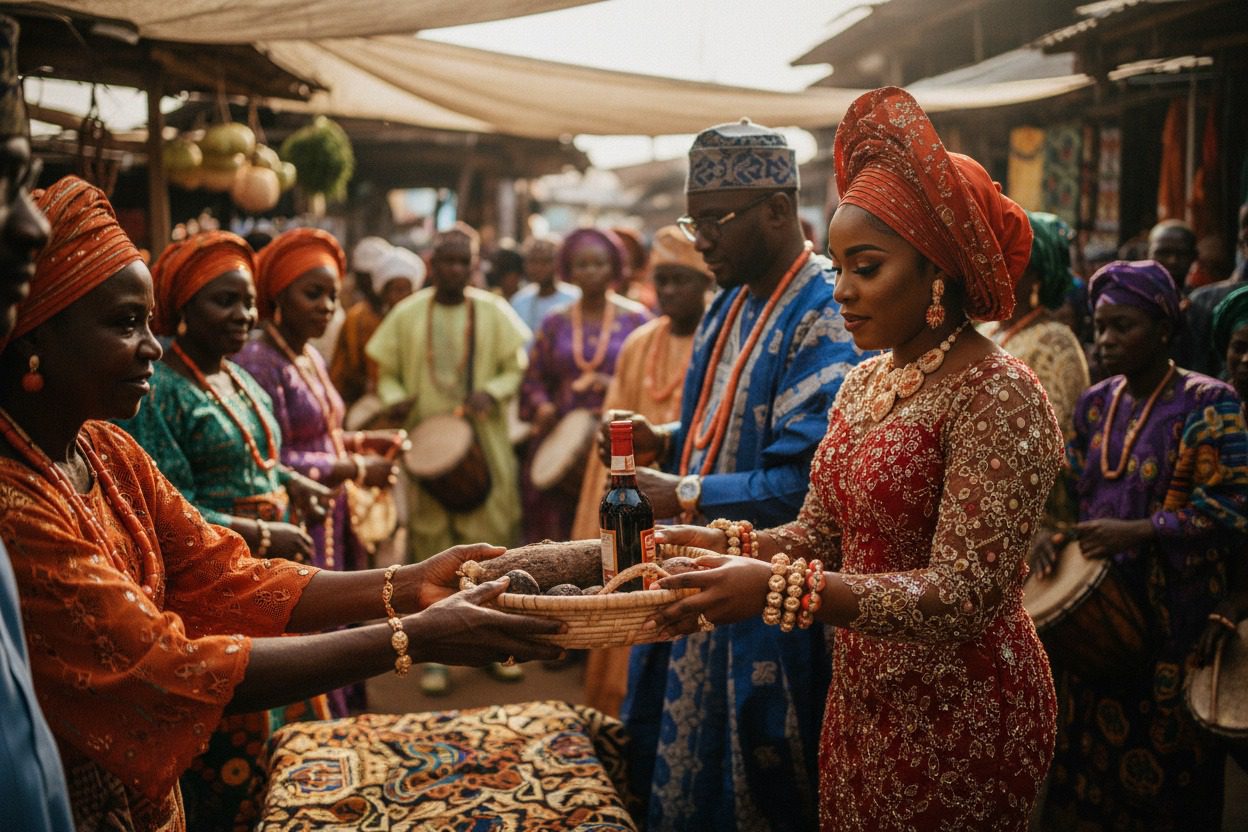
Traditional marriage stands at the heart of this cultural expression. Whether it is the Yoruba engagement known as ìdána, the Igbo wine-carrying ceremony called Igba Nkwu, or the Hausa Fatihah, every community brings its own flavour and customs to the process. Yet, one theme remains constant family involvement. Parents, uncles, aunties, and elders play vital roles in negotiations, blessings, and the overall celebration. Nigerian weddings are rarely private; they are grand public events that bring entire communities together to honour the union.
These ceremonies often unfold in carefully planned stages from the groom’s family formally declaring their intentions to the bride’s family, to the exchange of gifts, the bride price payment, and the prayers of the elders. The festivities reach their climax with music, dance, and feasting, often lasting into the night. Each ritual represents continuity, respect for ancestors, and hope for the couple’s future.
Marriage in Nigeria has always carried deep meaning. It marks the transition into full adulthood, strengthens family ties, and reinforces social status. In many communities, a person is not fully recognised as an adult until they marry. It also serves a practical purpose ensuring family lineage through procreation. Beyond romance, marriage here is viewed as a responsibility that binds two families in shared honour and collective growth.
Modern Nigeria, however, has seen remarkable changes. Young couples today strive to balance respect for cultural customs with financial realities and personal preference. Lavish weddings, which once symbolised prestige, now come under scrutiny as costs continue to soar. Many couples opt for simpler ceremonies, combining traditional rites with white or religious weddings, while still maintaining respect for their heritage.
Technology has also reshaped the landscape. Wedding planning now unfolds on WhatsApp groups; invitations arrive digitally; and livestreams connect family members around the world. Yet, even with these innovations, the soul of Nigerian marriage its communal warmth and celebration of togetherness remains intact.
The financial burden of Nigerian weddings is considerable. Bride price, attire, catering, photography, and entertainment can push expenses into millions of naira. Traditionally, the groom’s family shoulders most of the cost, symbolising his readiness to provide for his new household. The bride’s family contributes through attire, trousseau, and family ceremonies. Modern couples increasingly share these costs, reflecting a shift toward partnership and equality.
Bride price, often misunderstood, holds deep cultural symbolism. It is not a purchase but a gesture of appreciation a way of acknowledging the bride’s family for raising her. Though some families still demand extravagant lists, others have modernised the practice, preferring modest payments that reflect goodwill rather than wealth.
Inter-ethnic marriages are another fascinating feature of contemporary Nigeria. As cities grow more cosmopolitan, unions between Yoruba, Igbo, Hausa, and other groups are becoming common. These marriages blend traditions, languages, and values, creating a richer cultural exchange. Couples often hold two traditional ceremonies one for each side blending customs into a shared experience that celebrates Nigeria’s diversity.
Religion also plays a central role. Many couples honour both traditional and religious rites, merging ancestral customs with Christian or Islamic blessings. It’s not unusual to see drummers performing in church or imams blessing couples after traditional ceremonies. This seamless blend of faith and culture shows the adaptive spirit of Nigerians who embrace both heritage and belief.
Still, the beauty of marriage culture comes with challenges. Rising costs, gender role expectations, family interference, and pressure for immediate childbirth often weigh heavily on couples. Modern women are asserting independence and equality, while men navigate changing social expectations. Yet amid these tensions, love, understanding, and adaptability continue to sustain marriages across generations.
Marriage in Nigeria remains a grand journey one that unites families, celebrates heritage, and reflects the resilience of a people who find joy in togetherness. It is colourful, emotional, expensive, sometimes complicated, but always deeply meaningful. It is an evolving story of tradition meeting modernity, where the music, dance, and laughter remind everyone that marriage here is not just about two people, but about the bonds that hold a nation together.