




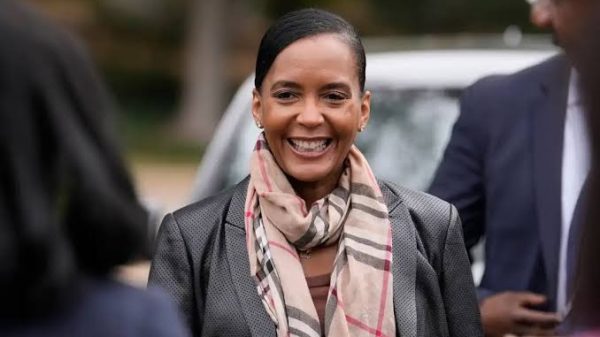

































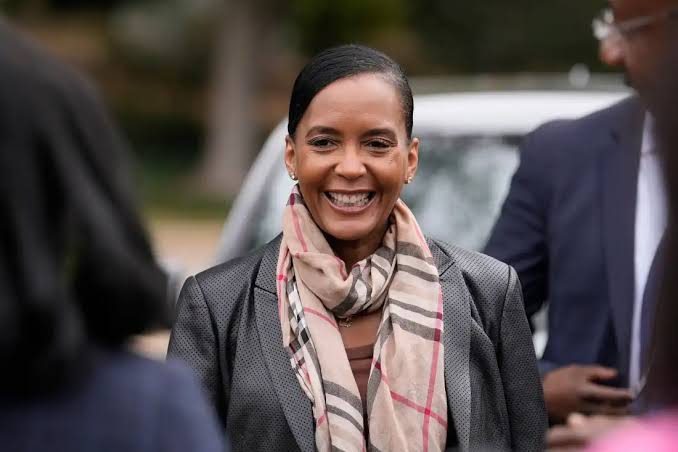
Georgia has officially stepped into a new era of political leadership with the election of Keisha Lance Bottoms, who has shattered a long-standing glass ceiling to become the first Black woman ever elected governor of a United States state.
The milestone victory unfolded after a fierce electoral battle in one of the nation’s most closely watched political arenas. Bottoms, the former mayor of Atlanta and a familiar face from her time advising the White House, managed to outpace her Republican rival, billionaire businessman and healthcare executive Rick Jackson. By securing the win, she not only claims the governor’s mansion for the Democrats after more than two decades of Republican control, but she also takes over from outgoing Governor Brian Kemp, stepping into the role as Georgia’s first female governor.
The triumph carries profound national significance. Bottoms joins a wave of historic electoral breakthroughs across the country, arriving on the same evening Stacey Plaskett made history as the first Black woman to lead a US jurisdiction in the US Virgin Islands, while Byron Donalds captured the Florida governorship as the nation’s first Black Republican governor.
For Georgia, the shift represents the culmination of years of grassroots organizing. Political observers tracking the race note that Black voters have long served as the bedrock of the Democratic coalition, transforming a reliably red state into a premier battleground. This momentum builds heavily on the groundwork laid eight years prior by Stacey Abrams. Even though Abrams fell short in her gubernatorial bids, her tireless campaigns mobilized a diverse, multigenerational coalition that fundamentally altered the state’s political landscape, helping deliver key Senate seats and presidential electoral votes to Democrats in recent cycles.
Jackson ran a campaign focused on his outsider business credentials, pitching voters on sweeping tax cuts, aggressive public safety reforms, and scaled-back government regulation. Yet, Bottoms’ message of progressive momentum and inclusive governance resonated deeply with the electorate, carrying her across the finish line.
As she prepares to take office, her victory adds a monumental chapter to the ongoing evolution of American leadership, signaling that the highest executive offices in the country are slowly growing to reflect the diverse population they serve.







