



























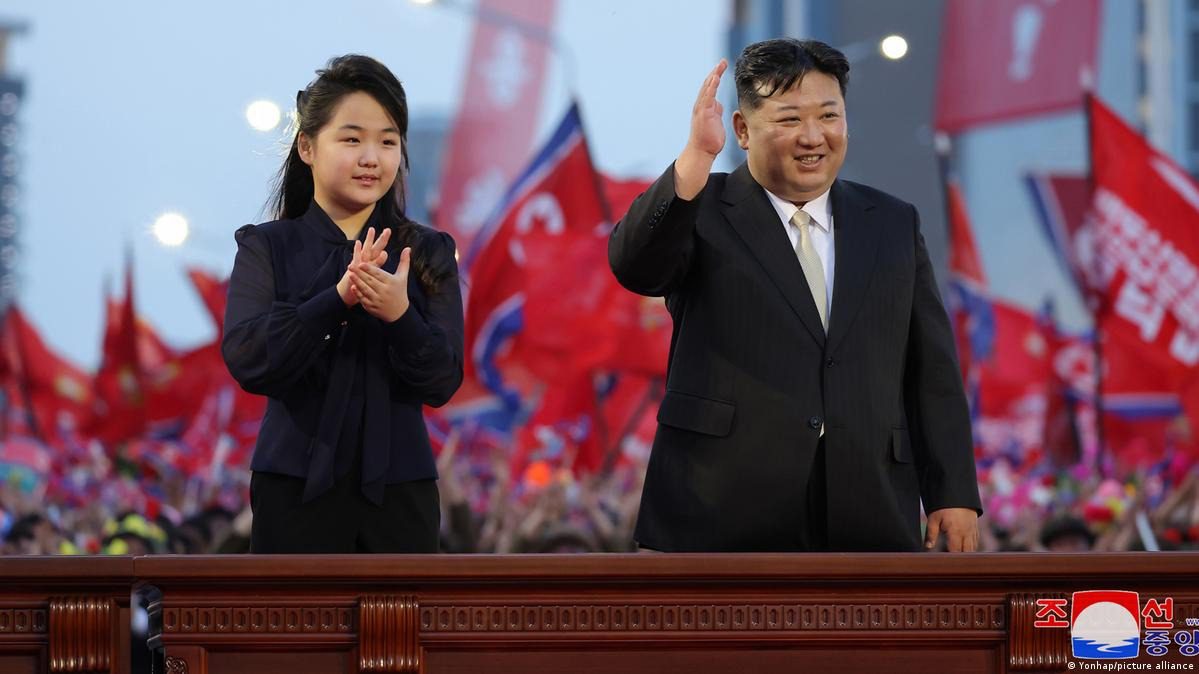
North Korean leader Kim Jong Un has reportedly chosen his 13-year-old daughter, Kim Ju Ae, as his successor, according to South Korea’s National Intelligence Service. Lawmakers were informed that this assessment follows a careful review of multiple indicators, most notably the young girl’s increasing visibility at key state events.
Ju Ae is the only child of Kim and his wife, Ri Sol Ju, whose identity has been publicly acknowledged. While intelligence suggests there may be an older son, he has never been presented to the public. The decision to position a female heir marks a rare shift in a deeply patriarchal society.
Over the past year, Ju Ae has been steadily introduced at major engagements. In September, she accompanied her father on her first known foreign trip to Beijing, further cementing her public presence. A South Korean lawmaker noted that Ju Ae’s appearances at events like the founding anniversary of the Korean People’s Army and the Kumsusan Palace of the Sun, coupled with her participation in policy discussions, indicate she is now formally being positioned as successor.
The announcement comes ahead of North Korea’s ruling party congress later this month, a pivotal gathering that shapes the nation’s foreign policy, military strategy, and nuclear planning.
Ju Ae’s first public appearance was in 2022 on state television, holding her father’s hand during an inspection of an intercontinental ballistic missile. Since then, her visibility has grown, with state media often placing her beside Kim rather than behind him, a subtle but meaningful signal in a culture where every visual cue carries political weight.
Observers suggest her prominent role at public functions indicates she is being treated as the de facto second in command and may already be influencing state policy. Power in North Korea has remained within the Kim family for three generations, and analysts have long speculated that Kim Jong Un intends to preserve this dynastic legacy.
The choice of Kim Ju Ae as heir underscores a strategic effort to maintain continuity in North Korea’s leadership while subtly challenging long-standing gender expectations within the regime.